
Donate to crowdfunding site so those who have served their time can vote, as Floridians intended | Opinion
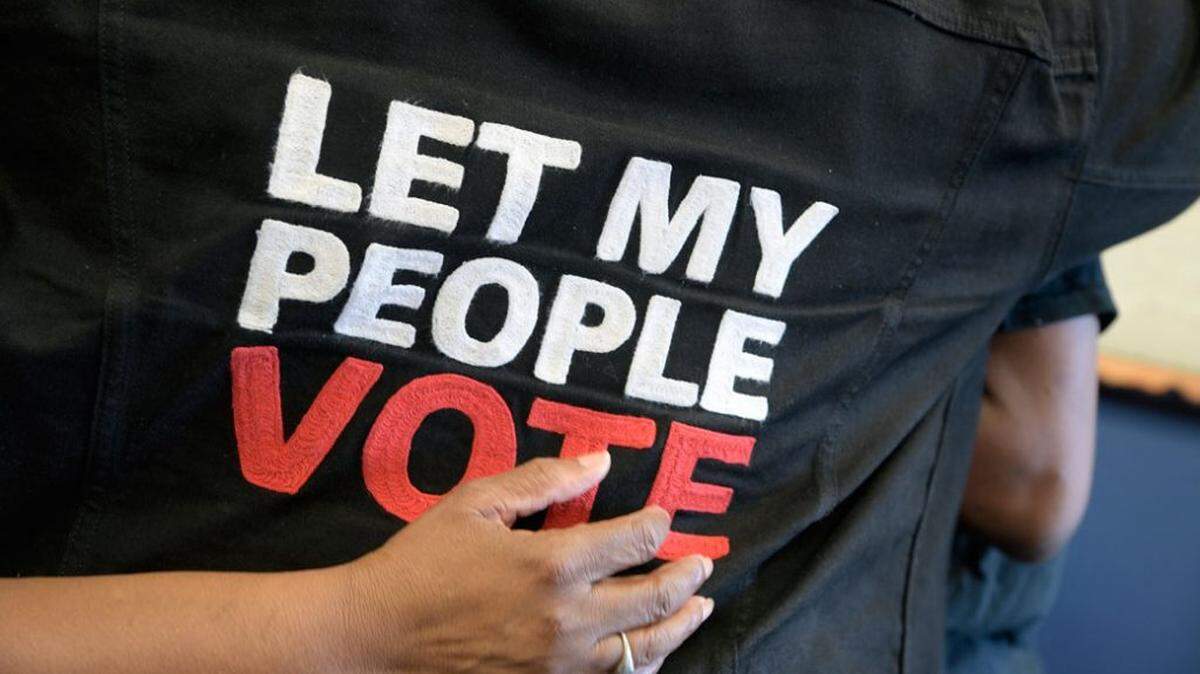
Two weeks ago, the U.S. Supreme Court, over three dissents, allowed Florida to keep hundreds of thousands of people formerly convicted of felonies from voting in next month’s primary elections. The majority in Raysor v. DeSantis gave no reasons, unlike Justices Sonia Sotomayor, Ruth Bader Ginsburg and Elena Kagan, who joined in an unanswerable seven-page dissent.
The case concerns whether Florida can refuse to allow to vote people who have served their prison sentences but who are too poor to pay off any related fines, fees and court-ordered restitution.
A federal district judge ruled that conditioning the right to vote in this fashion was unconstitutional, and a panel of the Eleventh Circuit Court of Appeals agreed. But responding to the governor’s appeal, the Eleventh Circuit decided earlier this month to have the issue decided by the full court. That won’t happen until August. Meanwhile, countless otherwise eligible voters, many of whom are Black, will be unable to cast ballots.
There is no way to predict what the full appeals court of will do, and I’m dismayed by the Supreme Court majority’s willingness to tolerate even temporarily disenfranchising poor citizens. But even if the legal status quo remains, there is a way out.
The Florida Rights Restoration Coalition has established a “Fines and Fees Program” to fund whatever needs to be paid to allow individual members of the Raysor class of plaintiffs to vote if they want to — and regardless of whom they would like to vote for. Here’s how the coalition describes the Fines and Fees Program:
It helps returning citizens break down any barriers they may have to voting because of financial obligations that arose from a felony conviction (excluding murder or felony sexual offenses).
It works closely with stakeholders in several counties to coordinate the use of the court system and current provisions of the law to address financial obligations for returning citizens who apply. In addition, FRRC has partnered with the League of Women Voters of Florida to develop an Attorney Assistance Program so that pro bono attorneys can help returning citizens through the process and advocate for relief as needed on a case-by-case basis.
Returning citizens may also be eligible for financial assistance from the Fines and Fees Fund, in the form of a scholarship-type award that would be payable directly to the clerk of court for the county in which the returning citizen was convicted.
Floridians should give generously to this worthy cause.
For those who know what they owe, every county should have a central information point, with volunteers who can meet Raysor voters at the courthouse and simply write the necessary check.
For those – and reportedly there are many – who are unable to get a hard number for what they owe, it ought to be possible to make payments that clearly overshoot the mark, subject to a refund of the excess once court staff performs the necessary calculations. In the meantime, Raysor-class members will be able to vote.
And if a county refuses to accept such an “overshoot” payment, those who are affected should be prepared to sue immediately and seek emergency relief to permit the individual to cast a provisional vote. If necessary, these ballots could be set aside pending adjudication of the legal issue. But at least these thousands upon thousands of otherwise eligible voters will have a chance to make their voices heard – which is what Floridians fortunate enough to be able to vote intended when they approved a referendum lifting the bar against voting by those formerly convicted of a felony.
Hats off to the Florida Rights Restoration Commission. The Sunshine State has seen razor-edge elections in the past. Now it’s time for a Raysor election.
Eugene R. Fidell is a senior research scholar at Yale Law School and of counsel at the Washington DC law firm Feldesman Tucker Leifer Fidell LLP.
This story was originally published July 28, 2020 at 6:28 PM.