
Gimenez should support, not veto, Independent Civilian Panel for police oversight| Opinion
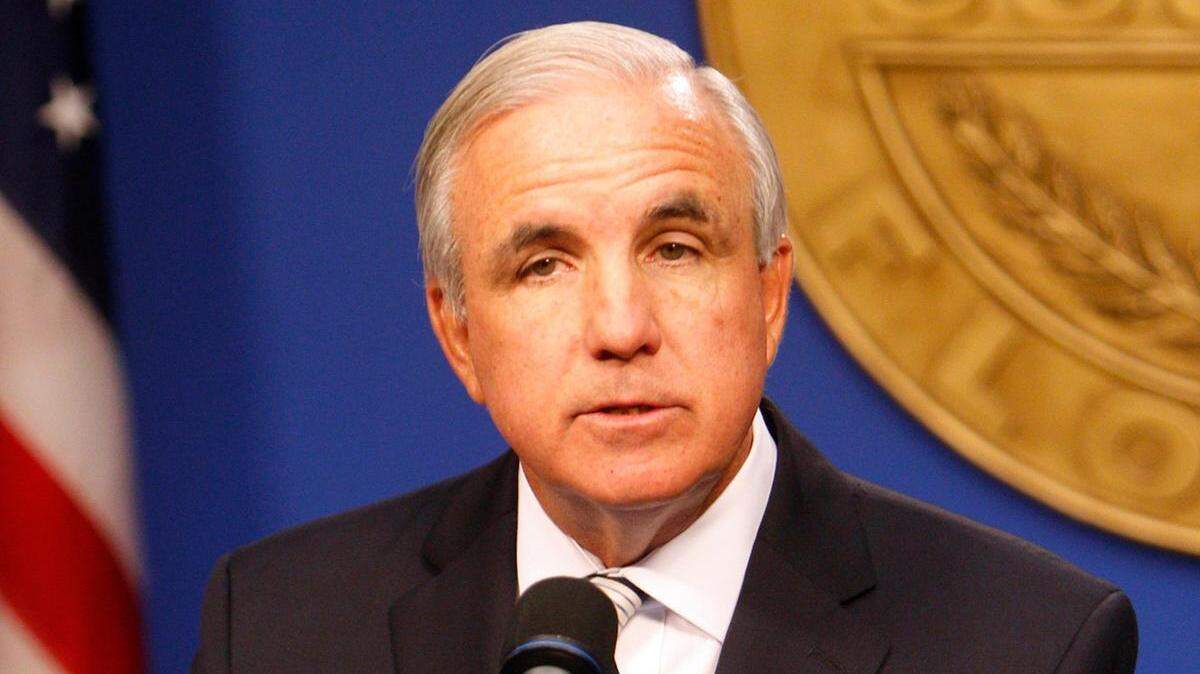
In early June, I wrote an op-ed asking the people of Miami to support a movement in our county that was unprecedented.
You didn’t disappoint!
But, in just one day, all of that hard work can be overturned as it once was before in 2018. On July 17, Mayor Carlos Gimenez can choose to stand with his constituents who voted him into office or veto their public cries for a more accountable and transparent police department in the form of an Independent Civilian Panel.
A lot has happened in Miami-Dade County to address police issues/oversight:
North Miami passed an ordinance to establish a civilian review board.
Miami unanimously passed a resolution urging the county to institute the ICP.
The online petition in support of the ICP has received more than 6,600 signatures.
The Miami-Dade County Commission has passed the ICP ordinance twice on the first and second reading by a majority vote.
Protests and conversations have occurred in every corner of our county for police accountability, plus police firings for incidents seen at the Miami International airport.
During all of these calls for change, Gimenez has insisted on one thing: For an oversight panel to be re-instituted he wants the board to be filled with appointments made by commissioners. That request, and others, are reflected in the ordinance approved by county commissioners weeks ago. Yet, now, the mayor now has one more thing he wants changed in order to support the legislation: limited subpoena powers for the ICP. He has requested that the subpoena provisions exclude: county employees, county commissioners and the county mayor. This is less about limitations on subpoenas and more about watering down the process of productive change.
In Gimenez’s world, he sees subpoenas being used with a political angle to “stick it” to the mayor and others. I am assistant director of the city of Miami’s Civilian Investigative Panel. I know that, when it comes to police oversight, we don’t play political games. We understand that our role is an important one tied directly to public safety. We understand that our investigations, words and standpoints have huge implications. To that end, we ensure we take all steps to achieve thoroughness, effectiveness and efficiency. Yet, to engage in what the mayor envisions wouldn’t lead to more productive results. Subpoenaing elected officials, in our work, would almost always be a useless exercise in money and in getting real information. Their answers, if they ever show up, usually are, “I don’t recall” or “I don’t remember.”
Don’t get me wrong: Subpoena power matters. It matters to gain evidence and information related to important cases of police misconduct. But where it matters far less is in subpoenaing the mayor, especially in a case where the mayor would have little to no personal knowledge. The ordinance includes all of the legal protections that allow a subpoena to be quashed in court. The mayor is acutely aware of these legal protections and how to navigate around subpoenas, yet he still would require this amendment in order to not veto the legislation.
One must ask: Does the mayor really want this provision or is it political gamesmanship to avoid giving the community what it is desperately demanding. I think it is the latter. During this process, one thing has been clear: No one — including police — endorses bad policing. Therefore, civilian oversight with good leadership and an effective staff should not be something up for debate. At its core, it seeks to rid the Miami-Dade County Police Department — the largest police department in the South — from the thing it claims it stands against: bad policing.
It is up to the community to do its best to demand, persuade, call and protest the veto of civilian oversight of police. Although I’m unsure what will come of the ordinance, the community has shown me that we all have hope for a better Miami.
Rodney W. Jacobs, Jr., J.D., is assistant director of the city of Miami Civilian Investigative Panel.