
Careless labels like ‘underserved’ ignore the richness, diversity among Blacks | Opinion
I am not underserved. I am not underrepresented. I am Black.
Underserved. Underrepresented. These terms are commonly used shorthand in nonprofit and for-profit circles to indicate minority communities. I must admit, as a nonprofit professional, I, too, have used this language with well-meaning intentions. But it begs the question: “Do these terms express or suggest white superiority at the expense of Black communities?”
Growing up, a Black boy in a middle-class suburb of Chicago, Blackness was everywhere. Yes, I was the only Black boy in my school until the fifth grade (then there were two of us!). However, that wasn’t my world. My world was carefully curated by loving parents, a banker and an administrator, who worked painstakingly to provide me and my sister with our own version of late-1980s Wakanda.
In our home, there was no shortage of Black literature. I could recognize the names of Nikki Giovanni and James Baldwin well before I knew of George Orwell and Emily Dickinson’s contributions to the canon. Every year, the day after Thanksgiving was celebrated by outfitting our house with Christmas decor — Black Santa stood sentinel on the mantel, as did the Black angel atop the tree.
In that home, in all its warmth and wisdom, Black literature, Black visual art, Black-thought leadership — and even Black Santa — were well-represented. And therefore, as a young Black boy navigating a strange suburban world, I, too, felt well-represented. My understanding of self was well-served by the presence and acknowledgment of Blackness in my home.
Imagine my dismay when I learned from schools and other nonprofits that I was underserved and underrepresented.
Institutions intending to serve Black communities should not attempt to simplify the complexity of a people with jargon, particularly when that language communicates oppression, lack or the need for uplifting. We are more than our pain.
If an entire people are labeled as “underserved,” that stream of logic only leaves those outside of that segment to come to the aid. We don’t have to look hard to see the fallacy of this stream of logic. While the racial wealth gap is undeniable, Black philanthropists fuel nonprofits, political campaigns and think tanks representing the priorities of the Black community, and all communities.
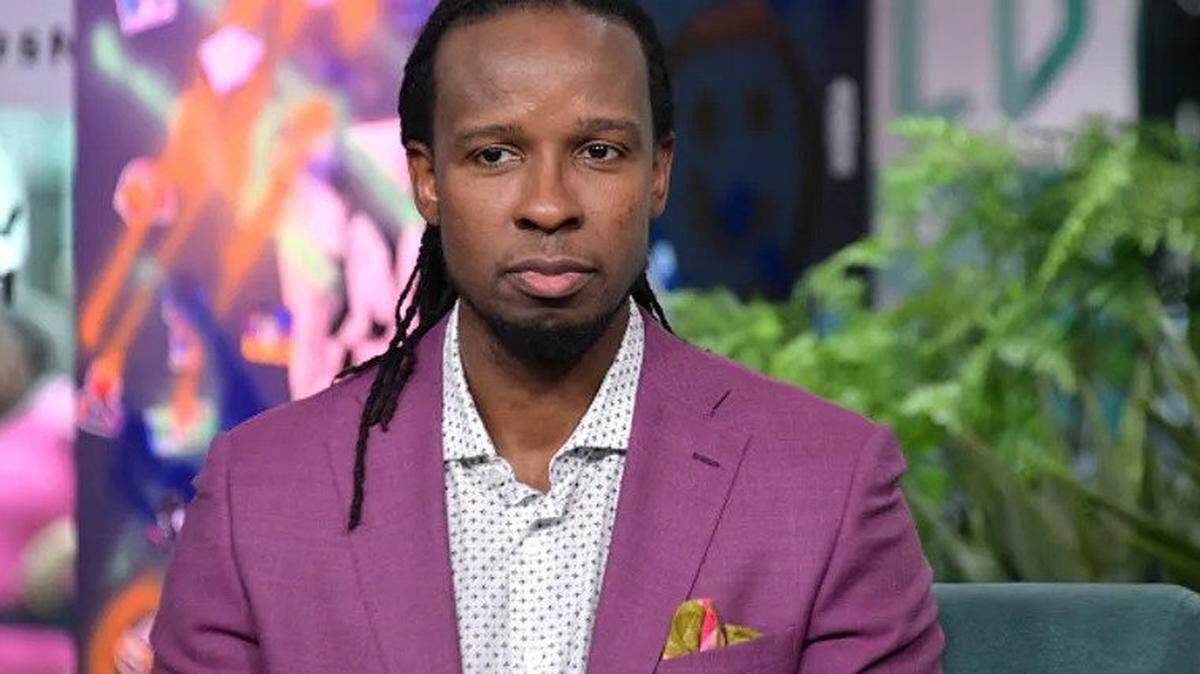
Scholarship in the areas of implicit bias and anti-racism is rich and growing thanks to the work of many, with Ibram X. Kendi at the forefront. Kendi, founding director of the Antiracist Research and Policy Center at American University, said in “The Undefeated” that, “Racist ideas become almost like a drug. Once you hear them and become hooked, you need more in order to sustain the way you see the world . . .” He says, “I was hooked for a long time [and now] I’m trying to relieve other people.” We cannot cling to outdated vocabulary while striving to take hold of new policies.
When institutions use terms such as “underserved” when they may actually mean Black, they not only are indirectly disparaging an entire group of people, they also are missing the opportunity to connect with and celebrate the vibrant array of cultures and peoples that can only be appreciated by being specific. As a Miamian, even the descriptor of “Black” can serve to represent a wealth of cultures and backgrounds: Haitian, Jamaican, Trinidadians and Tobagonians, Dominican, African American, and so many more.
That said, I propose that all well-meaning institutions and leadership investing in “underserved” and “underrepresented” communities take a moment and ask of themselves: “Whom do we serve by labeling an entire community as “under” anything?” Second, “What might be gained by being specific?”
Language used in institution-wide communications carries meaning and, when chosen poorly, a burdensome weight.
Whether your aim is to address the wealth gap in the Black community or increase institutional access to the Black community, my hope is that you will find the words “underserved” and “underrepresented” no longer serve your mission.
The generations we seek to empower deserve our specificity.
Carlton Ford is a national fundraiser and a graduate of Interlochen Arts Academy, The Juilliard School and Rice University.
This story was originally published June 22, 2020 at 5:28 PM.