
‘I was a black woman dressed for success, with a cop’s gun pointed at my head’ | Opinion
A few years ago, I attended a leadership orientation conference for the Miami-Dade Beacon Council at the Biltmore Hotel in Coral Gables. I was honored to have been nominated to become the chair-elect of the Urban Initiatives Committee. I agreed to serve because of the shared economic-development mission between the Beacon Council and OneUnited Bank, the largest black-owned bank in America and the successor to People’s National Bank on Northwest 79th Street in Miami.
After leaving the conference, excited about the possibilities, I returned several calls.
One was to Addonis Parker, the acclaimed artist who painted the “Thunder and Enlightening” mural on the facade of our Miami branch. He was painting a new mural in Overtown, so I agreed to stop by to see it.
When I arrived, I saw Addonis standing behind his truck with two police cars parked behind him. Perhaps naïvely, I felt safe as I pulled up. Addonis then got into my car.
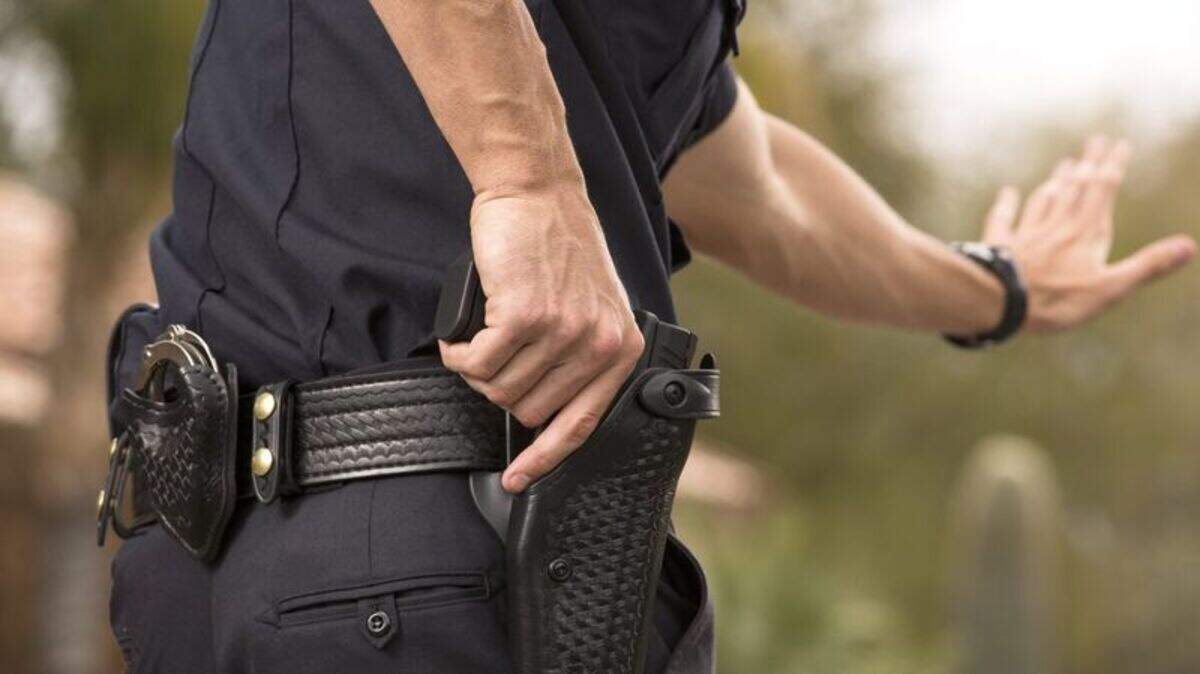
Moments later, I heard, “Get out of the car, with your hands up!” I looked out my window and saw a policeman with a gun pointed at my head. I was stunned, and terrified. The policeman shouted again, “Put your hands up and get out of the car!” I then said something like, “OMG, are you serious?” I tried to figure out how to put my hands up and get out of the car at the same time. If I lowered my hands to open the door, would the policeman think that I was reaching for a gun and shoot me? I slowly opened the door with one hand, while keeping one hand up. I stepped out and put both hands up. I was dressed for success, with a policeman’s gun pointed at my head.
One issue that media accounts of police confrontations miss is that it is difficult in a split second to adjust one’s mind to the fact that a police officer, who you assume is there to protect you, now perceives you to be dangerous and a threat. Also, your instinct is not to face anyone pointing a gun at your head. Your inclination is to run, hide or do something to protect yourself — fight or flight. It took my full mental and emotional will to override these basic human instincts. At that moment, I was not the president and chief operating officer of OneUnited Bank, mom, wife or community leader, I was just a black woman with a police officer’s gun pointed squarely at my head. Period!
After cautiously answering some basic questions and standing in fear for what felt like hours, the policeman lowered his gun and both Addonis and I were released. The policeman then said there were gun shots heard in the area and asked how long we had been here. Ironically, I had just driven past them to park, thinking they were offering us a level of protection that, evidently, we did not deserve. We explained that Addonis is an artist and I came to see the mural that he was painting.
Strangely, Addonis and I got back into the car and carried on as though nothing had happened. Our lives resumed; he went back to painting, and I drove home. But the experience will remain with me for life. Innocent black people are confronted by police everywhere, even in Miami where community relations with police have improved tremendously since the McDuffie riots, 40 years ago.
For example, Campaign Zero recently launched the #8CantWait campaign, recommending eight use-of-force policies that are proven to reduce killings by police and save lives. Miami has implemented seven of recommended policies, including banning chokeholds and requiring de-escalation, which may have saved my life. The eighth recommendation, which has not been implemented — requiring comprehensive reporting — may create the accountability needed to avoid incidences like mine from occurring altogether.
Many will say, since you cooperated, this incident proves people can avoid fatalities. But I say, why was I confronted with a gun to my head in the first place? This experience shows me how easily Addonis, a 6’8” black man, or I, could have made the “wrong” move that may have been interpreted by the officer as “probable cause” to shoot to kill. What if I had mental-health issues that made it impossible for me to override my human instincts when confronted with a gun? What if I was so terrified that I ran? And more important, if I were white, would I have been confronted at gunpoint while sitting casually in my car? Of course not.
The location — Historic Overtown — is also relevant. Once segregated and the preeminent center for commerce, arts and entertainment in Black Miami, Overtown is currently 75 percent Black, extremely low income and, based on its strategic location, being gentrified. This combination makes the sensitivity of policing more acute.
We, too, are citizens, taxpayers, employers, employees, voters and important contributors to our communities. We too, should be able to rely on the police to protect and serve us. We need to re-envision public safety, which will necessarily require structural and cultural change in how policing is conducted in the Black community.
Teri Williams is president and chief operating officer of OneUnited Bank.