
‘Racism a public-health crisis that Health Foundation will confront’ | Opinion
Along with the rest of the world, we at the Health Foundation of South Florida watched in horror and anguish the appalling images of George Floyd being killed while pinned under a Minneapolis police officer’s knee. It is senseless, heartbreaking, criminal — and maddeningly familiar.
His death, along with those of Ahmaud Arbery, Breonna Taylor and countless others, has rightly unleashed a wave of outrage and worry across our community and the country. We grieve for their family and friends, and we stand in solidarity with the black community in South Florida and all across America, joining them in challenging the systemic racism at the root of such incomprehensible violence.
The truth is, for far too long, we’ve seen evidence of the structural injustice and inequity that has brought us to this tragic and painful moment. Racial injustice and inequity reside at the heart of too much of our society, too many of our institutions, sometimes in plain sight but more often disguised and deeply ingrained in criminal justice and housing, education, economic development and environmental concerns.
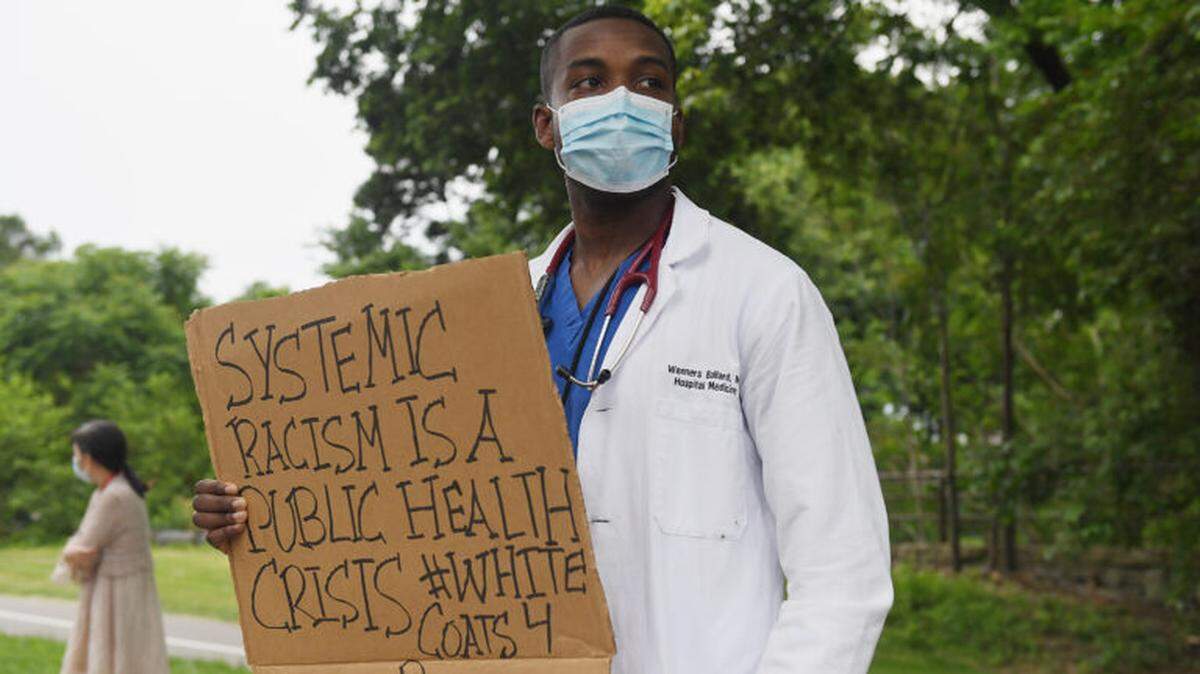
And, yes, in our health systems too: Racism is a public health crisis.
As a foundation devoted to ensuring everyone in Miami-Dade, Broward and Monroe counties has the opportunity to live a healthy life, our work specifically focuses on helping increase access to care in historically underserved low-income and minority communities. More and more, our efforts center on addressing the social and economic factors — such as access to affordable housing, food, education, a steady job — that have an outsized impact on anyone’s ability to be healthy.
Already we’ve seen the deadly result of racial disparities in the coronavirus pandemic, which has disproportionately affected the black community, not because of biological predispositions, but because social and economic realities simply place African Americans in greater danger.
Now more than ever, we realize that if we are to make any meaningful progress in addressing health inequity and disparity, we must begin by acknowledging, understanding and calling out the role racism plays in them. We cannot deny it, and we will not ignore it.
We know this won’t be easy. At times — and amid an avalanche of public statements from organizations, private, public or nonprofit — we have felt uncertain about exactly what to say. We have long been talking about and tackling the inequities and disparities of our regional health systems. Indeed, to do so is at the core of our mission. But today we are emerging more committed than ever to continue that work, to be bolder, more intentional, empathetic and conscious in all we do, support and fund.
We’ve just announced grants of $20,000 to the Urban League of Broward and $20,000 to the YWCA of Greater Miami-Dade, which have been at the forefront of the fight for racial justice, economic empowerment and health equity for many years. We’re encouraging others in our community to continue supporting them as well.
In addition, as we look internally, we have made some initial commitments with respect to how we operate and what we expect from our partners as well. For example, we will:
Set new diversity and equity indicators and accountability mechanisms to help us ensure we are being inclusive in our hiring processes, vendor procurement and throughout our operations and grantmaking. We will also challenge our grantees and partners to assess their own hiring and board appointment policies and ensure they are conducive to diversity and inclusion.
Provide our board and staff education that advances the understanding of racial equity and structural racism and the role they play in creating healthier, inclusive communities. And we will host similar sessions for our grantees and partners.
Engage more deeply with black-led community organizations that can participate in the planning and implementation of our programs and initiatives.
Give increased consideration to grantee applicants whose project development includes having meaningfully engaged with the community they seek to serve.
These are merely first steps, of course, and there is more to be done. As an organization, and as people who call South Florida home, there is much we will need to learn — and unlearn. We will surely make mistakes along the way, and we will grow from those, too.
Most of us will never fully understand what it’s like to experience the racism, injustice and inequity ailing our nation and our communities, but we are committed to taking on the struggle as our own. Because we’ve never been more convinced that, together, we can do better.
Steven E. Marcus is president and CEO of the Health Foundation of South Florida, whose mission it is to invest in and be a catalyst for collaborations, policy and systems change that improves the health of South Florida communities, with a focus on vulnerable, low to moderate-income populations.