
When Miami’s black teens and police understand each other, peace can follow | Opinion
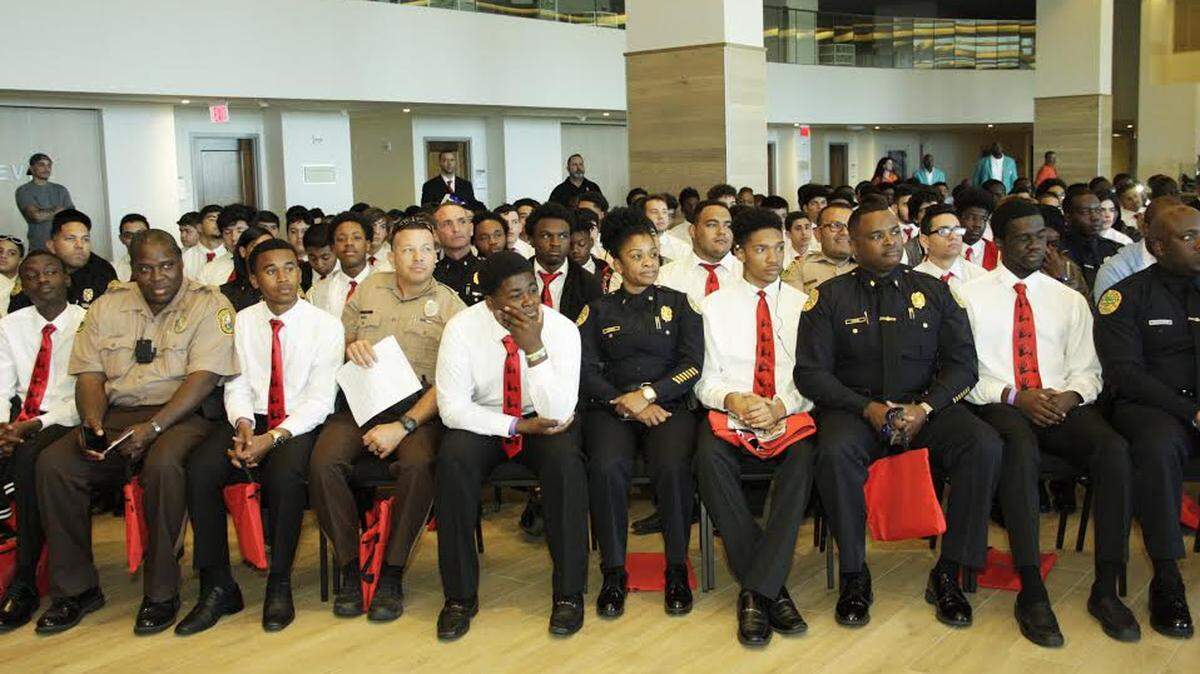
The combination of police and activists planning a rally in support of Black Lives Matter to protest the killing of George Floyd spurs only suspicion in many people.
However, I witnessed a much different story that must be told.
It came as no surprise that Coral Gables Chief of Police Ed Hudak would invite to his city police chiefs and representatives from all agencies in Miami-Dade County, with a peaceful protest the result. It’s not by accident that the officers were sensitive enough to kneel in prayer with the protesters in pictures that went viral. Many of the police were 5000 Role Models of Excellence mentors. In fact, Coral Gables is where I launched the first Police and Youth Conference more than two decades ago.
In 1995, police relations with black youth imploded, when the deadly police shooting of a black Coral Gables High student brandishing a toy weapon in nearby Miami ignited a powder keg of anger. Coral Gables police were called in when violence erupted at the school after an Martin Luther King Day celebration. Both students and police were injured, and there were several arrests. Tensions escalated for weeks with rocks and bottles thrown at officers on patrol.
At the time, I sat on the Miami-Dade School Board. Then-Gables Police Chief James Butler put in a call. He was angry and worried about retaliation by police. We enlisted the guidance of Miami’s police chief as we were resolved to provide an enduring solution. Generationally ingrained mutual hostility loomed as we planned the first Police and Youth Conference to be held at the iconic Biltmore Hotel.
Police chiefs from every municipality pledged to send three officers for two days of pre-conference training in the School Board auditorium. The sessions were tense. So were those with black teenagers from Ponce de Leon Middle and Gables High schools, in which Role Model mentors pre-trained them.
The conference was planned with morning and afternoon sessions. Lunch broke up the day. There were speeches, Q&As and role-playing. There were scenarios in which the boys played the police whom they feared; the police played the boys with whom they had negative encounters. There were few “Kumbaya moments” as vitriol spewed as if from a fountain. As we prepared for lunch, hostility got physical.
Role Model mentors and police formed a receiving line for the boys, leaving me alone in the ballroom. The boys has been instructed to leave a space to sit next to an officer, for bonding while breaking bread. One student balked. He began punching another teenager who moved to sit next to an officer screaming, “I can’t believe you are dissing me for the po-po.”
I worried that a fight would send those boys crashing through one of the Biltmore’s many windows. But there would not be a fight as the boy who was being punched did not retaliate. When calm was restored, I asked him why he didn’t fight back.
He responded, “I know what you are trying to do, and I didn’t want to mess it up.”
With that, I began to cry, as did the chiefs of police and the officers. Now we knew this could work. The Annual 5000 Role Models of Excellence Police and Youth Conference began that day. And even in the midst of the coronavirus pandemic ,we will have it in another form.
I am resolved to continue this program and, because of its success, it’s my firm belief that it should be replicated across this troubled nation. They create a better citizenry and better officers who often put on a badge with virtually no diversity experience.
Role Model Chief Hudak believes that the conferences unquestionably have made a difference. Last week, he called the chiefs together with a message: Let’s show the country that South Florida does it better. Law-enforcement Role Model Mentors included: Daniel Junior, director of Corrections; Alfredo Ramirez III, Miami-Dade police director; Jorge Colina, city of Miami police chief; Larry Juriga, North Miami police chief; and Charles R. Press, police chief of Key Biscayne.
They all are sensitized to the concerns and fears in black and brown communities. And they knelt in solidarity on the steps of City Hall.
When a black teenager brings me to tears saying, “I know what you are trying to do, and I didn’t want to mess it up,” we are convinced that it works.
U.S. Rep. Frederica Wilson represents Florida’s 24th District in Congress.
This story was originally published June 5, 2020 at 4:51 PM.