
Many factors helped Miami-Dade mitigate COVID-19, but we still must assess the data
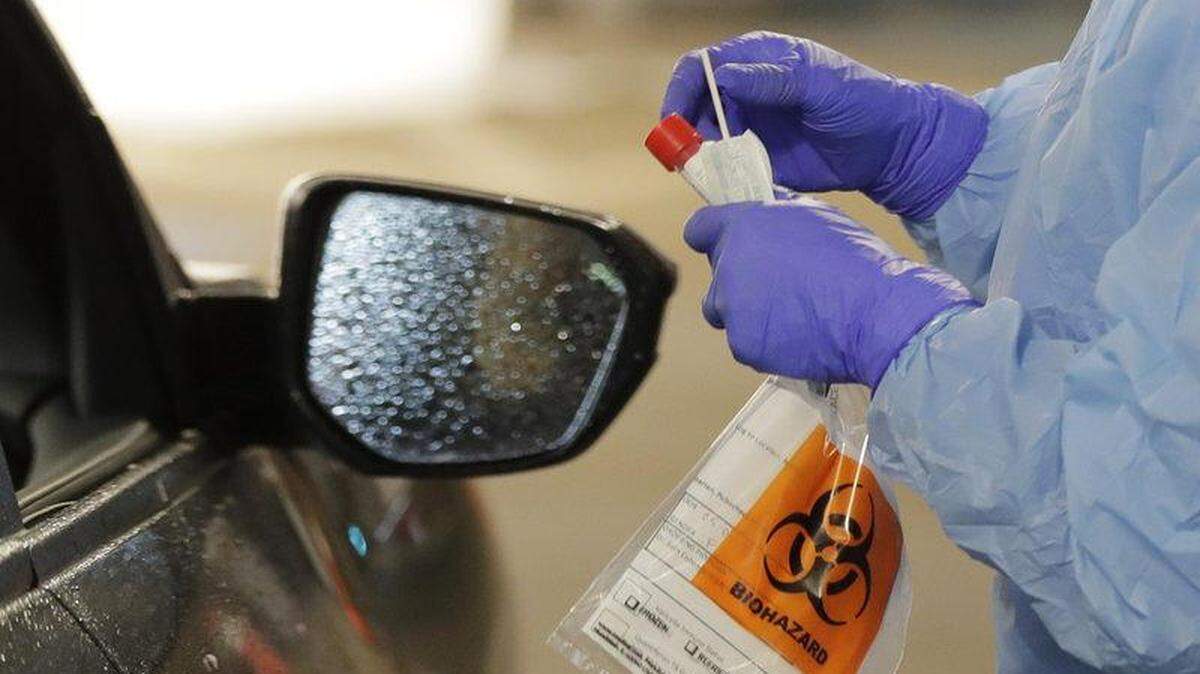
It is not an easy time for policymakers. We are torn between those who want to reopen the economy in one fell swoop and those who think the COVID-19 shutdowns will have to stay in place until a vaccine is found.
That is at the practical level.
At the theoretical level, we are torn between even more formidable extremes. One, emanating from healthcare professionals in Hong Kong, proposes that we must follow the “herd immunity model,” until about 60 percent of the population develops immunity to COVID-19.
Another theory, addressed in a recent New York Times article, suggests that we do exactly the opposite: trace and track — through rigorous, mandatory quarantines, isolation and investigatory follow-ups of all confirmed cases — every single carrier of the virus, as well as everyone that has come into contact with them.
Many of us in public office scratch our heads and try to become experts in terms like “R-naught” (the parameter that measures what Dr. Anthony Fauci called “disseminability”) and the logistics of “contact tracing.”
In the meantime, we try to make sense of the facts, including randomized testing in various places, as follows:
1. New York: In the nation’s most affected state, the nation’s leading hot spot, almost 20 percent of all people tested showed positive results; in New York City itself, the figure could be even higher.
2. San Miguel County, Colorado: In a sparsely populated county near a popular skiing venue, Telluride, the number of people who seem to have some level of contagion is much lower: Less than 1 percent tested positive.
3. Santa Clara County, California: The rate of contagion is between 2.5 percent and 4.2 percent. There are skeptics as to the accuracy of what the Miami Herald reported was a selection system that “recruited participants through Facebook ads, which scientists say could skew results by including people who think they got sick and want to confirm their suspicions.”
4. Miami-Dade County: Initially, the county recruiting method entailed robocalls by the mayor — something I criticized, before I adopted a more-neutral stance. But there still are issues of self-selection in this randomized study. No children under 18 were tested. And I am guessing that very few elderly, night-shift employees, robust young alpha males, and others who are skeptical of the entire idea agreed to drive to the testing site.
In the first phase of testing, the contagion rate came in at an estimated 6 percent. That means that about 180,000 people in the county could have some level of infection.
If so, our mortality rate so far is quite low, about 0.16 percent of deaths to total infected cases.
Therefore, it is thus entirely possible that the measures we have taken locally have had a positive effect. As a magnet for visitors from Europe and Asia, we could easily have become a southern version of New York if we had not imposed stringent social distancing, personal protection and stay-at-home orders. That would militate against anything even remotely like the “herd immunity” model.
It is also possible that a hotter climate worked in our favor. And the fact that the county is spread out over 2,400 square miles, whereas Manhattan has a mere 22, or less than 1 percent of our metropolis, is another likely advantage.
Though embarrassing, the low use of mass transit, compared to New York, also helped us.
Models of epidemic spread are based on three factors: infectious period, contact rate and mode of transmission. We can only control the contact rate and hope that we have guessed right on the infectious period and the mode of transmission. All indications are that we in Miami-Dade controlled well the contact rate by banning large events and other activities that inherently require physical contact or close proximity.
As we start reopening, we do well to follow the rules, while also being tolerant of people who disagree with the measures that our governments have enacted. At the end of the process, we are going to have a lot of real data from a lot of different models.
The discussion will be robust, and, I hope, not extreme.
Xavier Suarez represents District 7 on the Miami-Dade County Commission. He is a candidate for county mayor.