
U.S. fails to see that its independence relies on global interdependence | Opinion
The coronavirus pandemic is compelling empirical evidence of the tension between U.S. independence and global interdependence. Failure to consider global connectedness carries the risk of damaging U.S. security interests. Consider:
The United States has the world’s largest economy. Our defense budget is larger than the next seven spenders combined: China, France, Germany, India, Russia, Saudi Arabia and the United Kingdom. Our higher-education system attracts more foreign students than any other country, including students from our adversaries, Russia and China. Yet, we were, and remain, vulnerable to attack by an invisible virus that first appeared on the other side of the globe.
The United States nonetheless has adopted mostly a unilateral response to COVID-19, demonstrated by its withdrawal from the World Health Organization, followed by its refusal to participate in a meeting of world leaders to discuss, and pledge funds for, development of vaccines and treatments.
Environmental degradation and adverse climate change are the closest in nature to a pandemic threat. This is so because, even if the United States were doing everything environmentally correct to avoid climate change, we would remain vulnerable if other major countries failed to do the same. Pollution anywhere is pollution everywhere. The United States, however, officially disputes the relationship between pollution and climate change despite the unanimous conclusion to the contrary by the 13 U.S. government agencies that monitor the issue, as well as the near unanimity of the international scientific community. The country has withdrawn from the Paris Climate Treaty and, domestically, has reduced limits on planet-warming carbon-dioxide emissions from power plants and vehicles.
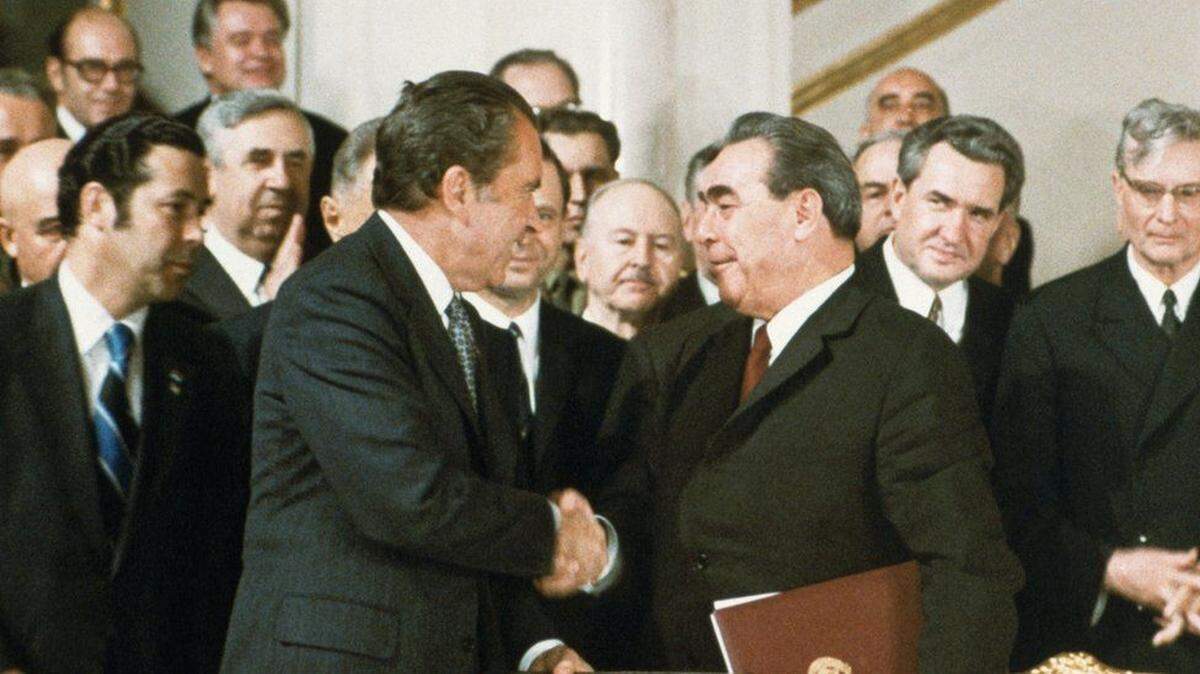
Nuclear war is a more-unique threat in that millions of people could be killed in minutes. Yet, for the first time since 1972 when the United States and the then-Soviet Union ratified the Strategic Arms Limitations Treaty (SALT I), there are no arms-control negotiations between the United States and what now is Russia — and China also seems to have no interest in the subject.
Moreover, the 2011 New Start Treaty, which limits the United States and Russia each to 1,550 strategic nuclear warheads on 700 strategic delivery systems, will expire on Feb. 5, 2021. While the treaty can be extended for a period of up to five years, neither country has indicated a willingness to do so. To the contrary, all three nuclear countries are upgrading their weapons-delivery systems, including the development of hypersonic-speed missiles that could be interpreted as first-strike weapons.
Yet, failure by the nuclear-weapon powers to curb their own spiraling weapons development undermines the commitment by non-nuclear weapon countries to forego acquisition of these weapons. Should these countries decide to acquire nuclear weapons, the risk to humankind is obvious.
Given that everything today is digitally controlled — the financial system, the electric grid, no less the military — cyber arms control is imperative. But for whatever reason, to date there has been no development of a U.S. cyber strategy similar to that which occurred during the early nuclear age — that is, discussions first within the United States between the government, think tanks and universities. These talks led to a body of knowledge on a variety of technical issues and then to a consensus on strategy — followed by discussions between the United States. and the Soviet Union. This process resulted in arms control agreements on nuclear as well as other weapons of mass destruction, chemical and biological, which, admittedly, are imperfect but bring a meaningful stability.
Terrorist attacks on the United States from abroad remain a serious threat despite the fact that none have occurred since 9/11. The most important ingredient in preventing such an attack, of course, is the ability of the U.S. intelligence community to detect threats, an ability significantly dependent on working effectively with foreign counterparts, particularly our allies. So it is disconcerting that the United States has had, in just three years, four national security advisers; four directors of National Intelligence; four secretaries of Defense; five secretaries of Homeland Security; and, three FBI directors. And nine of these served only in acting positions. Acting heads are like substitute teachers — they lack firm managerial control and provide less than optimum direction and guidance. In addition, the United States, in recent years, has substantially alienated its NATO and Asian allies, possibly having deleterious effects on intelligence sharing.
Nation-states need, as difficult as it might be at times, to calibrate the relationship between unilateral action and the realities of global interdependence.
To make America great again will require at least two fundamental ingredients: rebuilding strong domestic institutions that have the confidence of the majority of citizens; and rebuilding strong U.S. leadership with allies and partners in our interdependent world.
David Lenefsky lives in Longboat Key and practices law in Manhattan. He was project director for arms control at The United Nations Association-USA.