Even without a pandemic, we balance public-health concerns and the economy every day | Opinion
With the global number of confirmed COVID-19 cases surpassing 4.5 million, public-health experts advocate that strict social-distancing measures should be kept in place to slow the virus’ spread. Some economists have raised serious concerns about the economic burden of shelter-in-place restrictions.
On March 23, Larry Kudlow, head of the U.S. National Economic Council, said that the, “cure can’t be worse than the disease, and we’re going to have to make some difficult tradeoffs,” suggesting compromises between public health and the economy. Shortly after Kudlow’s statement, President Trump expressed agreement, tweeting that, “We cannot let the cure be worse than the problem.”
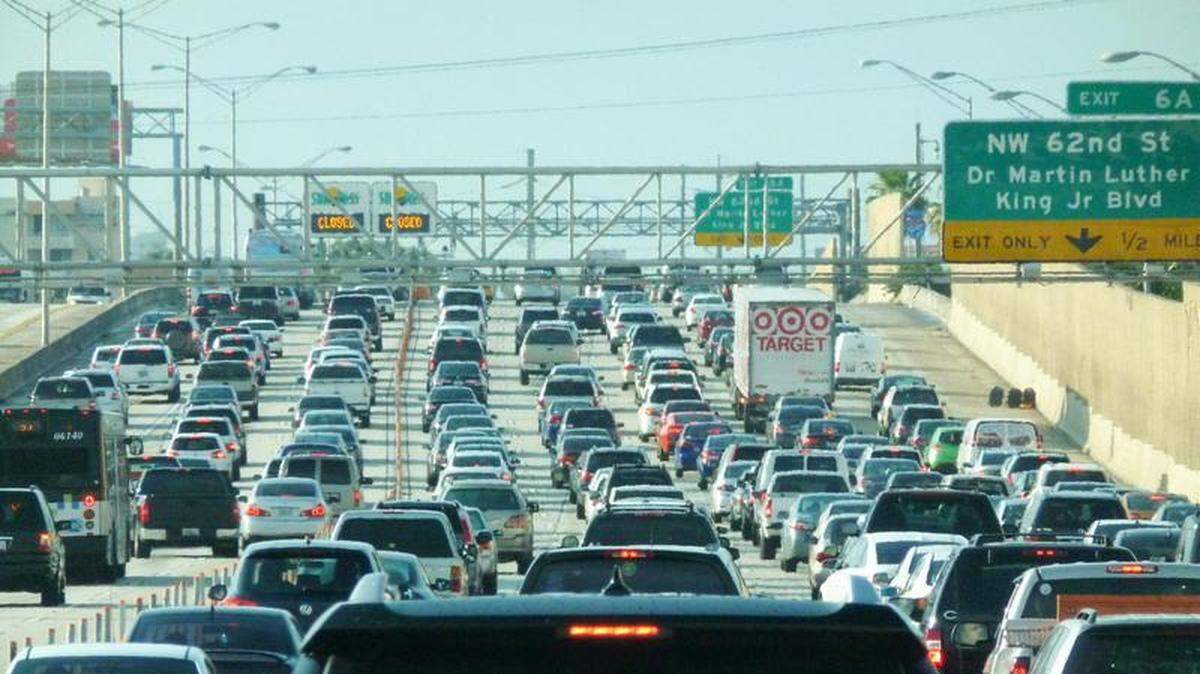
However, we face a balancing act between public health and the economy every single day — even in the absence of infectious disease outbreaks. Take the case of traffic fatalities, which rise during macroeconomic expansions and decline during contractions, particularly during deep recessions. Our own empirical work, along with others’, has shown that greater economic activity can have a detrimental impact on traffic safety because of external factors (e.g., increased traffic and congestion) as well as changes in risky behaviors, such as speeding, alcohol-impaired driving and distracted driving).
Florida Gov. DeSantis gave a go-ahead for Miami-Dade and Broward counties to reopen some businesses on May 18. The tradeoff is particularly poignant as both counties are among the hardest hit in the state by COVID-19. Traffic volumes and crashes most likely will increase in the weeks ahead. The Florida Department of Highway Safety and Motor Vehicles reported that Miami-Dade and Broward counties had 2,847 fewer car crashes in March 2020 compared to March 2019. While passenger-vehicle traffic in Miami has been cut by about 55 percent because of stay-at-home orders — making the city one of the top five major cities with the sharpest reduction in personal travel since late February — there has been an increase in the proportion of speeding citations.
Of course, a total shutdown of the U.S. economy is unlike any previous economic downturn, even the Great Depression. As of May 9, more than 36 million individuals had filed for unemployment. This officially is the worst jobless rate since the Great Depression of the 1930s and it occurred over just a seven-week period. These numbers are sure to rise during the coming weeks and months.
On the upside, this intentional economic shutdown surely will result in considerably safer roads given the substantial drop in traffic volumes. Already, estimates suggest that the shelter-in-place order in California has reduced traffic accidents by at least half. This unintended traffic safety benefit of social distancing in the case of California adds up to about 15,000 fewer car collisions and 6,000 fewer injury crashes per month when compared to the same period in 2019. Fewer people driving can also bring about environmental benefits because of reductions in pollution, not to mention that individuals can be more productive and enjoy better mental health because they are no longer stuck in traffic jams.
Our point is not to diminish the overall human losses, suffering and unprecedented hardship caused by the COVID-19 pandemic. Rather, our intent is to highlight the fact that we face similar difficult choices every day, particularly in the case of traffic safety. On an average day in the United States, more than 100 people die in traffic crashes and about 7,000 people are treated in emergency rooms for traffic-related injuries.
Sadly, these stark numbers also mean that we have become somewhat callous to traffic crashes even though, or precisely because, they are among the top causes of death in this country. Indeed, we have gotten mostly used to living with it as part of our daily lives. This, however, does not warrant a misguided comparison between shutting down highways to avoid traffic crashes versus shutting down the economy to combat the COVID-19 outbreak.
Many economists would consider the total value of saving lives to be well worth the economic costs brought about by shutdowns and social-distancing policies. Until the pandemic ends, however, it is uncertain how the total human and financial cost of COVID-19 will compare to its effects on traffic safety, environmental health, crime rates and other possible unintended benefits. What is undeniable is that public health and the economy have to work in tandem every day — with or without COVID-19.
Michael T. French, Ph.D., is professor of health economics at the University of Miami’s Herbert Business School. Gulcin Gumus, Ph.D., is associate professor in Florida Atlantic University’s Department of Management Programs.