
Biased language paints an unfair, incomplete picture of “old people” today | Opinion
If the coronavirus pandemic has taught us anything, it is that our lives, and our health, are deeply intertwined. My well-being is connected to yours — and to all the people we each know, love and engage with. If we exclude anyone from public-health measures, we risk everyone.
That’s why it’s so troubling that we are being exposed to behavior and rhetoric that excludes older people from our response to the pandemic.
We have been immersed in a steady stream of media stories that paint older people as always, and only, frail and vulnerable. The stories we hear about younger people who have lost jobs or have fallen ill are filled with vivid details that “put a face on the issue.”
In contrast, the stories we hear about older people are filled with numbers and faceless images: probabilities of death; exterior shots of skilled-nursing facilities; body bags being removed from nursing homes.
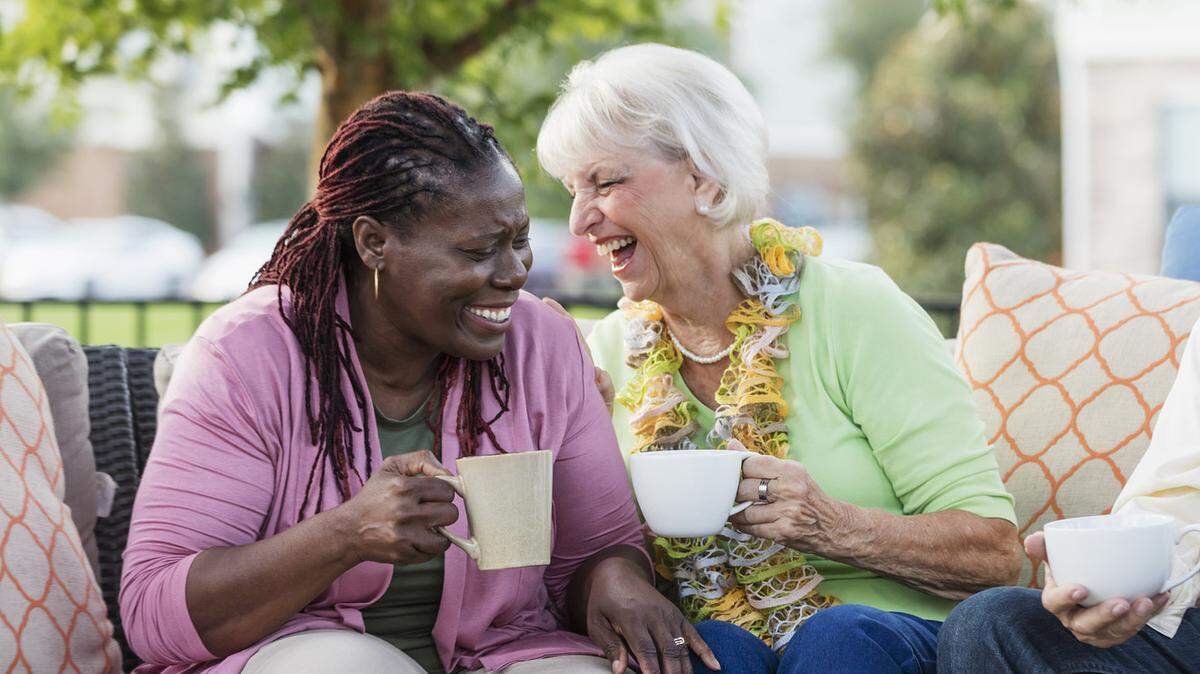
But these stories don’t reflect the full range of experiences of people who are living through this pandemic while aged 60, 70 or 80. They certainly don’t represent my recently retired friend who getting in 10,000 steps a day by picking up groceries for neighbors who need to stay fully isolated.
Or the local activist, 72, whose get-out-the-vote efforts focus on distributing applications for absentee ballots. They don’t depict the 66-year-old psychotherapist who has rapidly shifted her business model to offer virtual therapy. They leave out the 85-year-olds who are hosting daily read-alouds for their youngest family members.
Narrow representations of older people don’t just misinform us. They bias us. By dehumanizing older people, they make it easier for society to exclude them from our communities, policies and systems of support. They make it easy to focus on the supposed burdens “they” pose on “us.”
The stories we tell are dress rehearsals for the policies society will endorse. Ageist thinking drives formulas that guide hospital staff to devote scarce resources (like ventilators) to younger patients with the greatest chance of recovery, not older patients with the greatest risk. We see ageism in the absence of a coordinated national response to the outbreaks in facilities that primarily serve people in later life.
These particular expressions of ageism are new, but ageism is not. Since 2014, in coalition with a group of advocacy organizations and foundations, my colleagues and I have been studying how people think about aging. We have found — like many other researchers — that Americans hold deeply negative views about aging and older people. We also spotted linguistic patterns that reflect age bias, as well as evidence that by changing the way we talk about aging and ageism, we can significantly shift those views.
At every turn, we ran into wording that implies that aging happens to someone else — a phenomenon that social scientists call “othering.” Our common labels — seniors, senior citizens — set older people off as a distinct social group. Some of our labels are often prefaced with “the” — like “the elderly” or “the aging population.” This subtly positions the group as an object — and one with sharp boundaries. Along the same lines, we found that pronouns may be tiny, but they are mighty. In interviews, people in their 50s and 60s imagined how awful it must be for “them” — the people who were really old. Even well-intentioned advocates framed their cause as being about what “they” need.
Not all of us can set healthcare policy. But we can each decide to read different lines in our collective dress rehearsal. We can look for the ways that stereotypes show up in how we express our opinions, and call on our leaders to talk and act in more inclusive, more equitable ways. We can start talking about aging in the first person, getting into the habit of using a broad, generous “we.”
Language always shapes reality — but in a society upended by the pandemic, reality is in flux. The language we use in this moment has even more power than usual. As we are making intentional choices about our future, we can consciously choose more inclusive language. We can choose to expand our repertoire of stories to share the contributions of older people, not just “their” troubles.
And if we do, we can create a reality in which all of us, as we age, have the best chance to be well, stay well and do good.
Julie Sweetland is senior adviser for the FrameWorks Institute, which is based in Washington, D.C.
This story was originally published May 11, 2020 at 3:41 PM.