Next COVID-19 relief bill should send funds directly to cities like Miami, Hialeah | Opinion
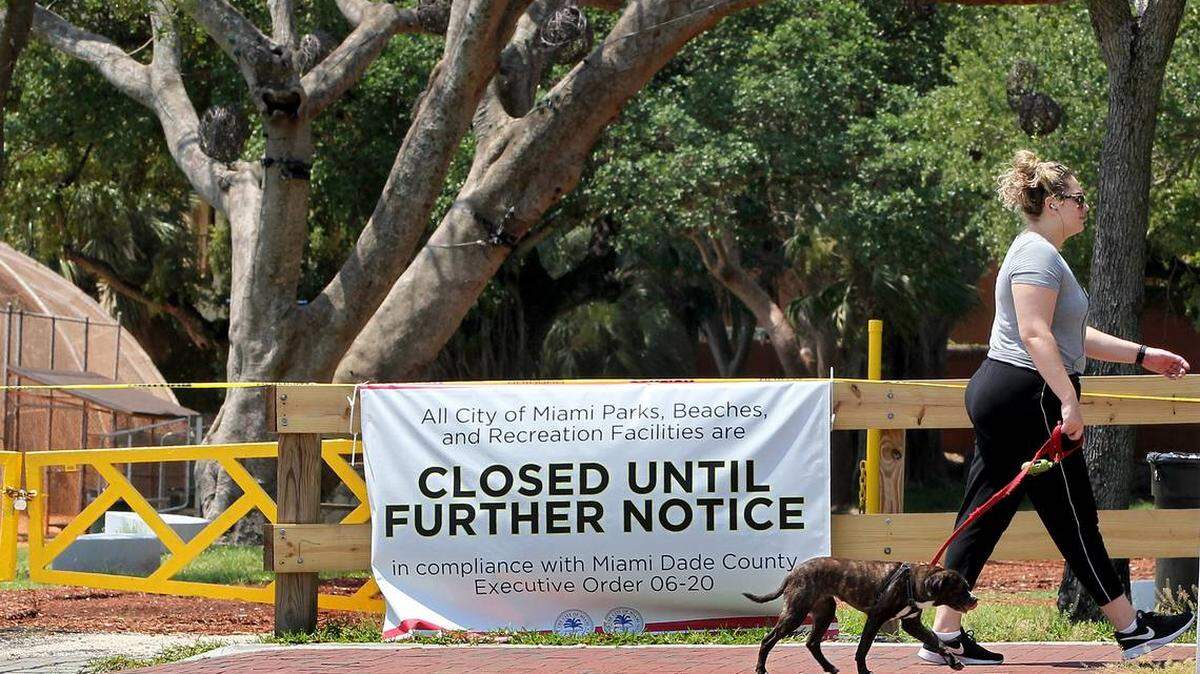
COVID-19 has posed an unprecedented challenge to communities across America. In South Florida, our cities are facing the brunt of this tragedy, with more than half of confirmed cases in Florida in the tri-county area. That is why, as mayors, we took urgent and decisive action, with county, state, and federal authorities to shut down mass gatherings early on, close nonessential businesses, order residents to stay home and take additional safety measures to protect residents’ welfare and health.
We are paying a profound price for this disease. From our residents who have died or fallen ill, to the families and small-business owners who have lost jobs and struggle to make ends meet, the pain runs deep. While the federal stimulus bill, the CARES Act, passed by Congress and signed into law by President Trump, was a welcome and needed infusion of money into the pockets of local families and state coffers, more will be needed to ensure that local communities like ours can weather this storm.
To help cities handle this crisis, we are asking federal leaders to consider $500 billion in additional relief directly to states and municipalities like ours in the next stimulus bill. Without it, we undoubtedly will face serious revenue shortfalls and be forced to make severe cuts to local budgets, which will harm residents’ quality of life.
The past bill did not go far enough in providing for local communities. With a provision to only provide funds to cities with populations over 500,000, Jacksonville was the only city in Florida that qualified for aid in the last bill. Yet, cities in South Florida are some of the most affected communities in the state for COVID-19. Hialeah is the sixth most populous city in Florida, with the second-highest count of confirmed coronavirus cases, and Miami falls just under the 500,000 population limit to qualify for federal aid, despite having the highest concentration of coronavirus in the state.
While our cities have budgetary reserves, they are by no means limitless. In Miami alone, we are anticipating a loss of $20 million in revenue a month. In Hialeah, we expect a fiscal impact of $5 million a month in lost revenue. However, despite these multimillion-dollar hits from the cost of personal protective equipment, coronavirus testing and other related expenses, neither of our cities is eligible for aid. Meanwhile, the state of Florida will receive more than $8.3 billion from the CARES Act — none of which appears to be going toward our cities.
While it is true that Miami-Dade County will receive some federal funds, it is unclear how much of those funds will be free to local cities. According to recent reports, COVID-19 is projected to take $300 million out of the county’s budget over the next year.
These problems are not exclusive to Miami or Hialeah. Other local governments face steep deficits in the next year because of rising unemployment, falling tax revenue and the overwhelming cost of contending with COVID-19. Across the country, more than 2,100 cities are looking at budget shortfalls for this fiscal year, according to a recent survey by the National League of Cities and the U.S. Conference of Mayors — almost 90 percent of those surveyed.
That is why we are urging federal leaders to prioritize local communities as Congress comes back to work on the next COVID-19-related stimulus bill. It is our hope that the package is not only fair to those communities, but also introduces a more reasonable cutoff, so that cities like ours, filled with working-class families facing the worst impacts from this virus, are able to cope with and recover from this crisis without compromising the essential services we provide.
To fight the effects of COVID-19, continuity and equity across all levels of government are key. At the local level, we will continue to use every resource at our disposal to combat this virus. With the federal government’s help, we can embolden these efforts so that, together, we can come out of this stronger on the other side.
Francis X. Suarez is the mayor of Miami. Carlos Hernandez is the mayor of Hialeah.