
We’re not doing enough to address the coronavirus pandemic in prisons | Opinion
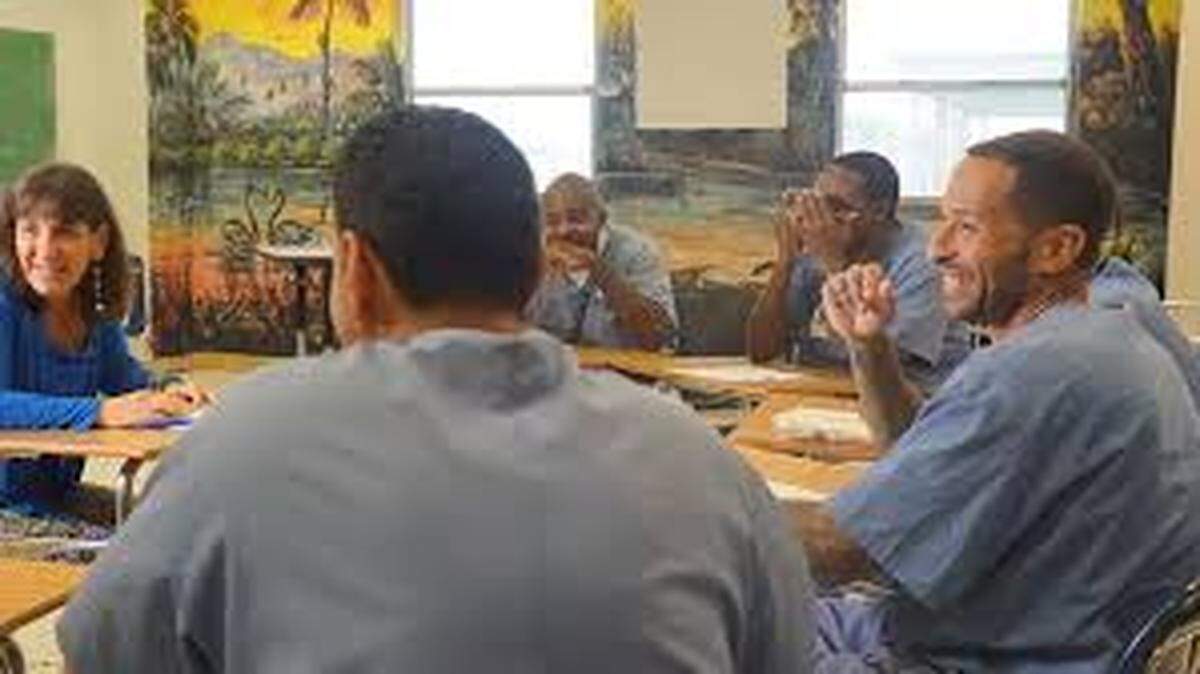
Two months ago, I was in the classroom at least three days a week teaching writing courses and meeting with my student facilitators. Or supervising other instructors’ classes. Or troubleshooting with the administration.
Then the coronavirus pandemic hit and forced educators around the world to move to distant teaching. Instructors had to learn how to navigate new technology for their online classes.
I did not have that option. I teach in prisons, where the internet is as invisible as COVID-19. I have had no contact with my students since March 11. Not a fleeting glimpse of them on Zoom or a video chat. Instead of worrying about whether or not they are learning, I worry whether they are going to live.
Prisons are a petri dish for COVID-19. A bar of soap and a mask for an incarcerated person can mean the difference between life and death. For anyone living with a “bunkie” inside a 6-by-9-foot cell, social distancing is an abstract concept.
With 94,000 inmates, Florida houses the third-largest prison system in the country. The Florida Department of Corrections (FDC) mandates that all prisons offer General Education Development (GED) courses, but budget cuts over the years have erased nearly all other educational opportunities. Florida Republican Sen. Jeff Brandes said on Facebook Live recently that it’s not uncommon for a Florida correctional institution of 1,500 inmates to have only one teacher, or no teacher at all.
This is why programs such as the nonprofit Exchange for Change that I run are so important. Since 2014 we have graduated more than 1,500 students from semester-long writing courses. This semester alone we had more than 300 students voluntarily enrolled in 33 classes.
But classes stopped as suddenly as the virus appeared.
Studies show that students in prison enrolled in educational programs are at least 43 percent more likely to stay out of prison when released and are at least 17 percent more likely to find employment when they return to their communities. Every dollar invested in prison education saves $4 or $5 on reincarceration.
Data is good, but I have more anecdotes that demonstrate these benefits than a statistician has formulas. I’ve seen rival gang members come together over literature; younger, rebellious students seek advice from elderly students they had dismissed; transgender students included in conversations from which they’d been excluded. I have seen kindness, encouragement and engagement among our students that university professors bemoan are lacking in students in their classes in the free world.
Exchange for Change is a member of the Florida Coalition for Higher Education in Prison (FCHEP), which represents a diverse group of college-in-prison programs. For the past seven weeks, we have shared concern for our students’ safety, even as we think about how to continue our programs.
Nationally, a staggering 59.5 percent of the incarcerated population that has been tested has come back positive; the national average for those in the free world currently is below 20 percent According to last week’s data from the Marshall Project, a nonprofit news organization covering the U.S. justice system, only 1.32 percent of the prison population has been tested. FDC is reporting only 373 confirmed cases for the incarcerated, 167 for staff, and five deaths.
“If you don’t test, you can’t report cases,” said a correctional officer at a federal prison in Miami. (Nationally, more than 70 percent of federal prisoners have tested positive.) “The lack of transparency is beyond negligent, even criminal considering it could cost lives.”
The Southern Collective of Higher Education in Prison programs, of which Exchange for Change is a member, believes some common-sense steps could improve things:
- Decarcerate. Use common sense: Identify and release people with serious health conditions; people over 60; and those who are close to their release date or being held in pre-trial detention.
- Revisit sentencing laws. Florida has some of the harshest in the country. The parole board granted only 14 of 1,499 parole cases in 2018.
- Allow educational programs to continue through correspondence now and return inside when visitation returns.
- Include community leaders and the incarcerated when planning and strategizing.
- Stop private companies from profiting the same way we stop price gouging, by eliminating or reducing fees for phone calls and healthcare costs.
- Provide all the necessary hygienic supplies. A recent GoFundMe drive launched by FCHEP yielded a 5-inch bar of soap for each of 10,000 inmates in eight Florida prisons, including three in Miami-Dade. This life-saving measure supplements the 2-inch hotel-size bar FDC issues weekly. Said one recipient: “When residents get something new, even as simple as a bar of soap, it’s like a child unwrapping that first present at Christmas.”
A 5” bar of soap is not a solution to an immeasurable problem. We can, and should, do better than that.
Kathie Klarreich is the founder and executive director of Exchange for Change, a South Florida-based nonprofit that offers writing courses in local correctional facilities and runs writing exchanges between incarcerated students and those studying in local academic institutions.
This story was originally published May 5, 2020 at 5:02 PM.