
A well-managed, competent federal government another victim of the coronavirus | Opinion
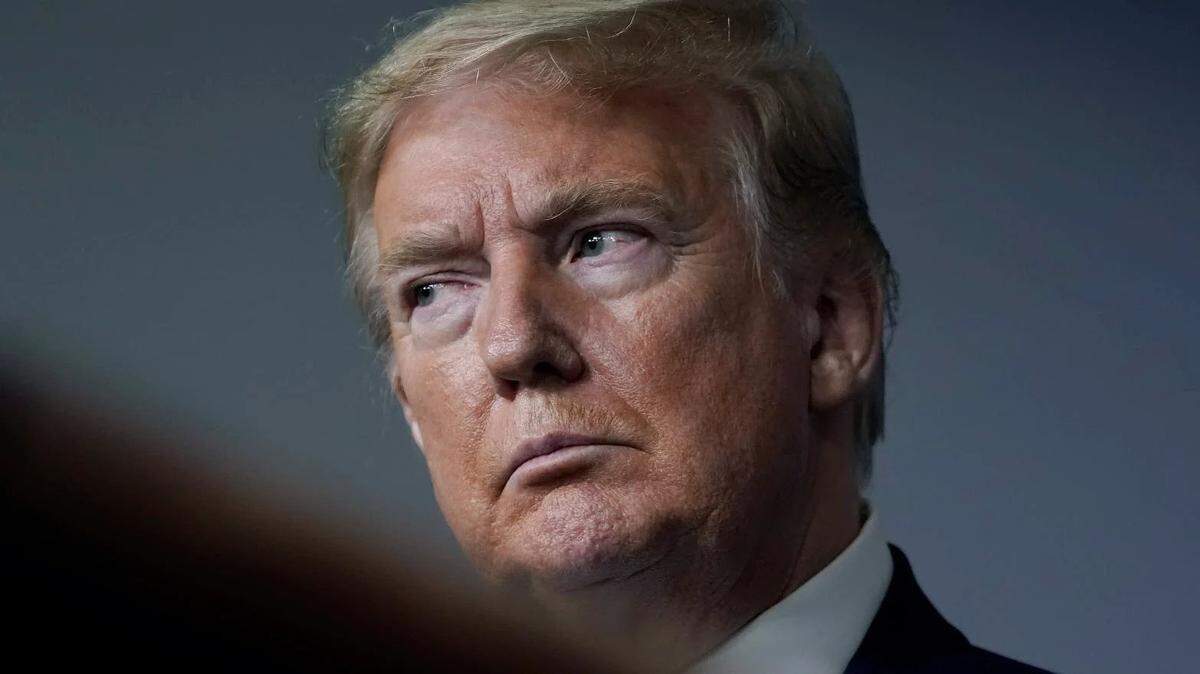
The sidelining of Dr. Rick Bright as director of the Biomedical Advanced Research and Development Authority (BARDA) is of more than passing interest for at least two important reasons. First, it calls attention in a dramatic way to the degree to which President Trump has politicized federal government bureaucracy at the cost of professional competence and managerial effectiveness. Second, it reminds us how dependent we are upon our federal government to find solutions to society’s most critical problems and the price we pay as the bureaucracy is made more dysfunctional.
The Trump administration’s efforts, too often successful, to prioritize abject political loyalty above professional and managerial competence is not a new story. It did not begin with the recent firings of federal inspectors general, who evidently lost their jobs as a consequence of performing their duties on the basis of statutory requirements rather than political requirements. Nor did it begin with Trump’s continuing efforts to abolish the Office of Personnel Management,
the principal federal agency responsible for ensuring that government jobs are filled on the basis of merit and competence — an effort opposed by both Republicans and Democrats in Congress.
No president since the Great Depression — none ever, most likely — has presided over such a frenetic rotation of people in and out of critically important government positions. Unfortunately, the more things change at that level of government leadership, the more they do not stay the same. Rather, they go downhill. The evolution during the past three years of directors of National Intelligence, one of the most critical of government leadership positions, from the well-regarded Dan Coats, to Joseph Maguire, to a totally unqualified Richard Grenell speaks volumes about the degree to which this White House has has prioritized absolute political loyalty over professional competence.
This might not be so detrimental if, as Trump and so many of his supporters seem to believe, the best government is the government that most effectively gets out of the way of its private entrepreneurs. The reality of American history is very different. In fact, no country has ever so glorified its private entrepreneurs as the source of its greatness, while depending so heavily upon the public sector to make private-sector achievements possible.
Virtually every major innovation critical to modern American society — from the computer and the internet, to old and new sources of energy — began with, or have been facilitated in their development by, research supported or conducted by the federal government. In many cases, the private sector’s dependence upon the actions of the federal government has gone well beyond just research and development. Absent government initiatives to support industries ranging from the airlines to semiconductors, most successful and wealthy Americans would be neither so successful, nor so wealthy.
Nowhere has this been more true than in the area of medical research and development. Even though in recent years the Trump administration has not been especially generous, and private sector R&D spending has grown, it is still the federal government that provides the bulk of support for the basic research that leads to the development of new drugs, medical technologies and vaccines. This has certainly been the case regarding the research designed to address such recent medical crises as HIV, SARS, Zika and now COVID-19.
Because of the importance of this research, the sudden and unexplained removal of the head of the agency at the center of the development of vaccines designed to tame major pandemics, under any circumstances, be a matter of considerable concern. That it happens in the midst of an actual pandemic and at a time that the agency’s budget has been dramatically increased irrefutably is a matter of great concern. Consistent and effective leadership in an agency such as BARDA is absolutely critical at this time.
The Trump administration has suggested that Bright’s removal is solely the result of poor performance on his part. If that is true, the fact that the administration is just now recognizing it suggests, at best, an incredible level of management incompetence. If, as Bright has said, it is because he pushed for a stringent vetting of hydroxychloroquine, embraced by Trump as a coronavirus treatment, plus his unwillingness to sacrifice professional integrity and competence to political loyalty and the corrupt intent of the administration, then what else is new?
Whatever the case, this is not the kind of federal government leadership and management that we need at this critical moment.
Allan Rosenbaum is professor of public administration and director of the Institute for Public Management and Center for Democracy and Good Governance, at the Steven J. Green School of International & Public Affairs, Florida International University. He is president-elect of the the 9,000-member American Society for Public Administration, the nation’s largest professional association supporting improved government administration.