
Trees are good for our health. Miami needs a lot more of them | Opinion
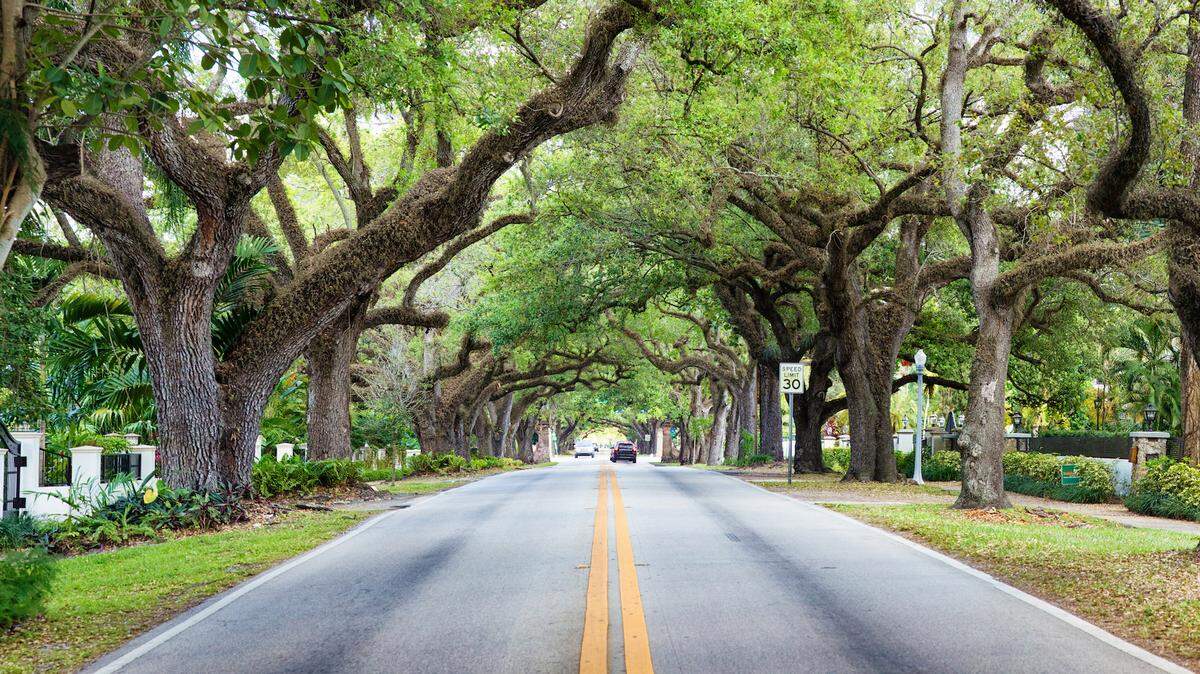
One afternoon, a middle-aged woman visited our clinic, hoping to improve her blood sugar. The woman — I’ll call her Flor — wasn’t yet diabetic, but her sugars were higher than normal, and the scale showed she was overweight.
The resident doctor and I talked to Flor about healthy food, and suggested she become more physically active. She couldn’t afford to join a gym, and she lived in a crowded apartment with her family. Flor told us she’d like to go for walks, but found it difficult to be out in the searing Miami sun for very long. Her neighborhood had sidewalks, but offered little shade.
Her dilemma isn’t unusual, and it’s become more acute during the COVID-19 pandemic, when walking offers one of the few ways to escape from being cooped up in cramped quarters. Miami’s temperatures are among the hottest in the nation, yet less than a fifth of our county’s land is shaded by trees. In Miami-Dade County’s central core, many streetscapes are sheathed in concrete, with only a few anemic tree sporadically scattered in the swale between the sidewalk and the road. Often, those trees are palms — suitable for evoking a subtropical vibe, but not so great at providing shelter from the sun.
To improve the health of its residents, Greater Miami needs to plant more trees — and take better care of those we already have. Several scientific studies have looked at the connection between the leafiness of neighborhoods in Miami-Dade County and the health of its older residents. One study found that low- and middle-income Miami-Dade residents who lived in neighborhoods with fewer trees were more likely to suffer from diabetes, high-blood pressure and high cholesterol than people with similar incomes who lived in neighborhoods with more vegetation. Other studies have found that people who live in greener neighborhoods are less likely to be overweight and less likely to suffer from depression than people in neighborhoods with fewer trees. Miamians who live in neighborhoods with a dearth of tree cover also are more likely to be hospitalized for asthma.
All of these conditions — diabetes, high blood pressure, obesity — shorten a person’s life during normal times. During the COVID-19 pandemic, they increase a person’s risk of requiring hospitalization in the intensive care unit and of dying of the infection.
And just as income may play a role in who develops serious COVID-19 complications, shade isn’t equitably distributed in Miami-Dade County, either. A 2016 assessment found that Miami-Dade’s lower-income neighborhoods overall tend to have less tree canopy than wealthier neighborhoods. During the COVID-19 shutdown, verdant neighborhoods such as Key Biscayne and parts of Coral Gables have had scores of residents strolling on their sidewalks before sundown, while lower-income neighborhoods near the UM/Jackson medical campus, where I work, are largely devoid of pedestrians.
Unfortunately, during the past two decades, a wave of development has led to the removal of thousands of trees. To compensate for removed trees, builders usually have to plant new ones, though they sometimes work out a deal in which they contribute to a tree trust fund. But it can take decades for young trees to grow to the equivalent of those they have replaced. And on many urban blocks, there are far too few trees to begin with.
To be sure, trees aren’t a panacea for health disparities. More trees won’t fix the unequal access to healthcare, biases and many other inequities that result in people with lower incomes dying at younger ages than wealthier folks. And there’s no guarantee that planting sidewalk trees will induce more people to walk outdoors, particularly in neighborhoods where residents work long hours and worry about their personal safety. But trees do cool neighborhoods, an issue of increasing importance as each year breaks new heat records. A 2015 study of “heat island” effects in large U.S. cities found that Miami was the second worst in the nation in the difference between its urban core temperatures and those in surrounding rural areas.
April 24 is Arbor Day, a day when people traditionally plant trees. If we want a healthier community — one in which we all thrive when we finally get to the other side of this crisis — we need to advocate for more trees every day. A greener Miami will make it easier for all of us to get outside, improve our health and enjoy a better quality of life.
Erin N. Marcus M.D. is an associate professor of clinical medicine at the University of Miami and a Public Voices fellow.