
Refugees of Mariel overcame bias and made Miami a richer place | Opinion
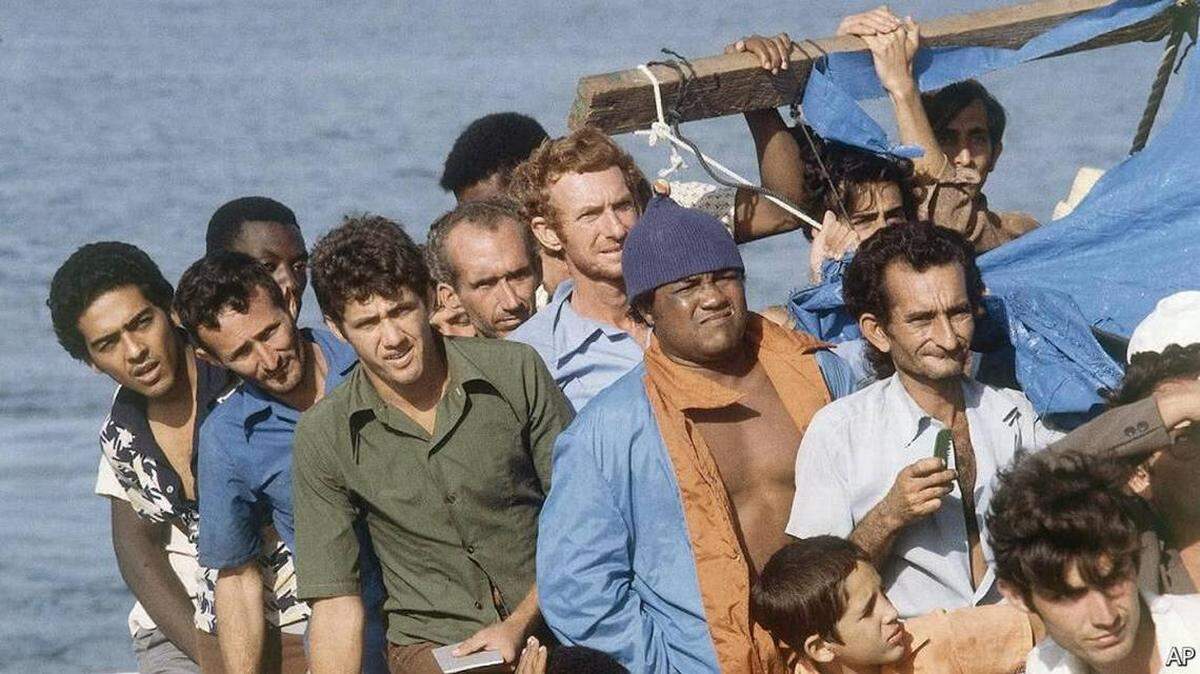
They were called escoria — scum — lumpen proletariat, antisociales. They were spat upon, beaten and humiliated before they left Cuba in 1980. The sin of the Mariel generation was that it yearned to live in freedom. The Mariel Boatlift originated 40 years ago when a bus of Cuban asylum seekers crashed into the grounds of the Peruvian Embassy in Havana, followed by 10,000 more citizens when the Castro government withdrew the guards.
As Metro-Dade director of Latin Affairs, I met with Assistant County Managers Tony Ojeda and Sergio Pereira and proposed creating Reenlace — Relink — as a coalition of Cuban nonprofit groups to help staff process those 10,000 Cubans. Little did we know that, on April 20, Fidel Castro would transform his public-relations crisis into chaos for the United States, announcing that Cubans could leave the island through the Port of Mariel. Between April 21 and October 31, more than 125,000 of them arrived in Miami
Leaders, including County Manager Merrett Stierheim, Assistant County Manager Pereira and Miami Mayor Maurice Ferré faced the crisis effectively. Stierheim organized an orderly processing of refugees at Tamiami Park. I activated Reenlace, and volunteers from Cuban organizations flocked to the park. They donated cash, clothes and time. We worked 20 hours a day and hardly slept. Volunteers such as Siro del Castillo seemed to live at Tamiami Park.
As then Assistant City of Miami Manager César Odio told NPR: “I feel so proud about my city. . . . We took care of the problem. We did not have people living on the streets like had been pictured. . . . The people that arrived from Mariel . . . had families here . . . had houses waiting for them . . . jobs waiting.
“And they were absorbed into the community almost immediately.”
Miami non-Cubans and some Cuban exiles viewed the Mariel arrivals with suspicion. Although the majority were decent people, an estimated 2,746 hardened criminals, as well as mentally ill people, had been added, by force, onto the boats of Cuban Americans who went to pick up their relatives. This small percentage of the group and their crimes stigmatized all Cuban exiles, an image reinforced by the movie “Scarface.”
Mariel exiles became entrepreneurs, business leaders, artists, journalists and scholars. Our cultural scene flourished. Carlos Alfonzo became world-renowned, with exhibitions at the Hirshhorn Museum in Washington, D.C.,and the Miami Art Museum. Other artists included Laura Luna, Juan Boza, Eduardo Michaelsen, Andrés Valerio, Víctor Gómez, Luis Vega and Miguel Ordoqui. Writers such as award-winning Reinaldo Arenas, Carlos Victoria, brothers José, Juan and Nicolás Abreu Felippe, Roberto Valero, Luis de la Paz, Jesús Barquet and Mirta Ojito, who has won the Pulitzer Prize, enriched our literature.
Our city benefited from the contributions of journalists such as Andres Reynaldo, jazz drummer Ignacio Berroa, opera singer Elizabeth Caballero and ballet producer Pedro Pablo Peña. In 1983 Mariel magazine became a symbol of this cultural rebirth. As poet Reinaldo García-Ramos, told Fabiola Santiago, “We arrived with a desperate need to express ourselves. . . . Freedom allowed us to become and Mariel was the laborious birth.”
The 1980s riots, the Mariel influx, and drug crimes damaged the city’s image. On Nov. 23, 1981, a Time magazine cover story posed the question: “Paradise Lost?” When Ferré named me Miami’s director of information, he assigned me “Mission Impossible” — promote the city as an international business center. I confronted the image crisis by creating “Miami — A New World Center” tours for newspaper editors. We invited them to a no-nonsense tour of the city, including meetings with business and cultural leaders in Liberty City and Little Havana. During 10 years, 1,500 journalists came, at no cost to the city, and wrote hundreds of positive articles.
Cuban-exile leaders combated the negative image of Cuban Americans as well as the attacks by supporters of an anti-bilingual ordinance. In 1982, developer Armando Codina, banker Luis Botifoll, advertising guru Tere Zubizarreta and Miami Herald executive Sam Verdeja founded Facts About Cuban Exiles, FACE, to fight against prejudice and communicate accurate information about Cuban Americans.
In spite of the various crises Miamians faced in the early 1980s, we triumphed thanks to the leaders and volunteers who united to meet challenges head on. Some still use the term “Marielito” to insult Cubans who arrived in 1980. Nothing could be more unfair. Time has demonstrated that Mariel exiles successfully transitioned to living in a free society and significantly contributed to our city.
After 40 years, no one can doubt that they deserve to be appreciated, and honored.
Aida Levitan, Ph.D. is president of ArtesMiami, Inc. and immediate past chair of FACE. Twitter: @aidalevitan.