
With planning, Miami-Dade can address deep-seated economic challenges post-COVID-19 | Opinion
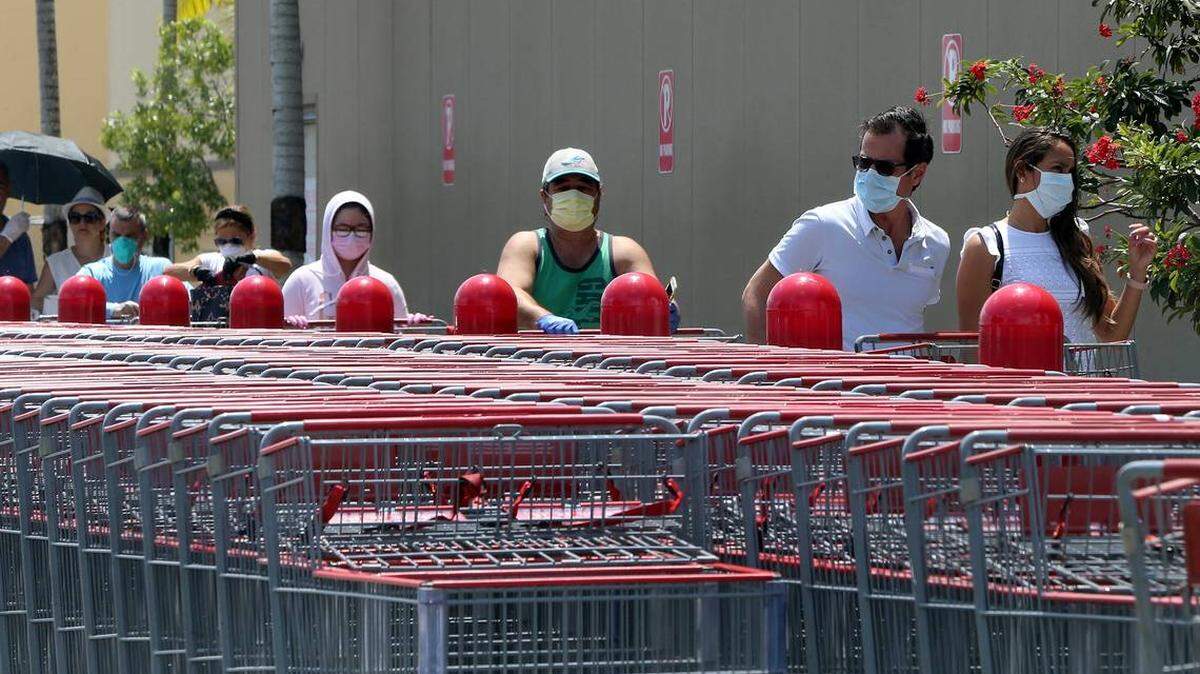
The crisis that our community is enduring truly is unprecedented. There is no manual to guide us on what comes next.
In South Florida, many have turned to hurricane response as a guiding principle, but the global pandemic that now exceeds half-a-million cases in the United States and more than 8,000 in Miami-Dade County is not anything like a hurricane. In fact, the health and economic pain will be felt for months and years to come, which is why how we plan our next move as a community undoubtedly will shape the next year and our future.
Our guiding principles to embrace the new world we live in today must put collaboration and coordination into overdrive. I have laid out four pillars as a blueprint for the best approach to begin the conversation on what comes next.
Establish a set of benchmarks and data-driven metrics: The most important conversation of what comes next centers around a clear and concise set of benchmarks that will serve as the baseline for steps the county must take to avoid a surge in new cases. The metrics must be set by a group of public-health experts and professionals so elected leaders and the public alike can have faith in the steps the county is taking.
Mass testing capacity: National and international public-health experts and epidemiologists, including Dr. Anthony Fauci, the nation’s top infectious-disease professional, have laid out clearly that any plan for a community relaxing its current social-distancing guidelines and closures must depend on the rapid expansion of mass testing. I believe to achieve this goal, the county must appoint a lead official in Miami-Dade, preferably a public-health professional, to coordinate an expanded mass-testing program in Miami-Dade. This will ensure we are able to meet future surges at hospitals with the necessary protective gear and equipment and to protect seniors and vulnerable populations.
Convene a Miami-Dade Forward Action Group: We must rely on community leaders and experts to guide elected officials, and their input must be welcomed and incorporated into the county’s plan. A lead action group comprising leaders in public health, big business, small business, labor, tourism, municipal, public schools, universities and the county must be appointed immediately to begin the process. The lead group should be made up of individuals who will serve on a series of subject-area working groups. These subgroups will work in partnership with public-health experts to help establish key sets of metrics that the Action Group will follow as the agreed-upon metrics.
Regional and Municipal Coordination: An important component of how we approach Miami-Dade’s next steps relies on a continued regional approach with our colleagues in Monroe, Broward and Palm Beach counties, as our local economy is very much interconnected, and so are our residents. Therefore, having a singular South Florida approach from the start will be pivotal. We must also bring together all the city mayors of Miami-Dade to weigh in on a regional approach to ensure that our municipal partners are invested in the overall strategy.
The county must have direct and transparent communication with the public, for it’s the only way we can implement a plan. It must include the reality that there may be times in the coming year, absent a vaccine, that if the numbers show a resurgence of the virus, aggressive social-distancing measures may need to be reinstated once again.
This crisis also shows that far too many families are hurting. We see everyday images of long lines forming, miles deep, at food-distribution locations because of the economic pain of the pandemic. Jobs have been lost, wages evaporated, unemployment benefits have been slow to come and safety nets are being tested like never before.
Short- and long-term plans for continued support systems are required as we know because economic challenges will be felt for months. There is no “on button” to get the economy bustling again. Quite frankly, the pandemic has exposed the deep-rooted affordability crisis that already exists in our neighborhoods and multiplied it by many. As businesses reopen in the future, many in our communities will remain unemployed, underpaid and barely able to get by.
The pandemic won’t erase those hard facts. But we have an opportunity to take a new approach to ease the pain and plan for a fairer economy that lifts up everyone. Our next steps will without a doubt shape the next year.
Daniella Levine Cava represents District 8 on the Miami-Dade County Commission. She is a candidate for county mayor.