
Death remains all too real, but mourning has become a virtual reality | Opinion
“I wish I could hug you.”
That’s what my Italian wine sage Stefano Campanini said as we stood in his tiny wine boutique that was, in that moment, a catacomb set on the edge of Little Haiti, the words “Abject Freedom” spray-painted on the bottom of an abandoned couch on the nearby train tracks.
At the time, Campanini had lost two friends in Parma, Italy, to COVID-19. (Since then, he has lost another friend.) His mother, who also lives in Parma, had been in quarantine for three weeks.
I really wanted to share a glass of wine with him, but dared not.
It was an awkward moment, as I stood just a couple feet away from him, trying not to look hurried as he passionately described the stories behind these Italian wines, social distancing, a cold, cruel sentence in a time of abject mourning not just for the dead but for the way in which we grieve and comfort each other.
For most people living in Miami, many of them immigrants, or the children of immigrants, others, the descendants of the old, slave South, the rituals surrounding death and mourning are rich, sacred and vital not only to the way we honor the dead but also to the way we cope with life’s ultimate social distancing.
Food and drink, the way they are prepared, the way they are shared are central to these ceremonies.
I grew up attending funerals in Jamaica where, in many regions, a series of elaborate rituals begins the moment breath leaves the body to comfort the mourning and officially send off the departed into the spirit realm. Among them, “nine night,” a domino-slamming-rum-and-reggae gathering that happens nine nights after the person dies — and the set-up to a wake-jubilee that begins the night before the funeral.
While Heineken and Red Stripe and rum punch are among the featured drinks, white rum is a kind of holy spirit cherished by gravediggers and diasporic Jamaicans alike. In the more rural communities like my mother’s Bigwood District, which sits in Manchester’s misty mountains, folks make their own white rum.
Over time, the newer generations have made the set-up their own, adding a dancehall-party spirit to the ceremonies, but certain traditions remain the same. For example, while many traditional, Jamaican dishes are served at the set-up, the killing of a goat for “mannish watah” (water) or goat soup is most sacred and served as an aperitif in Styrofoam cups or mugs.
Music is also sacred. At about 10 p.m., the island’s designated death band — Duppy Bashment (translated as ghost party in Jamaican patois ) arrives at the “dead yaad” — the dead person’s house — and the group sings folk and spiritual hymns until dawn:
One glad morning when this life is over, I’ll fly away . . . When I die, hallelujah, by and by, I’ll fly away.
And folks do fly when they “catch the Holy Ghost,” or “catch the spirit,” terms often used among many black churches to describe a person’s reaction when the Holy Ghost or God’s spirit inhabits the body. In this moment, folks chant, laugh, wail, sing, weep and dance — hips swirling in an enchanted cry of loss and hope that the loved one has safely and auspiciously crossed into the spirit world.
As the night goes on and more people arrive, whether you’re religious or not, you are touched by the unified energy, the collective grief, summoned, released and echoed across the heavens.
That sound echoes across the heavens and arrives in the United States where many immigrants practice versions of their native funeral traditions.
I grew up in North Miami off West Dixie Highway, which over the years has transformed into a Little Port-au-Prince because of its large Haitian immigrant population.
West Dixie Highway is beaded with funeral homes like a kind of rosary, and on most weekends, there is a funeral carnival as endless cars and, sometimes, casket chariots stream down 135th Street, curling onto West Dixie Highway before they pile up into one of the funeral-home parking lots that lead to Dignity Caballero Rivero Southern Cemetery, formerly Southern Memorial Cemetery.
“In Haiti, everything is big, big, everything is show-off, everything is extravagant,” said Haitian cookbook author Cynthia Verna.
“After the funeral is a big party. Soup is all over the place. Bouillon is all over the place, and chicken, beef and codfish patties are a must.”
Haitian ginger tea is also must.
“I think we often serve this potent tea at somber occasions not just because the herbs have a calming effect on the body, but also because the tradition gives people a sense of peace, as if we can feel the warmth of our ancestors with each sip,” said Little Haiti Cultural Complex manager Sandy Dorsainvil.
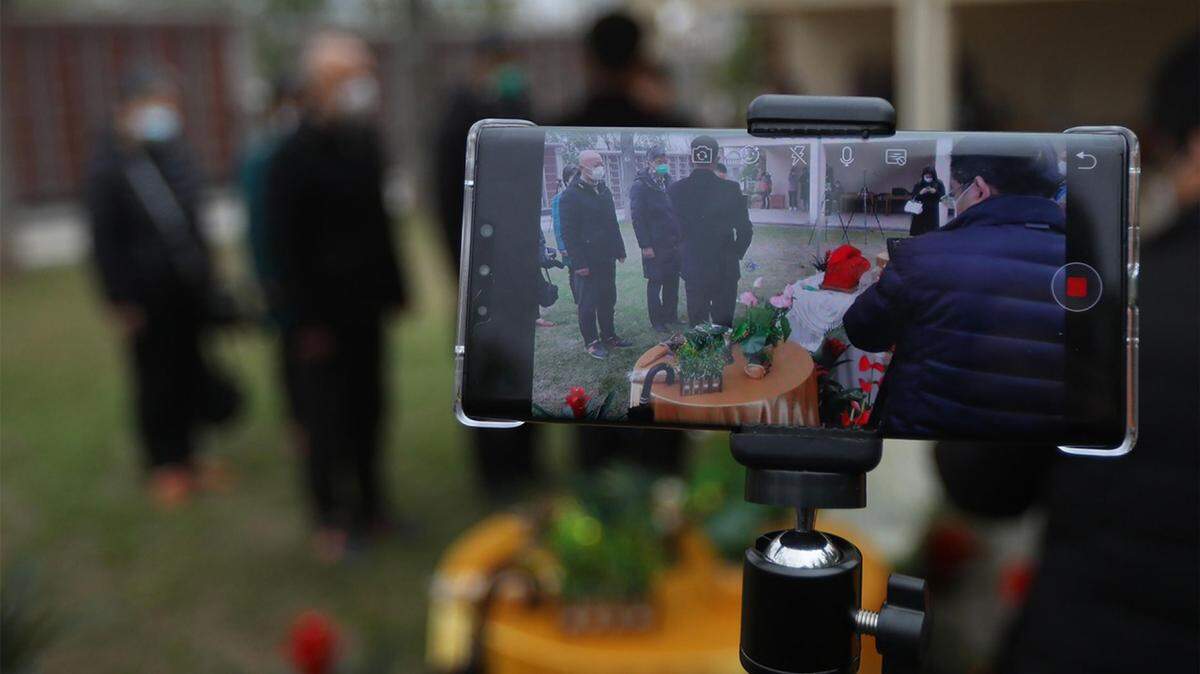
These days, however, there are no elaborate funeral processions winding down West Dixie Highway as we mourn not only the dead but our former way of life, finding warmth in the virtual catacomb that is now social media where death announcements overflow.
“In Haiti, there is a whole tradition on how you announce the death,” said Verna. “People give you the te veven for sezisman, the shock.” Te veven is a tea made of porterweed.
But as virtual spaces become sanctums of sanity , perhaps new traditions are emerging in this global call to come together, separately, in abject desperation and hope, the masked and unmasked, grieving together, sipping white rum, te veven and Campanini’s Italian red.
Dinkinish O’Connor is a culture critic who teaches communications and humanities classes at St. Thomas University.
This story was originally published April 15, 2020 at 5:54 PM.