
Juan Guaidó’s plan provides the best path to democracy in Venezuela | Opinion
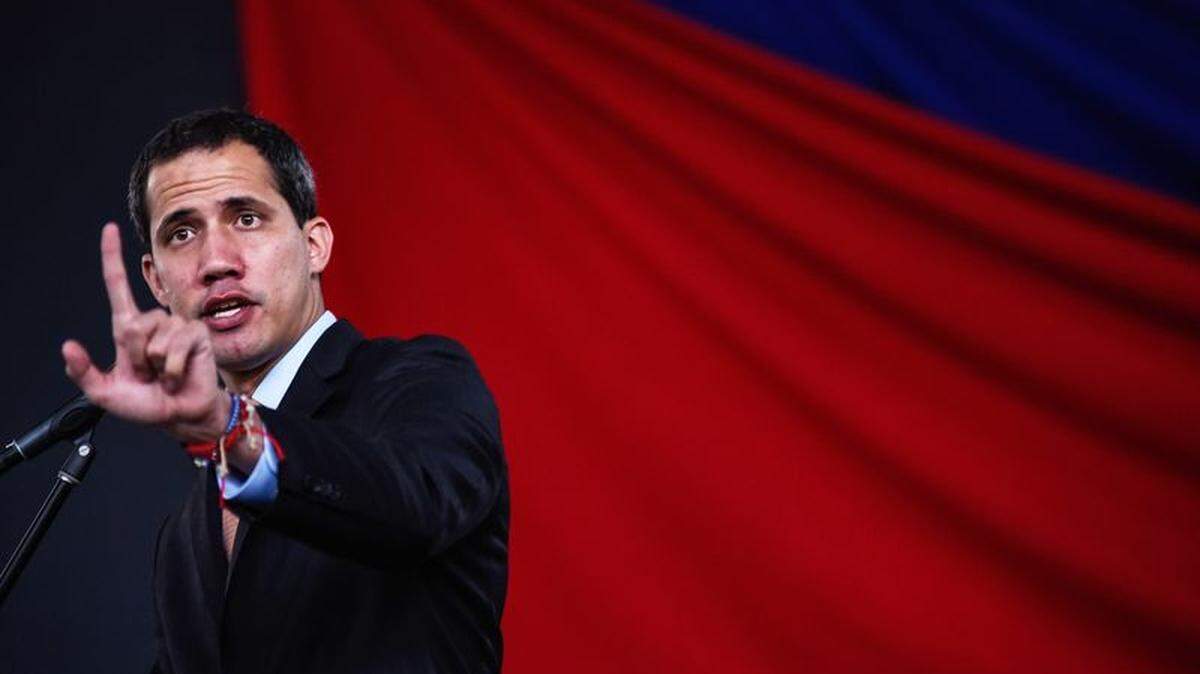
In a dramatic turn of events, President Juan Guaidó has presented a viable solution that can lead to the democratic transition in Venezuela. His proposal to form a National Emergency Government, includes both democratically elected and other political figures, as long as they have not been indicted or have engaged in crimes against humanity.
This move, along with the State Department’s complementary Democratic Transition Framework, was welcomed by among other nations, the United States, Colombia, Ecuador, the European Union and the Organization of American States. This provides an opportunity for regime supporters to coalesce around a transition that would allow Venezuelans to regain peace, while safeguarding a better opportunity to handle the COVID-19 pandemic.
The U.S. Justice Department’s indictment of Nicolas Maduro and several of his associates on charges of narcoterrorism is proper, timely and substantiated. The Interim Government of Venezuela applauded this move because it shows that no one escapes the rule of law. Through its Narcotics Rewards Program, the U.S. State Department offers rewards of up to $15 million for information leading to Maduro’s arrest and/or conviction, a step the United States would not take lightly.
Critics have painted the indictment as superfluous or meant as a political distraction. To the contrary, these criminal charges against Maduro and his associates are long overdue. For years, he has propped up his illegitimate regime through illicit funding, much of it dependent on drugs, a system he inherited from his predecessor, Hugo Chavez.
In 2013, French authorities found 1.3 tons of cocaine packed into 31 suitcases on board an Air France flight from Caracas to Paris. It was one of France’s biggest cocaine busts ever. In 2018, Diosdado Cabello, the leader of Venezuela’s illegitimate National Constituent Assembly and Maduro’s No. 2, was sanctioned for being “directly involved in narcotics trafficking activities.”
Former Venezuelan Vice President Tareck El Aissami was sanctioned in 2017 by the U.S. Treasury Department for overseeing narcotics shipments. He later was labeled a Specially Designated Narcotics Trafficker. In 2019, he was charged with violating the Foreign Narcotics Kingpin Designation Act for using his position of power to engage in international drug trafficking.
This practice is so deeply embedded in the regime that even Maduro’s wife, Cilia Flores, has been implicated by association. In 2017, her nephews were convicted in the United States for cocaine trafficking. Their appeal was rejected.
But it’s more than just drug trafficking and fraudulent money that sustain the Maduro regime. As one researcher wrote, the illegal drug trade creates “spaces where transnational organized criminal networks thrive.”
In July 2019, Maduro offered refuge to two former FARC commanders wanted by Colombian judicial authorities — Ivan Márquez and Jesús Santrich, who also are wanted in the United States on drug-trafficking charges.
Naturally, there are the many downstream costs of allowing narco-traffickers and terrorists to operate freely in Venezuela. Human Rights Watch has reported gruesome abuses by guerrillas and rogue groups (such as ELN). At the numerous illegal mines that have been allowed to operate, there is proof of “forced labor or sex trafficking, compelled through violence and fear by the group running the mine. There has been reporting that in some regions, the average age of those being sex trafficked is 13–14 years old.”
Additionally, it has become undisputable that PDVSA, the state-owned oil and natural gas company, has morphed into a pervasive tool of the regime to launder money. Among the dozens of criminal cases pending,, the U.S. Treasury disclosed that in one currency-exchange scheme alone from 2014 to 2015, senior managers laundered $1.2 billion. The National Assembly estimates that $30 billion has disappeared from PDVSA in recent years. To put things in perspective, Odebrecht admitted to paying $788 million in bribes over 14 years.
I remind advocates for the United States’ immediate lifting of sanctions to tend to the COVID-19 pandemic in Venezuela that there is a license specifically allowing humanitarian supplies to enter the country. The regime obstructs humanitarian efforts by blocking safe entry points for aid and delaying visa approval for humanitarian workers. But somehow, Maduro managed to pay at least $14.5 million to lobbying firms in Washington D.C. as Venezuelan oil keeps flowing for free to Cuba.
Clearly, Guaidó’s proposed National Emergency Government, endorsed by the international community, it the most viable way to move forward and, simultaneously, address the COVID-19 pandemic. Guaidó’s administration will do everything within reach to ensure that democracy is restored, but the only way to effectively get there is by removing Maduro.
The international community will be key for providing Venezuela much-needed assistance and conducting a serious and credible democratic transition. This is the right move at the right time.
Carlos Vecchio is the ambassador of the interim government of the Bolivarian Republic of Venezuela to the United States.