
Lots of questions must be answered before county tests 7,000 for coronavirus | Opinion
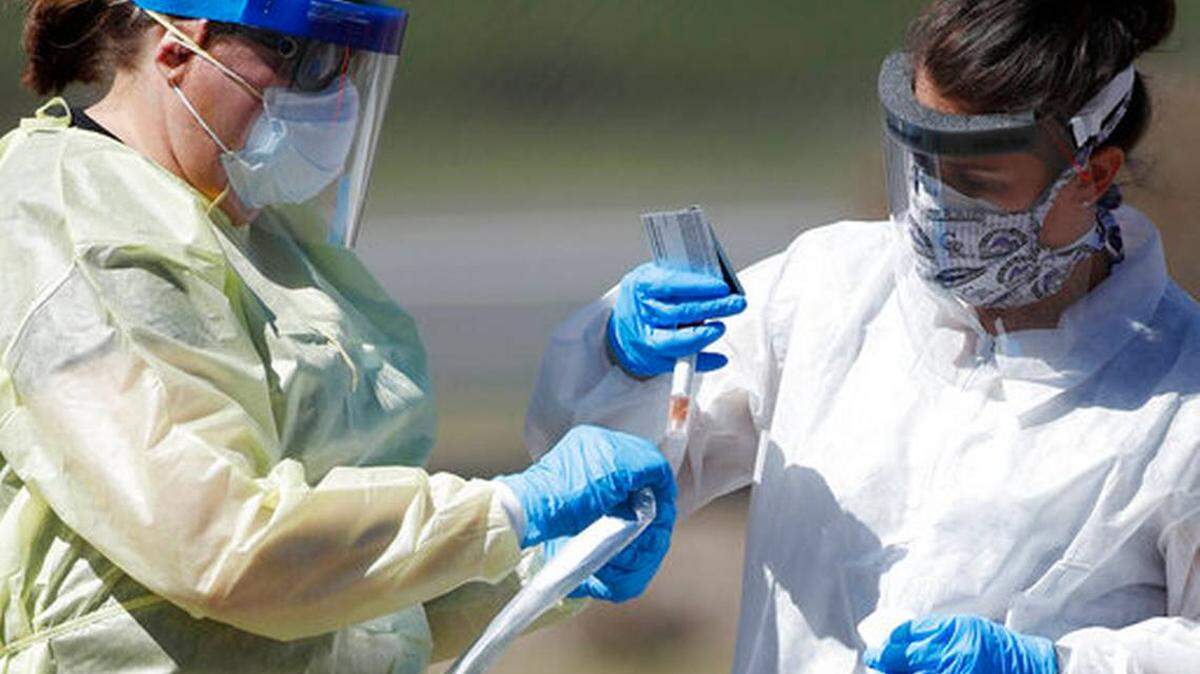
There is much to like about the idea of random testing in Miami-Dade County, with as many as 7,000 patients, being performed to understand and eradicate a pandemic of yet-unknown, but clearly serious, proportions.
The coronavirus is an elusive, global disease. We have little to go on by way of prior research and even less in terms of an antidote.
Therefore, having some random testing while the spread is still occurring could add valuable data and analysis in fighting the disease, locally and, possibly, nationally and internationally.
Of course, if we have 7,000 reliable test-kits (with nearly instant results), the first thing to do would be to offer them to officials in cities such as New York, which might be desperate for that technology. Assuming there is not an urgent need elsewhere, and that the principal objective is research, I have asked the administration and to the county attorney:
1. Who is the vendor providing the technology and how reliable is the test? I initially got an answer from a media source, which was later confirmed by Mayor Carlo Gimenez’s chief of staff, Alex Ferro. It is not reassuring: The technology comes from China via an American company based there.
On this issue, there is already concern. Is it wise to buy technology from a company based in the very country where the virus apparently started? Is the test reliable? Why not get it from an American company that is supervised under the FDA, which requires not only proof of safety, but also of efficacy?
2. Who is in charge of the methodology for the random testing? So far, two individuals give me some reassurance. One is the University of Miami’s Erin N. Kobetz, who has a master’s in public health and vast experience in modeling epidemic. The other is our own director of Water and Sewer Department, Kevin Lynskey, who is a savvy and common-sense administrator.
Yet, as a member of the Health Services and Government Operations Committee, I want to delve into the methodology to be used. For example, the solicitations to find volunteers (750 a week) will be made through robocalls with the mayor’s voice. But that brings the problem of self-selection; some will want to be tested to satisfy their own concerns; others might not want to be involved in anything having to do with a politician who is running for office. (Full disclosure: I am a candidate for Miami-Dade County mayor.)
The problems of methodology can be assuaged — even if retroactively — by peer review.
3. I have asked the county attorney to confirm that we, the county, will own the raw data derived from the 7,000 random tests. This is important for every reason imaginable, including, and most important, that we want, as a public institution, to have the results made public. In the world of research, that means making not just the findings but also the raw data, including methodology, available for peer review.
The randomized selection of subjects for the 7,000 coronavirus tests is going to use Florida Power & Light data that includes place of residence and contact information. I gather that FPL is making this data available, as well as its involvement in the random selection, for free. Presumably, the analysis by the University of Miami will also be a matter of public record.
But what about the China-based company? What prior evidence of reliability will accompany the test kits purchased from it?
While I congratulate the administration for its speedy approach to this rather large, random testing — compare it to the same testing done by San Miguel County, Colorado involving 645 subjects — I must insist on getting clear answers to my questions. Otherwise we will fail the tests of reliability and transparency, which are part of peer review and which are key to any useful scientific research.
Xavier Suarez represents District 7 on the Miami-Dade County Commission.