
Bloomberg stands toe-to-toe with Trump in the digital race for president | Opinion
Nearly a century ago, comedian Will Rogers said, “Politics has become so expensive that it takes a lot of money even to be defeated.” That has become even more true in our digital age — because of Facebook and Google.
Political spending this presidential election season is projected to top $6 billion dollars, according to a study by Advertising Analytics and Cross Screen Media. More than one quarter of that total — $1.6 billion — will be spent on digital ads on Facebook and Google. (Twitter has stopped accepting political ads.)
This is the first presidential election cycle where the tech giants are disclosing political expenditures. This concession to transparency only came after enormous public pressure following the Cambridge Analytica scandal, when Facebook data was used to sway voters in the 2016 election. And so, for the first time, we’re able to see clearly the outsized impact of online ads in politics.
What has been revealed so far is a dramatic advantage for President Trump and the Republican Party against his Democratic rivals.
The Republicans haven’t always been ahead in digital marketing. Karl Rove did pioneer many technological advances in the 2004 re-election campaign of Republican George W. Bush. But in 2008 and 2012, Democrat Barack Obama attracted some of the nation’s top digital talent to his campaign, and he built a sophisticated data analytics operation that helped him win both elections. Democrat Hillary Clinton didn’t press that advantage.
The digital marketing machine that Trump’s team created in the 2016 race outflanked Clinton and the Democrats, particularly in their use of hyper-targeted ads to micro-niche interest groups on Facebook and Google. The partisan digital divide has grown wider ever since.
Despite being 73 years old, Trump is the most aggressive user of social media of any president, and perhaps any sitting politician, in history. This goes well beyond a bazooka-like Twitter feed with 70 million followers. He plucked Brad Parscale, a little-known digital agency owner from San Antonio who had done some website work for the Trump organization, to be his digital director in 2016. By all accounts, Parscale’s work targeting both conservatives and liberals on Facebook and Google with divisive messages were a huge factor in Trump’s victory in 2016. This election, Parscale is running the whole show as Trump’s 2020 re-election campaign manager.
It’s broadly agreed that the Republicans’ digital advertising machine is far ahead of the Democrats. Interestingly, this is not simply about money. Even before Michael Bloomberg announced his candidacy, the Democratic presidential contenders combined raised a similar amount of money as Trump and the Republican National Committee.
The advantage is about data. Trump has spent the past four years building one of the most sophisticated data collection and analysis machines ever seen in politics.
But what has emerged since Bloomberg entered the fray is that the Democrats are quickly catching up.
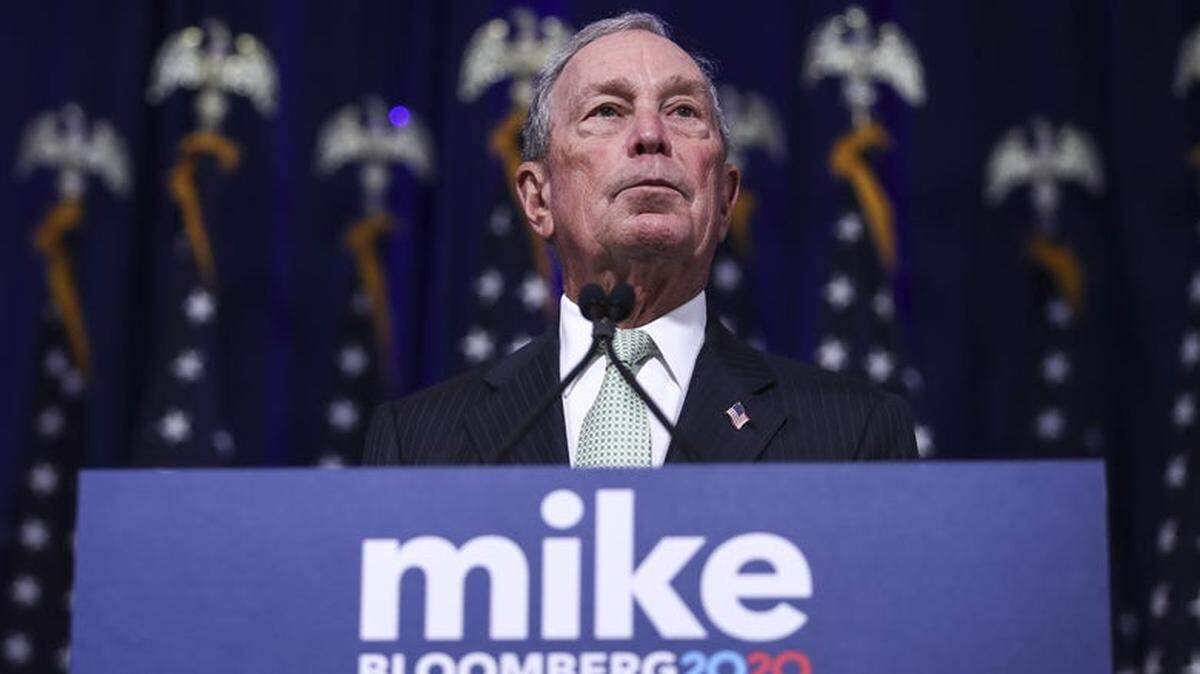
In a matter of months, Bloomberg has nearly evened the digital playing field. Yes, he has poured enormous sums of money into hiring the nation’s top digital marketing talent. But he has also leveraged his expertise in data analysis from running the nation’s premier business analytics company, Bloomberg Media Group. Those omni-present Bloomberg terminals are far more sophisticated than the analytics required by a presidential run.
Whether Bloomberg and the Democrats will be able to catch up in time — and whether Bloomberg will follow through on his promise to lend this machine he’s building to the eventual Democratic nominee — remains to be seen. But one thing is clear: Without Bloomberg’s investment, the Democratic field had no chance in the digital presidential race.
Now, at least, Trump’s team has a fight on its hands.
Dan Grech is the founder and lead instructor of the digital marketing training provider BizHack Academy. He is a former Miami Herald staff writer.
This story was originally published February 26, 2020 at 8:16 PM.