
Venezuela funds repression with gold refined, sold in America and Europe | Opinion
Venezuela is under heavy sanctions. The country is in bankruptcy. However, the biggest concern of the Venezuelan government is that members of the armed forces and other elements that repress thousands of Venezuelans, may no longer be loyal to the regime.
That´s why Nicolas Maduro had to find alternative sources of money. And he found them. First, Venezuela is a narco-state. High political and military leaders benefit from drug trafficking. Venezuela has put its ports and airports at the service of drug traffickers that have established air and sea routes to sell drugs in North America and Europe.
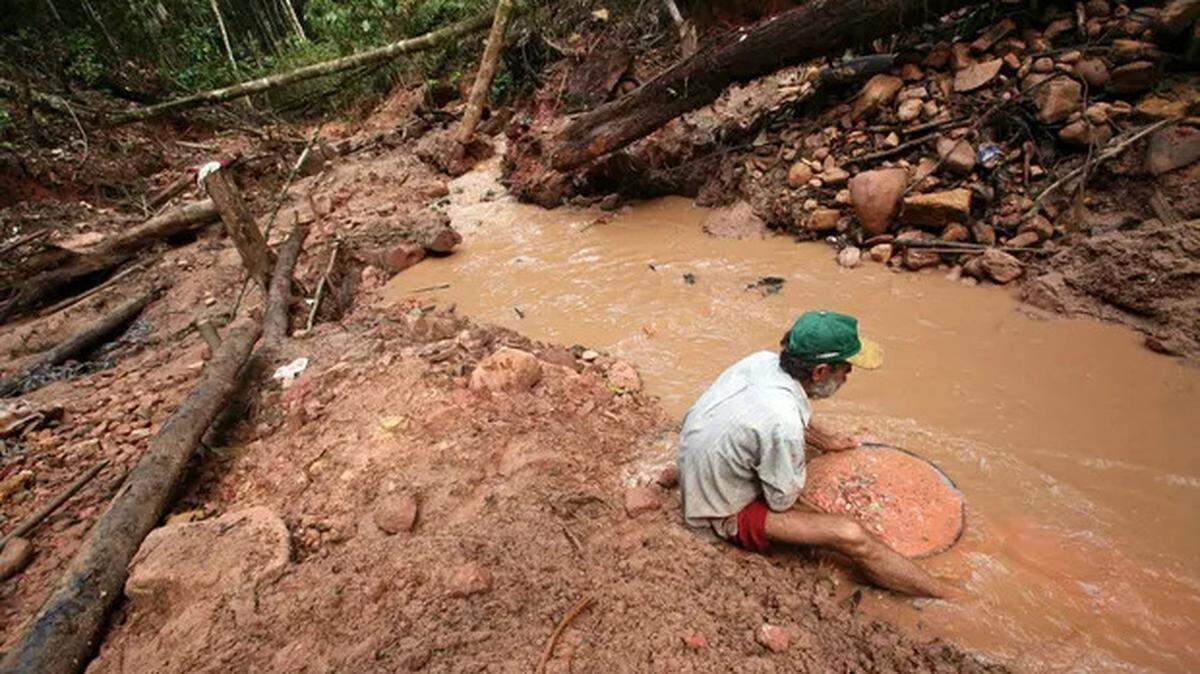
And, recently, another troubling story came to light. The Venezuelan government, in partnership with a Venezuelan entrepreneur who lives in Doral, Florida (where the U.S Southern Command is located,) is exploiting gold mines located in the depths of the Venezuelan Amazon. These mining activities also are under U.S. sanctions.
But this is not the entire problem.
Thousands of workers who lost their jobs because of the impoverished Venezuelan economy have moved to the Amazon to work in this illegal industry. In addition, it has been reported that these mines are operated by none other than members of a Colombian guerrilla group, Army of National Liberation or ELN; dissidents of another Colombian guerrilla group, the Revolutionary Armed Forces of Colombia (FARC); and criminal gangs.
The fact that the two guerrilla groups were identified with Marxism, equality for all and voices for the working class has not prevented these “progressive” revolutionaries from exploiting workers and inflicting on them severe punishments that constitute no less than blatant violations of human rights.
Miners accused of stealing or of violating the rules, have been subjected to amputations, torture and murder. The Venezuelan government and the military participate in carrying out these atrocities. Miners work under sub-human conditions. Often the amputations and killings are purposely carried out publicly so that other workers get the message.
Witnesses have recounted how they saw workers suspected of stealing having their hands amputated or being shot in their hands. Others said that “union leaders” in charge of these mines amputated arms with chainsaws, axes and machetes. These practices are not much different than those used by ISIS.
These mine workers also labor under terrible health conditions. They work 12 hours a day without protective gear. They are exposed to the effects of mercury. Children as young as 10 were found among the workers. The conditions are worse than those experienced by industrial workers in the 19th century.
It was reported that former Venezuelan Vice President Tareck El Aissami supervises these operations on behalf of the Venezuelan government. El Aissami, who’s on ICE’s Most Wanted list, has strong connections to Iran and Hezbollah and has facilitated their operations in Latin America. He has also worked closely with Ghazi Atef Nasserdine, a former Venezuelan diplomat in Damascus who was in charge of recruiting young Venezuelans for paramilitary training in Hezbollah camps in Lebanon.
There is another element to this story. The extracted gold is smuggled and sold in the United States to large U.S. companies. This gold is then sold to the American public in the form of jewelry or other items that contain gold, such as electronic devices.
Venezuela has become a nightmare, heavily supported by Russia, which has taken control of Venezuelan oil. That’s why I applaud the Trump administration’s decision to sanction Russian oil company Rosneft, which controls more than 70 percent of Venezuelan oil exports. Rosneft has given Petroleos de Venezuela (PDVSA) a new life and may stay in Venezuela forever, while the United States and U.S. companies may be forced out of Venezuelan indefinitely, giving more space for Russia to control almost all of Venezuelan oil.
It is important point out that El Aissami was just appointed president for the new commission to restructure the country’s beleaguered oil industry, including overseeing PDVSA.
In other words, Venezuela is not only violating sanctions, with plenty of help from Russia, and finding new resources to buy the loyalty of the military and the paramilitary; Venezuela also has turned into a monster kleptocratic and murderous state that requires action where sanctions, although successful so far, seem to be insufficient.
I’ve argued for the need to reevaluate our strategy in Venezuela. General sanctions may not be enough. We must find ways to directly combat Venezuelan gold contraband and exports, as well as thwart the regime’s ability to circumvent current sanctions. But we also need to support militarily opposition forces in Venezuela while avoiding direct intervention of U.S. troops. We may have no other choice but to consider this option more seriously.
Luis Fleischman is professor of Sociology at Palm Beach State College, co-founder of the Palm Beach Center for Democracy and Policy Research, and director of the InterAmerican Institute for Democracy. He is the author of “Latin America in the Post-Chavez Era: The Threat to U.S. Security.”