
Puerto Rico’s man-made disasters will kill more people than natural catastrophes | Opinion
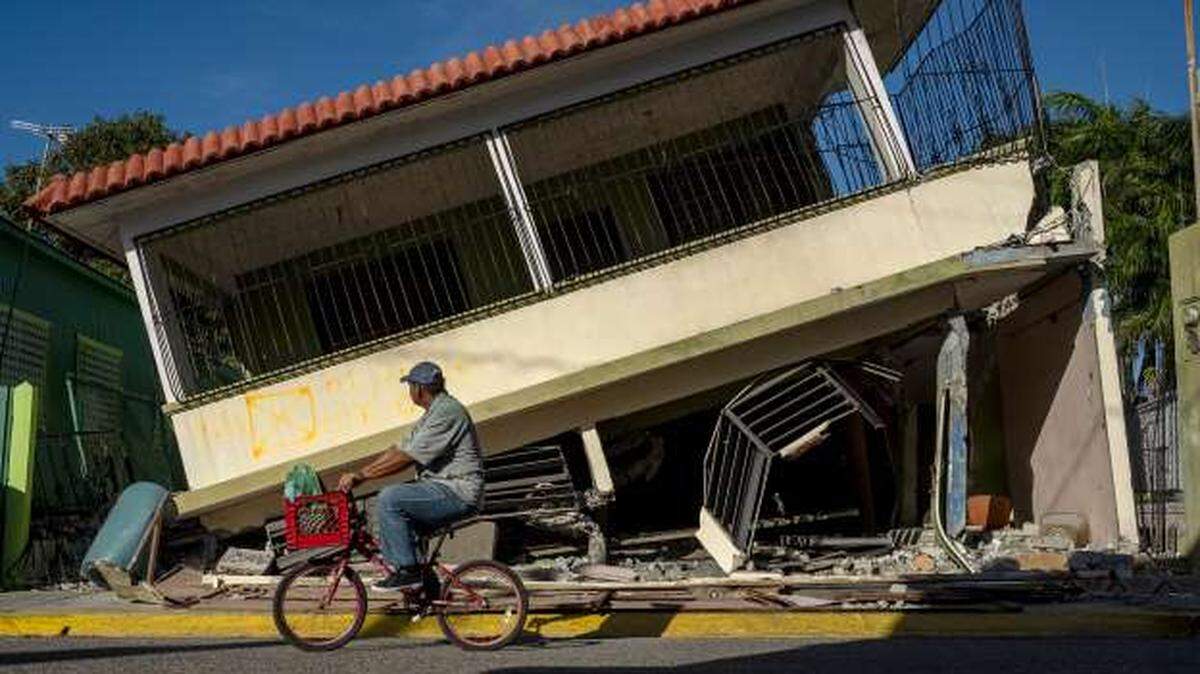
Angel Angueira, “Don Angel” as he’s known in the historic Ponce Beach fishermen’s neighborhood, has never left Puerto Rico. He’s 76. He and I were down by our street corner recently, inspecting mounds of rubble shaken loose by the magnitude 6.4 earthquake that struck at 4:30 a.m. on Jan. 7. It jolted me from bed. I could hear my neighbor, Angueira’s teenage granddaughter, screaming in panic, while dogs howled and car alarms wailed.
“These are forces of nature, we can’t control them,” Angueira said. “But I’ve never seen anything like this.” This was said by someone whose simple wooden house, along with several others on our street, was destroyed two years ago by the Category 4 hurricane that killed an estimated 3,000 people.
“Maria was horrible, but at least we knew it was coming and could evacuate to a shelter,” he said. “We don’t know when this shaking will stop, or maybe get even stronger. This is more difficult than a hurricane.”
Most people are shell-shocked all over again. The older parts of Ponce are like a war zone: Debris litters the streets, and many people sleep in their cars at night. During power outages, residents are in constant search for water, ice to preserve food and somewhere to charge cell phones. Now, they need to keep an emergency bag by the front door in case they have to make a sudden, middle-of-night exit.
The recent series of earthquakes and the 2017 hurricane struck in the midst of a financial crisis that culminated in the territory’s bankruptcy and harsh unemployment rates, along with political conflict that led to the governor’s ouster last year.
There are longstanding challenges, too, including a pervasive dependency on imported basic goods and deteriorating schools, roads and other infrastructure.
Along with the devastation wrought by nature and the precarious socio-economic situation, other disasters — though slower-moving and less obvious — also plague the population.
Since accepting a temporary faculty position at the Ponce School of Medicine seven years ago, I’ve lived in Puerto Rico’s second-largest city, mainly investigating an obesity epidemic even more severe than that in the mainland United States. The Centers for Disease Control and Prevention estimates 77 percent of adults in the U.S. territory are overweight or obese.
Diabetes has become the third-leading cause of death, killing many more annually than the worst hurricane ever will. Puerto Rico arguably is on the front lines of the United States’ vulnerability to climate change (two “once in a century” hurricanes struck within a week; the one-two punch decimated the small offshore islands of Culebra and Vieques), and while the damage to the electrical grid and other infrastructure was massive, most of the ensuing deaths actually were related to underlying chronic diseases. Many who died, for example, were diabetics left without electricity to refrigerate their insulin or dialysis patients unable to reach clinics because roads were closed.
In response to the obesity epidemic that’s fueling diseases like diabetes, our Florida International University-affiliated research team conducted a USDA-funded study among overweight young adults in Ponce. Those who participated in innovative peer support groups lost a significant amount of body mass compared to the control group, most of whom gained weight.
My neighbor Angueira recalls, “When I was young everyone was skinny. There wasn’t fast food everywhere.”
Yet, tragically, there are no policy initiatives, such as soft-drink taxes that countries such as Mexico have successfully instituted, or aggressive education campaigns to combat the problem.
My previous public-health career focused on another global crisis, HIV prevention. The lack of concerted action to combat obesity reminds me, worryingly, of the early years of AIDS.
A tent city has mushroomed on the outskirts of Ponce sheltering some of the thousands left homeless, and it’s unclear when or where they ultimately will find housing, let alone how people here will deal with all the accumulated anxiety and trauma.
What’s even less clear is whether — once these latest natural disasters fade from view — some less obvious calamities will start to be seriously addressed.
Daniel Halperin is a public-health researcher affiliated with the University of North Carolina School of Global Public Health in Chapel Hill He formerly taught at Harvard and the University of California at Berkeley. The findings of his obesity prevention study in Ponce were published in the October 2018 Journal of Nutrition Education and Behavior.
This story was originally published January 20, 2020 at 2:32 PM.