
Maduro locked out legislators — and opened door for global action for democracy | Opinion
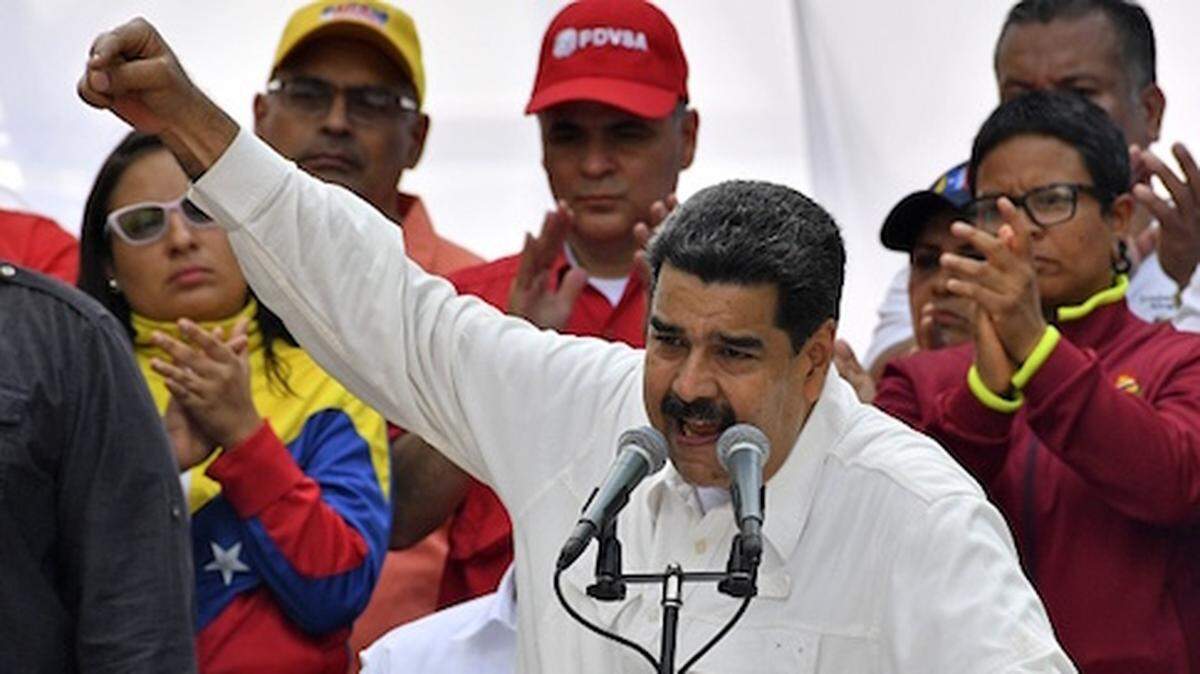
Venezuelan ruler Nicolás Maduro’s brazenly seized the country’s freely elected National Assembly last week, physically barring most elected legislators from entering the building.
The move may have backfired.
A Venezuelan opposition that appeared divided last month now is far more unified. This should lead a working majority of world leaders to take steps to return Venezuela to the rule of law.
Extrajudicial killings, arbitrary arrests and torture condemned by human-rights officials from the Organization of American States and United Nations made clear the nature of the post-Chávez regime. Blocking, with weapons, the legislators on Jan. 6 appeared aimed at destroying the country’s last remaining democratic institution. That should trigger universal economic and diplomatic sanctions unless Maduro backs down and agrees to restoration of the country’s constitution through elections supervised by the U.N. and the OAS .
The Lima Group’s 14 regional members, including Canada, along with the European Union and the United States had demanded a democratic transition ever since Maduro assumed power in 2018 following internationally condemned fraudulent presidential elections. Until now, some key governments such as the Lopez Obrador administration in Mexico and the new Peronist government in Argentina, had opposed international sanctions.
However, following the barricade, Mexico’s government was quoted by Special Representative for Venezuela Elliot Abrams saying, “The legitimate functioning of the legislative power is inviolable in democracies.”
Abrams also cited Argentina Foreign Minister Felipe Sola, who said, “To impede by force the functioning of the legislative assembly is to condemn oneself to international isolation.”
Abrams commended the Lima Group and the E.U. support of the re-election of Juan Guaidó as National Assembly president, even though the initial election occurred in the offices of a local newspaper, since the legislators were prevented from entering the Assembly building. Legislators repeated that action when they finally shouldered their way into the Assembly chamber the next day.
Democratic leaders in the hemisphere and beyond now need to take advantage of Maduro’s overreach by demanding the following actions — in both the OAS and the U.N.:
Formal release and lifting of all charges against legislators who remain detained, those who have been forced into hiding and those who fled the country, so that they can resume their legislative duties;
Release of all political prisoners identified by the U.N. and Inter-American Human Rights bodies;
Agreement with the Guaidó-led National Assembly on a timetable and agenda for steps already identified by the Lima Group and the OAS in previous resolutions to restore democratic institutions. These include: an electoral law and a new electoral tribunal approved by the legitimate parliament after it is permitted once more to function; formal written agreements reached under international mediation ending violations of press freedom and the freedom to peaceful assembly; Maduro’s agreement in diplomatic notes to cooperate with comprehensive humanitarian relief under international norms managed through the UN and approved by the National Assembly.
If the Maduro regime does not agree to those conditions for a democratic transition within 30 days or a very short timeline, here is what the international community should set out as the consequences: all countries deny travel visas for Venezuelan officials and their families; individual and corporate assets of officials of the regime and entities linked to the regime are seized; further economic sanctions imposed on Venezuelan government-linked enterprises or those linked to government officials and their families; and just as the OAS has seated Guaidó’s interim government representatives as Venezuela’s legitimate authorities, the U.N. should do the same.
As a carrot for members of the Maduro regime, the Venezuelan opposition, the United States and other countries should repeat assurances that they will recognize those regime members who work towards positively enabling a democratic transition.
The Maduro regime has effectively destroyed the country’s economy, corruptly used the country’s vast mineral and energy resources, and caused massive human suffering. In ways far more destructive even than the military dictators of recent decades, Venezuela’s people have lost a generation of health progress with diseases and hunger combining to produce child and maternal mortality rates comparable to those of sub-Saharan Africa. More than 5 million Venezuelans have fled the repression and misery produced by a regime that appears determined to maintain power regardless of the consequences.
For its neighbors in the hemisphere and beyond, this new year and the start of a new decade are the right time to press for the return of the rule of law in Venezuela.
Mark L. Schneider is a senior adviser at the Center for Strategic and International Studies, former assistant administrator for Latin America at USAID, former U.S. Peace Corps director and former deputy assistant secretary of State for Human Rights.