
Trump’s cruel immigration policies keep asylum seekers in detention. Give them parole | Opinion
After discovering that my father planned to flee Cuba, a group of his peers trapped him in a bathroom and beat him mercilessly with a metal pipe, disfiguring his face and permanently breaking his nose.
He was 17 years old.
Living in post-revolutionary, surveillance-state Cuba eventually drove him to a paranoid schizophrenic break from reality. But he was lucky compared to the many non-Cuban immigrants who sought safety and a better life in the United States. As soon as he arrived in this country, he was granted parole and legal authorization to work. Now, he is a U.S. citizen who has served the people of South Florida as a critical-care nurse for more than 20 years.
My maternal grandmother also immigrated from Cuba. After a year of living and working in the United States, she obtained lawful permanent residency under the Cuban Adjustment Act.
Although my father and grandmother did not come from a European country or come from wealth or high social status in Cuba, they were treated humanely under the law.
But the compassionate treatment my family once received as Cuban migrants has been extinguished.
Political dissidents and refugees fleeing the island today face a much bleaker reality. As I write this, a Cuban man that I’ll call Amaury is enduring his 16th month of incarceration for exercising his legal right to seek asylum.
Amaury is a doctor who refused to coerce women into having abortions as instructed by the Cuban government. He is also a gay man who suffered escalating discrimination and brutal beatings at the hands of Cuban police because of his political views and sexual orientation.
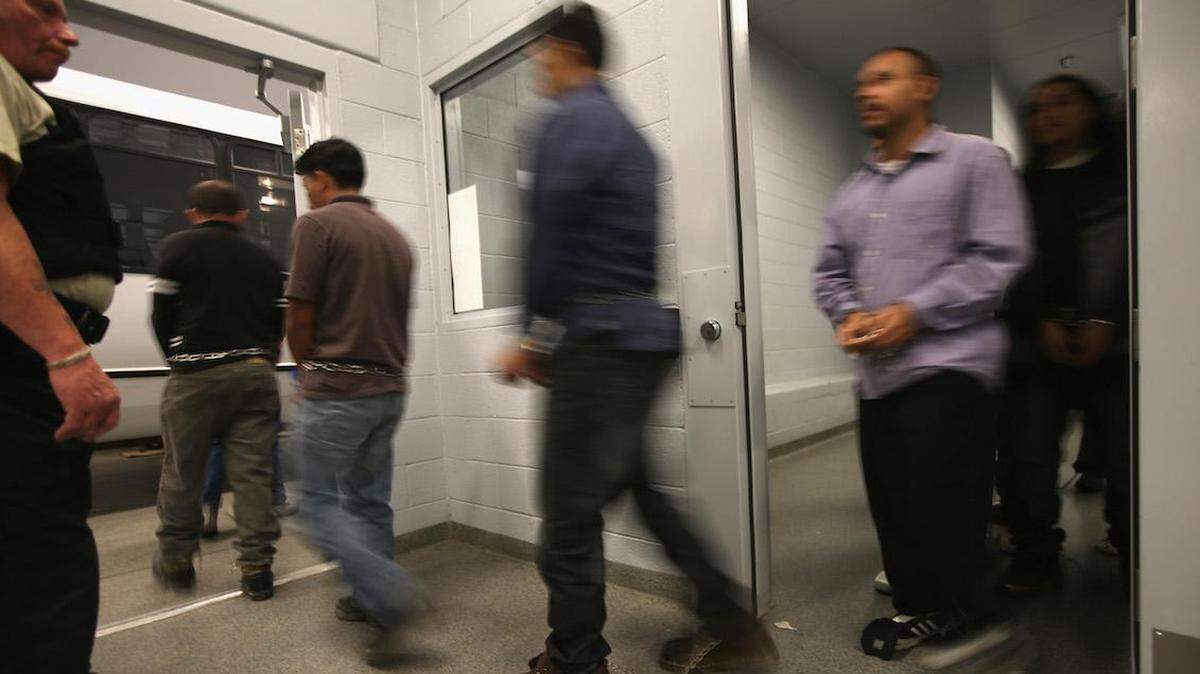
During the past year, while locked away in U.S. Immigration and Customs Enforcement (ICE) custody, Amaury worked in a kitchen jail for $1 a day. He was forced to spend $3 to speak with his loved ones for only 15 minutes. He was denied any information about his requests for parole and was berated in English by ICE officers, who refused to provide him with an interpreter.
Amaury spent Nochebuena in a cell, hundreds of miles away from his family in Cuba, facing deportation.
And he isn’t alone.
Under the Trump administration, parole approvals for arriving asylum-seekers have dropped sharply. In 2016, the New Orleans ICE Field Office, which has jurisdiction over Amaury’s custody, granted parole in 75.9 percent of cases. Just two years later, the rate had dropped to 1.5 percent.
The drop came despite a 2009 policy that still is in effect, directing ICE to release asylum-seekers into the United States when they lawfully present themselves at official ports of entry, as Amaury did.
It didn’t matter that Amaury’s asylum office interviewer checked boxes indicating that he had established a credible fear of persecution because of his opposition to the Castro government and his membership in a protected social group. It didn’t matter that his sister, a U.S. citizen, was willing and able to receive him in her home.
For decades, tens of thousands of immigrants and asylum-seekers have been languishing in ICE prisons across the country. They are English-speaking Cameroonians fleeing state-sponsored torture. They are Sikh Punjabis fleeing severe discrimination, and they are Central Americans fleeing war-like violence caused by this country’s foreign interference.
And now, they are also Cubans.
In Cuba, Amaury studied to become a doctor and swore an oath to do no harm. He was appalled at the poor medical care immigrants receive in ICE detention. He saw detained immigrants suffering from preventable mumps outbreaks, and the sychological torture that led to loss of life and thoughts of suicide.
Amaury came to the United States eager to practice medicine and to live his life openly as a gay man without fear of reprisal. But as he passes each month in detention, his dream fades and his dread of deportation to Cuba grows. He has been denied the opportunities that my family and thousands of other Cubans received after arriving in the United States.
So, after decades of benefiting from a path to status and using it to forge a thriving community, I ask: Where is our collective action now?
For my part, I work as an attorney at the Southern Poverty Law Center. Together with the ACLU of Louisiana, we filed a federal class action lawsuit in May to restore the parole process and ensure that thousands of asylum-seekers, including Cubans like Amaury, have a fair chance at escaping the hellish conditions of ICE prisons.
I was just 12 years old when we took to the streets and called on U.S. government leaders to intervene in the case of just one Cuban immigrant boy. Today, thousands of families’ lives are at stake.
Now that the full force of our immigration system’s cruelty has fallen upon our own extended family, will we act again?
Mich P. Gonzalez is a staff attorney in the Miami office of the Southern Poverty Law Center.