
Immigrants add tremendous value to Florida’s economy | Opinion
Immigrants know what it takes to make it in America. The U.S. economy, and particularly Florida’s economy, depend on it.
In Florida, 30 percent to 40 percent of all new businesses are started by immigrants, and businesses launched by immigrants employ more than 500,000 people, according to the Center for Economic Research and New American Economy. Without their supercharged ambition and appetite for risk, Florida would be struggling.
I spent the past three years working on “Making It In America,” a documentary about immigrant entrepreneurs. The film premieres Jan. 5 in Miami.
The idea for the film came together in 2017, as national rhetoric about immigrants turned negative. But how about the positive contributions immigrants make to our society and economy? We set out to tell that story.
Making the film was an inspirational journey across Florida’s business world. The filming took us to the far corners of the state: Tampa, Jacksonville, Orlando, Miami and beyond. Everywhere we went, we encountered people from other countries who now proudly call the United States their home. Some came here with financial resources, most did not. Some had start-up plans, most did not. Some emigrated legally, some did not.
As Roberto Torres, a Tampa Bay area apparel retailer and restaurateur told me, immigrant entrepreneurs succeed by finding a hole in the market and filling it. Torres started his business with $1,500, hawking T-shirts from the trunk of his car to boutiques up and down Florida’s coasts. Today, he owns the Blind Tiger Cafe, Tampa Bay’s favorite hipster coffee bar/clothing store hybrid.
“We bring a hard work ethic, we have an acute sense of community,” Torres said, “And finally, this ability to find an opportunity and we can make it better than anybody else.”
In Miami, Susana Robledo started her multimillion dollar custom curtain business by sewing in her tiny apartment with her single mother. Today her company, CubeCare, is among the top 500 Hispanic-owned businesses in the United States.
“It’s my philosophy about immigration that we are guests here, so we have to be on our best behavior when we are here and we have to contribute to our communities,” Robledo said.
Haitian-born fashion designer Fabrice Tardieu quit a high-profile job in the Paris fashion world to move back to Miami and launch his brand. He says that as a Haitian he has a multicultural sensibility that translates well to his creative designs. To him, work is about finding your passion.
“Do what you love, and the rest comes,” he said.
In Jacksonville, where Filipinos make up the largest immigrant group, Dr. Francis Ong uses his background as a plastic surgeon to help poor people with physical abnormalities.
“I think being blessed is giving back,” Ong said. “That’s the best way to say thank you for what I got.”
One of the most poignant aspects of the film is the portrayal side by side of people as successful as Alfy Fanjul, a Cuban-born sugar magnate, with younger immigrants just starting out, such as Monica Lazaro, whose DACA status hangs by a thread as she leaves Miami to study at Harvard.
At one point, Fanjul stops to introduce some of his company’s workers in a lab at their sugar mill. They hail from Colombia, Honduras, Mexico, Ecuador, Nicaragua, Philippines, Cuba and the United States.
The moment shows how Cubans, with their grit and ambition, opened to the doors in Florida to immigrant dreams, much to our benefit. And nothing, not even documented status, will shatter those dreams.
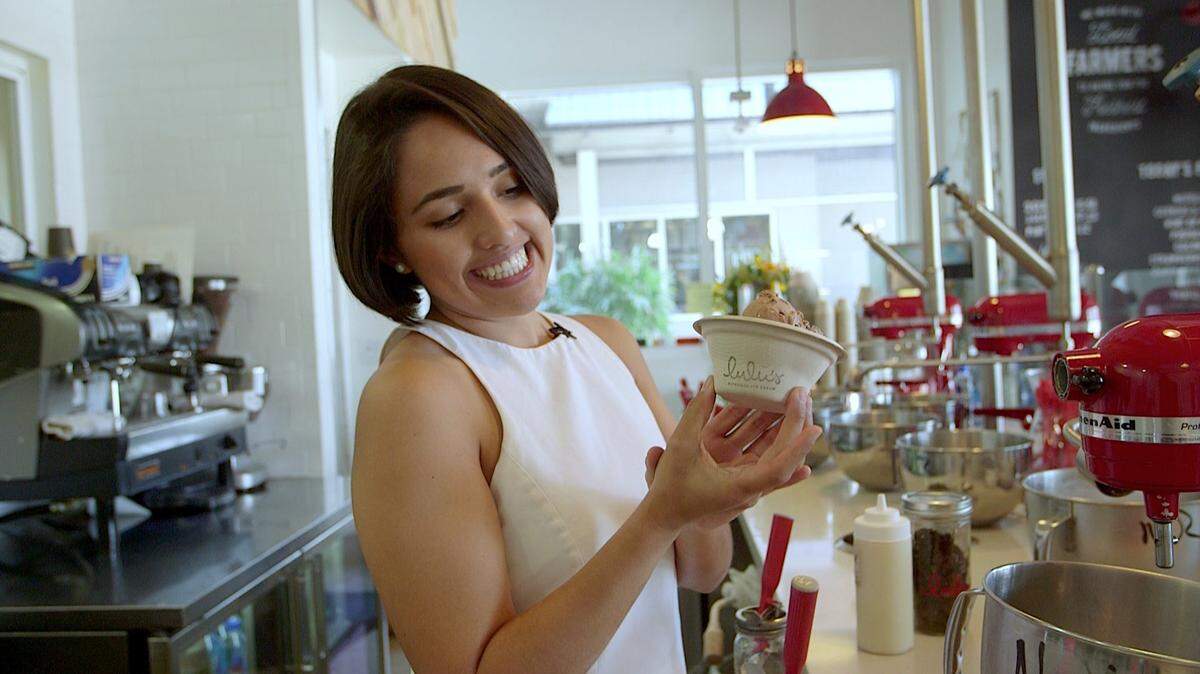
In Miami, Luisa Santos did not let her once-undocumented status deter her dreams. She eventually became a citizen, attended Georgetown University and now owns Lulu’s Ice Cream.
“The general attitude that would help us move forward as a country,” Santos said, “is let’s highlight the many things that immigrants do contribute, and let’s see how we get more of that.”
I couldn’t agree more.
Oscar Corral, a former Miami Herald reporter, is an Emmy Award-winning documentary filmmaker and CEO of Explica Media. “Making It in America” will be screened at 5 p.m. Jan. 5 at the Koubek Center, 2705 SW 3rd St. Miami. The screening is free, however audience members must register in advance.