
Kwanzaa, with its message of unity, has become a multicultural celebration | Opinion
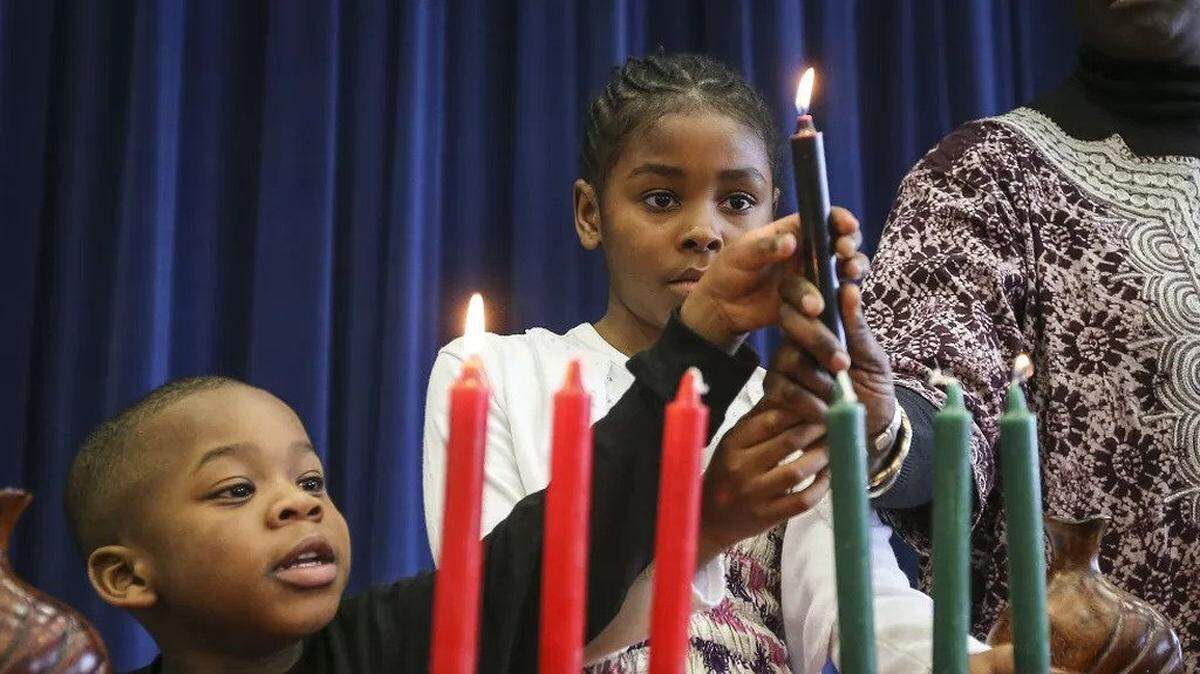
This is an important anniversary year for black people in the United States. It’s been 400 years since the first enslaved African landed in Jamestown, Virginia, in 1619.
That’s something to keep in mind during what will be the 53rd celebration of Kwanzaa, Dec. 26 to Jan. 1. The holiday overlaps with Hanukkah (Dec. 22 to 30) and comes on the heels of the more popular December holiday of Christmas.
I celebrate Kwanzaa (from Swahili, meaning “first fruits”), a holiday that honors family, community and culture. My family and I have done so for decades. But I will do so this year knowing that the bigotry that allowed for the enslavement of blacks remains a vital force in America.
In 2019, we still have religious and cultural intolerance. I can sympathize with many others here who feel like outsiders.
Black people in the United States are still subject to discrimination, police abuse and disproportionate treatment in the criminal-justice system. Churches and synagogues are being attacked and worshipers killed. On Dec. 10, a kosher deli in New Jersey was attacked in what is believed to be a hate crime.
Like other holidays that are celebrated predominantly by people of color — such as Ramadan, Juneteenth, Holi and Hispanic Heritage Month — Kwanzaa is often misunderstood. Because of its Swahili name and because it begins the day after Christmas, many folks think Kwanzaa is a religious holiday. Some refer to it as the “black Christmas.”
But Kwanzaa is a seven-day, pan-African, secular holiday with cultural roots. Its origins are in the civil-rights movement of the 1960s. But because of founder Dr. Maulana Karenga’s former ties to the United Slaves Organization, a black nationalist group, Kwanzaa is often pegged as being separatist and black nationalist. It is neither.
Over the decades, there have been quite a few non-African Americans present at our gatherings, and the atmosphere has been celebratory. People who are not of African descent are happy to be included because they often have family members or friends who participate.
Kwanzaa’s seven principles — unity, self-determination, collective work and responsibility, cooperative economics, purpose, creativity and faith — are ones that many people, irrespective of background, can appreciate.
Millions of people, regardless of race or religion, now celebrate Kwanzaa worldwide.
But even as our communities become increasingly multicultural and cross-cultural, acceptance has diminished for those who don’t follow mainstream traditions around this time of year.
In this age of terror, particularly in the current political climate, we would all benefit by learning more about one another, and to embody Kwanzaa’s ideals of happiness, unity and peace.
“Habari gani” (“What’s the news?”) is the greeting used to start the celebration.
The response, in Swahili, are the seven principles, in order: Umoja, Kujichagulia, Ujima, Ujamaa, Nia, Kuumba and Imani.
Harambee! Let’s pull together!
Kiki Monifa of Oakland, California, is editor-in-chief of BlackHistoryEveryday.com.
Progressive Media Project