
Venezuelans will not rest until Maduro is gone and democracy is restored | Opinion
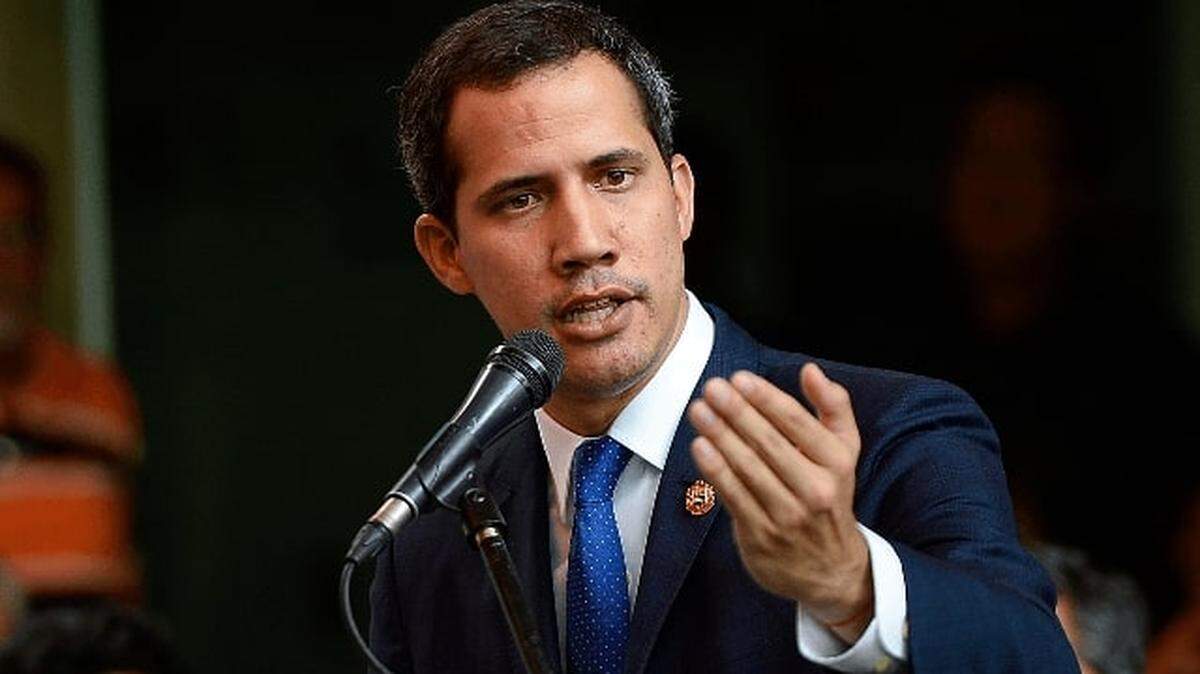
Nearly one year ago, Juan Guaidó became the interim president of Venezuela, a move that reflected Venezuelans’ overwhelming desire to end Nicolás Maduro’s illegitimate regime.
We have not accomplished everything in the past year that we had hoped we would, but much progress has been made, and it’s vital that we and our allies remain focused on Maduro’s removal and the restoration of democracy in Venezuela.
When Martin Luther King Jr. was asked in 1964, “Why must we act now?” King responded: “The time is always right to do what is right.”
In Venezuela, we have learned that waiting for perfect conditions is a recipe for failure. When we wait, the opponent, the dictator Maduro, moves to shut the window on liberty.
Knowing that people secure their freedom through struggle, and in order to produce a democratic revolution in Venezuela, last January, President-elect Guaidó followed Article 233 of our Constitution to become the legitimate president.
Now, with the strong support of 58 countries that recognize his legitimate government, President Guaidó and the people are redoubling efforts to complete the daunting task of rebuilding respect for the rule of law, defending human rights and creating a robust open democracy.
It would be a major miscalculation to underestimate the serious threat Maduro poses to democracy and security.
Venezuela — formerly the fourth-largest economy in Latin America, one of the region’s longest-standing examples of democratic rule; home to one of largest proven oil reserves in the world; and one of the United States’ closest economic and strategic allies in the hemisphere — is now practically a failed state in desperate need of multilateral assistance.
Maduro’s criminal failures and unprecedented corruption have put our economy on life support, caused enormous suffering by generating a complex humanitarian emergency, and surrendered our national sovereignty by placing territory and resources in the hands of illegal armed actors. These include narco-terrorist groups FARC, ELN and Hezbollah. The dictator is giving away free oil and control of the security apparatus to the communist regime in Cuba, as well.
Maduro’s rule has been just as violent as the left- and right-wing authoritarian regimes Latin America overcame in the 1980s and 1990s; at the same time, Maduro is the figurehead leader of a criminal enterprise.
Internationally, he is supportive of the Kremlin’s efforts to foment political instability around the globe and actively encourages Moscow to expand its security presence in Venezuela. The legitimate claims of people suffering in the region are being manipulated by the São Paulo forum under the coordination of Cuba and Maduro’s financing to exacerbate the unrest, transforming protests into riots to destabilize the region. Russia is reshaping a new cold war with Latin American as its latest battlefield.
President Guaidó called for mobilizations. According to NGO Observatorio Venezolano de Conflictividad Social, more than 10,477 protests have taken place in Venezuela since the start of 2019 when President Guaido took office.
The Rio Treaty group restricted the access and transit of 29 people linked to the Maduro´s regime in the territories of the signatory nations. This was an important sign of the growing recognition that finishing the job of ending Maduro’s tyranny and rebuilding inclusive democracy in Venezuela is a moral responsibility for our hemisphere.
The Rio Treaty will operate alongside the Lima Group, which has been crucial for marshaling multilateral support from both Latin America and the European Union. We thank the Lima Group countries for their continued defense of democracy and humanitarian support, in particular their generosity in hosting Venezuelan refugees.
We have key partners here in the United States — the administration of President Trump, the bipartisan support of Congress and the people of the United States. The United States has been crucial in helping the Guaidó government develop a strategic plan to recover ill-gotten gains, and in imposing sanctions and meting out justice to hold accountable those who have committed human-rights violations and gross acts of corruption.
After two decades of manmade devastation left the country in ruins, we have to reject the narrative that crisis is Venezuela’s new normal.
We do not fear Maduro, who is loved by no one, including historically pro-regime populations that have jeered and egged him. More than 80 percent of the Venezuelan population wants him out of power.
We will not waver; we will not tire. As President Guaidó said: “We all wonder if all the sacrifice was worth it. If we stop today, it will not have been worth it, but if we continue to freedom, it will have been worth everything.”
Carlos Vecchio is the interim Venezuelan government’s ambassador to the United States.