
Don’t let Florida execute James Dailey, Gov. DeSantis. He might be innocent | Opinion
As a former prosecutor, I tried more than 30 murder cases. For 18 years, as the elected state attorney in Duval County, I had the ultimate responsibility to decide whether to seek the death penalty in murder cases.
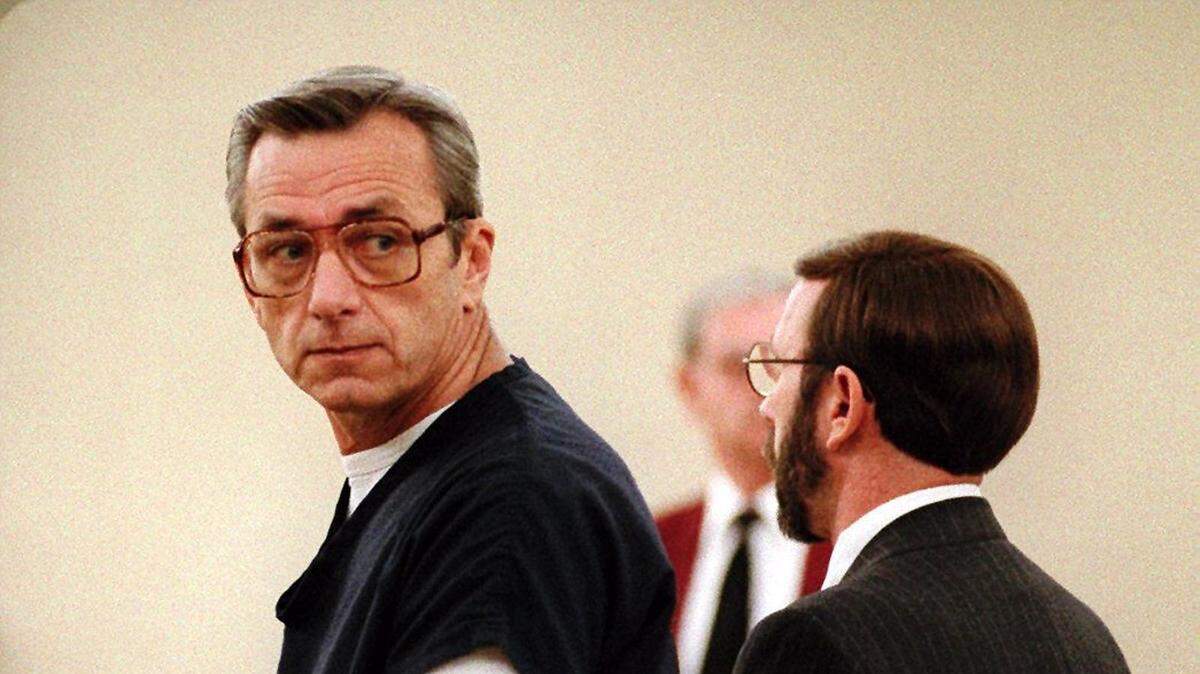
It is with all of this experience in mind that I urge Gov. Ron DeSantis to grant executive clemency to James Dailey and not to execute a man who was convicted and sentenced to death on the basis of unreliable jailhouse informant testimony. Dailey has been on Death Row since 1987, when he was convicted and sentenced to death for the murder of Shelly Boggio.
Last weekend’s story in The New York Times Magazine, “False Witness,” meticulously details how Paul Skalnik, a child-sex offender, con man and notorious “jailhouse snitch,” provided the damning testimony critical to Dailey’s conviction and death sentence.
Dailey’s jury never learned the full extent of Skalnik’s criminal history as a con man, including how, time and again, he preyed upon and exploited vulnerable people with his lies and false promises. Nor did jurors hear the details of Skalnik’s longstanding cooperation with prosecutors, which resulted in leniency in his own cases and appeared to lead to the dismissal of a child-sex charge.
Instead, Skalnik provided jurors with a dramatic account of Dailey’s supposed confession. (Dailey, who did not take the stand at his trial, denies ever talking to him.) Skalnik told Dailey’s jurors that he faced a 20-year sentence on grand-theft charges, but expected nothing in return for his testimony.
Yet just five days after Dailey was sentenced to death, Skalnik was released. He went on to con more victims and commit another child-sex offense in Texas.The Florida prosecutor who put Skalnik on the stand and asked the jury to believe his testimony, in order to convict Dailey and then sentence him to death, later testified that she would not put Skalnik on the stand again because she could not be sure his testimony would be truthful. At this point in time, Skalnik has been convicted of no fewer than 25 crimes of fraud and dishonesty, in at least three different states, in both state and federal court.
Floridians have differing views about the death penalty. But everyone agrees that if we are to have the death penalty, it must be fair and reliable. The process in Dailey’s case was neither.
I believe that police and prosecutors do their very best and, in the majority of cases, they get it right. But human beings are imperfect. Sometimes the system fails. Since 1973, 166 people in the United States have been exonerated and freed from Death Row. Florida has had the most death-penalty exonerations of any state in the nation, with 29.
The risk of executing an innocent person is real. There is powerful evidence that Dailey is innocent. There was never any eyewitness or forensic evidence implicating him. Police initially arrested Jack Pearcy in connection with the murder. Pearcy directed them toward Dailey, his housemate, in attempt to shift the blame from himself. Pearcy, who was tried first, was convicted and received a life sentence, not death.
The evidence in this case consistently points to Pearcy as the sole actor responsible for Boggio’s murder. Witnesses saw the victim alone with Pearcy shortly before the critical window of her death. Over the past 30 years, Pearcy has admitted at least four times that he committed the murder alone, including in a sworn affidavit. (The courts thus far have refused to consider his repeated confessions on the merits, instead rejecting the evidence on procedural grounds.)
Unlike Dailey, Pearcy had a history of violence, including against women, and a long criminal record. Pearcy is paying for this crime with a sentence of life in prison. There is too much doubt to make Dailey pay for this crime with his life.
This was a terrible crime, and Boggio’s family suffered an unimaginable loss. Floridians’ concern for the family, however, does not lessen the concern for the truth.
The courts are limited by procedural rules that make it difficult to re-open cases and consider new evidence. The governor, however, is subject to no such limitations. As former Supreme Court Chief Justice William Rehnquist made clear, executive clemency “is the historic remedy for preventing miscarriages of justice where judicial process has been exhausted” and the “fail safe” for cases such as Dailey’s, where the clemency board and executive can consider all of the evidence, even when the courts cannot.
DeSantis has the authority to make absolutely sure that he does not put an innocent man to death. He should use that power.
Harry L. Shorstein practices law in Jacksonville. He was the state attorney for the Fourth Judicial Circuit for five terms.
This story was originally published December 11, 2019 at 4:29 PM.