Development in Miami should make everyone feel at home in their neighborhood | Opinion
The late Jane Jacobs, author of “The Death and Life of Great American Cities,” wrote: “Cities have the capability of providing something for everybody, only because, and only when, they are created by everybody.”
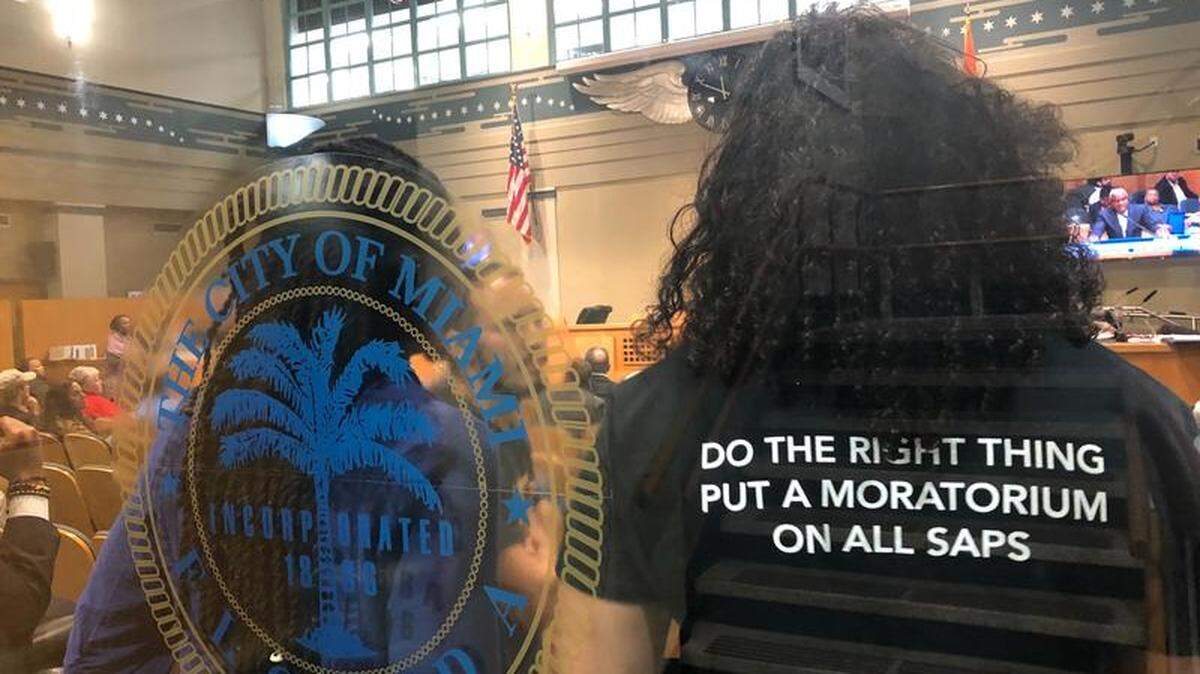
On Dec. 4, Miami’s Planning, Zoning & Appeals Board meet to discuss Special Area Plans (SAPs). The public is invited to weigh in on how they are affecting our many diverse neighborhoods.
Special Area Plans touch on many of the issues we are grappling with, including race and poverty, gentrification, sea-level rise, affordable housing and traffic.
In theory, they are a powerful tool designed to encourage smarter private development by trading increased density and flexibility for “community benefits.” However, such upzoning raises due-process and equal-protection concerns in less affluent and minority neighborhoods.
First, Special Area Plans in areas such as Brickell City Center are very different from those proposed for areas such as Little Haiti.
The former is about encouraging better urban design in pre-existing high-rise zones to attract new residents to even higher and denser living. The latter is more about taking advantage of cheaper land in pre-existing low-rise residential zones, also to attract new residents.
Little consideration is given to existing neighborhood residents who either cannot afford the proposed “set-aside” affordable rental units, or who have families. Moving is the only other alternative as the Special Area Plan drives up rents everywhere. This is known as “gentrification.”
We must put protections in place to ensure that these neighborhoods are not forced to bear the burden of market forces, while developers and other residents reap the benefits.
Second, Special Area Plans are not an “entitlement” like the owner of a commercially zoned property being able to build a five-story commercial building “as of right.”
Instead, a proposal for SAP development is a mere request to the city that a property owner of at least nine acres makes for special zoning treatment — higher and denser — in exchange for a wide variety of concessions called “community benefits” to be negotiated by the developer and the city.
Since SAPs in disadvantaged neighborhoods create a swiftly rising tide of property values, we should assure that most of the neighborhood’s existing boats, whether owned or rented, are lifted.
Community benefits must be tailored to specific needs gleaned from neighborhood meetings and should include funding to stabilize the neighborhood outside the SAP boundary as well as inside. For example, funding for land trusts, repairs and improvements to homes and businesses of local residents, and funding for “soft second” mortgages to turn qualified renters into homeowners.
“Inclusionary” rental units inside the new Special Area Plan are simply not enough community benefit. Minimizing displacement of existing residents and businesses must be a priority.
Residents who built neighborhoods where they have raised families for generations must not be treated as an afterthought, even if those neighborhoods have been allowed to slide into disrepair caused by decades of neglect by the city and the absence of private investment.
We also must consider the effect of several Special Area Plans affecting the same neighborhood. They should be separated in space and time.
Finally, any reform of Special Area Plans will be futile if developers can simply go in front of the City Commission and achieve their goals politically. Some, believing they are assured of rapid approval at the Commission, do not care what the Planning, Zoning & Appeals Board recommends, preferring denial to deferral. The goal instead must be to follow Miami 21’s explicitly stated Intent: to preserve and protect neighborhoods.
These issues go to the heart of the social contract between the government and our most vulnerable residents. We -- all of us -- need to be able to have a meaningful voice and role in preserving and shaping our own neighborhoods.
Anthony Parrish is a developer of affordable single-family homes in West Coconut Grove. He serves on the city of Miami’s Planning, Zoning & Appeals Board. David Winker is an attorney active on civic issues.