
Rubio: Bolivians stood up for democracy. The rest of the world must support them | Opinion
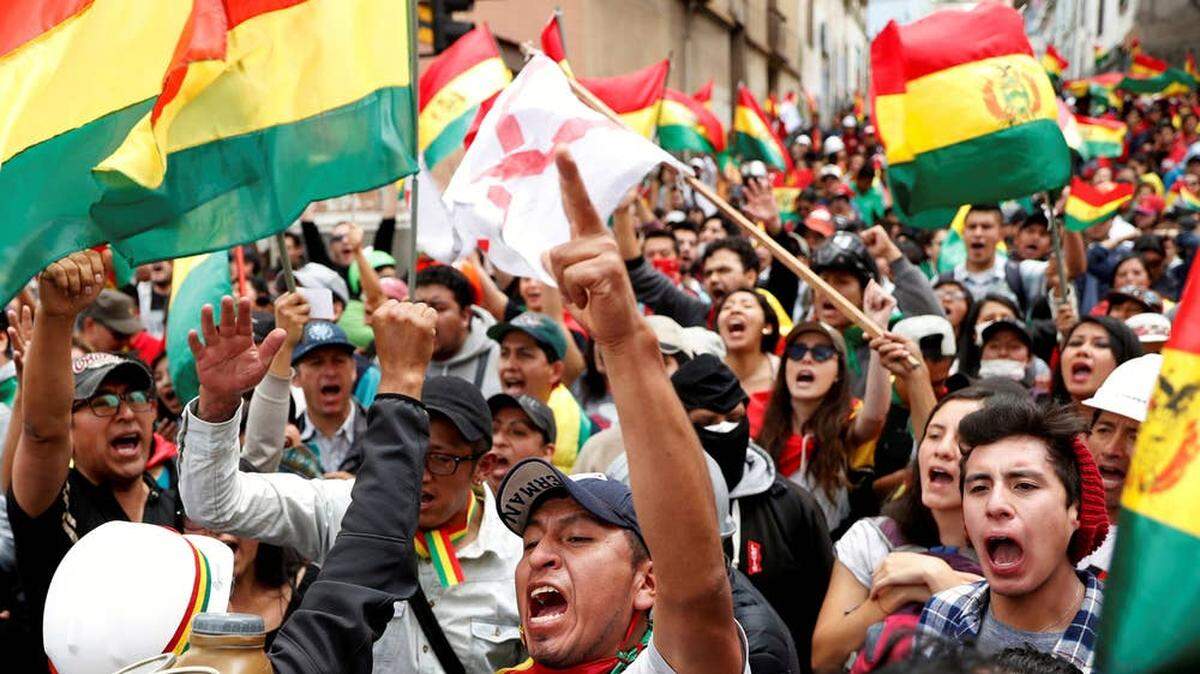
For the past three weeks, the world has watched as the Bolivian people rejected Evo Morales, a would-be autocrat who, in a desperate bid to cling to power, made a mockery of his country’s political institutions. Morales’s flight from the nation he could not bear to relinquish should be celebrated by all those who stand for the rule of law in the Western Hemisphere.
More specifically, Americans have a national interest in ensuring that electoral processes remain stable and free. Prosperous, democratic societies, of course, are better for those living in them. But they’re also better for the United States and the hemisphere, exposing us to fewer spillover effects from conflict and offering more stable, mutually beneficial economic and security relationships. They are also less vulnerable to foreign interference from countries such as China and Russia.
After failing to manipulate the election to his preferred outcome, Morales predictably has whined that he’s the victim of a coup. It’s the same, textbook strategy used by the regimes in Cuba, Nicaragua, and Venezuela to excuse their own electoral and political failures. But the facts leave no ambiguity about the real story: Morales tried — and failed — to overturn a democratic electoral process, and the Bolivian people rightly are defending their democracy.
After a majority of Bolivians rejected Morales’ attempt to run for a fourth term in 2016, the country’s supreme court, which Morales had packed with friendly judges, unconstitutionally cleared his way. Then, on Oct. 20 of this year, the first round of elections was held. Morales claimed victory, but in reality the results called for a runoff. A day later, after an unprecedented 24-hour suspension of preliminary results, the tally suddenly and conveniently surged to cross the 10-point difference that Morales needed — revealing serious irregularities in the vote count.
As Bolivians began to peacefully protest across the country, the Organization of American States (OAS), overseeing the electoral process as an international observer, noted the deeply improbable shift. On Oct. 22, the vice president of Bolivia’s electoral board resigned amid the growing controversy.
Rather than accept the results, Morales claimed to be the victim of a coup and foreign interference. The day after, the OAS, European Union, United States, Argentina, Brazil and Colombia all recommended proceeding with a runoff. Unsurprisingly, the regimes in Cuba and Venezuela — no doubt devastated to watch a fellow socialist lose his grip on power — prematurely congratulated Morales on his “victory.” More disappointing was Mexico’s decision to follow suit.
As the political situation began to devolve into violence, the OAS began a U.N.-backed audit of the election. Ten days later — as the military announced its refusal to “confront” Bolivians protesting Morales — the auditors declared that they had uncovered examples of manipulation and other irregularities in the voting system.
After the head of Bolivia’s armed forces suggested that Morales step down to prevent the situation from further deteriorating, he voluntarily resigned. Despite initially announcing he would not leave Bolivia, Morales fled the next day to Mexico, a nation whose government has publicly stated would not interfere in the affairs of other countries.
The irony that Morales chose a free-market nation as his new home — forgoing the solidarity of joining his fellow socialists in Havana, Managua, or Caracas — should not be lost upon anyone.
The Bolivian people must be applauded for rejecting Morales’ antidemocratic gambit. While much is still unclear about their nation’s next steps, their resolve foretells a brighter future for the country and its hopes of returning to democratic order. As Americans, we must call for a return to free and fair elections in Bolivia, as well as an independent Supreme Electoral Tribunal. Restoring Bolivia’s democratic process — and ensuring the process is upheld in other OAS member states — will pave the way for renormalized, bilateral relations between our nations. In particular, it will enhance security cooperation on counternarcotics, a problem that corrupt elites in the country have historically exploited.
We should also commend the OAS for its invaluable assistance and urge it to continue to defend and monitor the democratic process in Bolivia and the Western Hemisphere. At the same time, this growing form of electoral distortion, in which dictators who lose at the ballot box claim a coup is being staged, must be condemned in the strongest terms. The media are complicit here, as reports credulously continue to use the term “president” to refer to figures like Morales, Miguel Díaz-Canel or Nicolas Maduro, who were not elected through a legitimate, free and fair democratic process.
Thankfully, in the wake of its audit, the OAS didn’t mince words. Its secretary-general, Luis Almagro, declared, “Yes, there was a coup in Bolivia. It happened on Oct. 20, when the electoral fraud was committed.”
Marco Rubio is the Florida’s senior senator in the U.S. Senate.