
Why should North Carolina residents pay for our transit needs? Because we’re all in this together | Opinion
Several weeks ago, I testified before Congress on the issue of transportation. During my testimony, U.S. Rep. Mark Meadows, of North Carolina’s 11th congressional district asked me: “Why should my residents in a rural area give money to support rail in Miami-Dade County?”
The easy answer to the question revolves around money. In 2017, Florida received back only 90.7 percent of the gas-tax revenue it sent to the U.S. government in federal funding for roads and transportation projects. It was an increase from the 88 percent that Florida got back from 1956-2016.
And that same year alone, Florida generated $175 million that went to projects in other states. Over the lifetime of the highway fund, Florida has contributed more than $5.2 billion to projects in other states.
Put succinctly, we weren’t asking for money from other states, we were asking for more of our own money. Miami-Dade contributes to the greater expansion and maintenance of the country and its transportation infrastructure.
The thinking behind the question appeared to be that people should only pay for what helps them. This concept tends to permeate our current national dialogue, however, I suggest that it is un-American.
As a country, we are held together by the Constitution, but it is worth noting that, as written, it was not our first effort to come together as a country.
Our first effort was the Articles of Confederation and Perpetual Union. They failed for many reasons, one of which was that it contained a provision that every state was stuck looking out for itself.
Under the Articles of Confederation, we were not one nation, under God, indivisible with liberty and justice for all. We were states on the same continent, that really liked each other, sort of like besties but not brothers. We reinvented ourselves under the Constitution because we understood, fundamentally, that as besties we couldn’t make it. We had to be brothers. We understood that this American experiment, which has transformed the world, could never manifest its truest and fullest destiny as loosely associated states with a common interest. We had to be undivided, indivisible.
The Constitution’s authors realized that the strong shall bear the infirmities of the weak and that, in some ways and at some point, we will all be weak and we will all be strong.
This American ethos allows us to have a nation of coast and heartland, dependent on each other for an American goal, an American good. This makes sense. Our coast, with airports and seaports, allows for billions of dollars of exports and imports that power the U.S. economy. Not the Florida economy. Not the California economy. Not the New York economy. The American economy. An economy that supports millions of jobs and tens of millions of families.
Similarly, the American heartland provides manufacturing and agriculture that supports millions of jobs and tens of millions of families. Our success, if it is to be actualized and permanent, is inextricably intertwined with every part of America and every type of American.
We can’t afford a new America where everyone is in it for themselves. An America that does not believe in sacrifice. An America that does not believe in a greater good. An America comprised of 50 states that see themselves as friends and not family. Perhaps these tensions are predestined to surface, so it is our job to extract them like they are cancer. Their roots are fatal to the America of our conception, perception and perpetual growth.
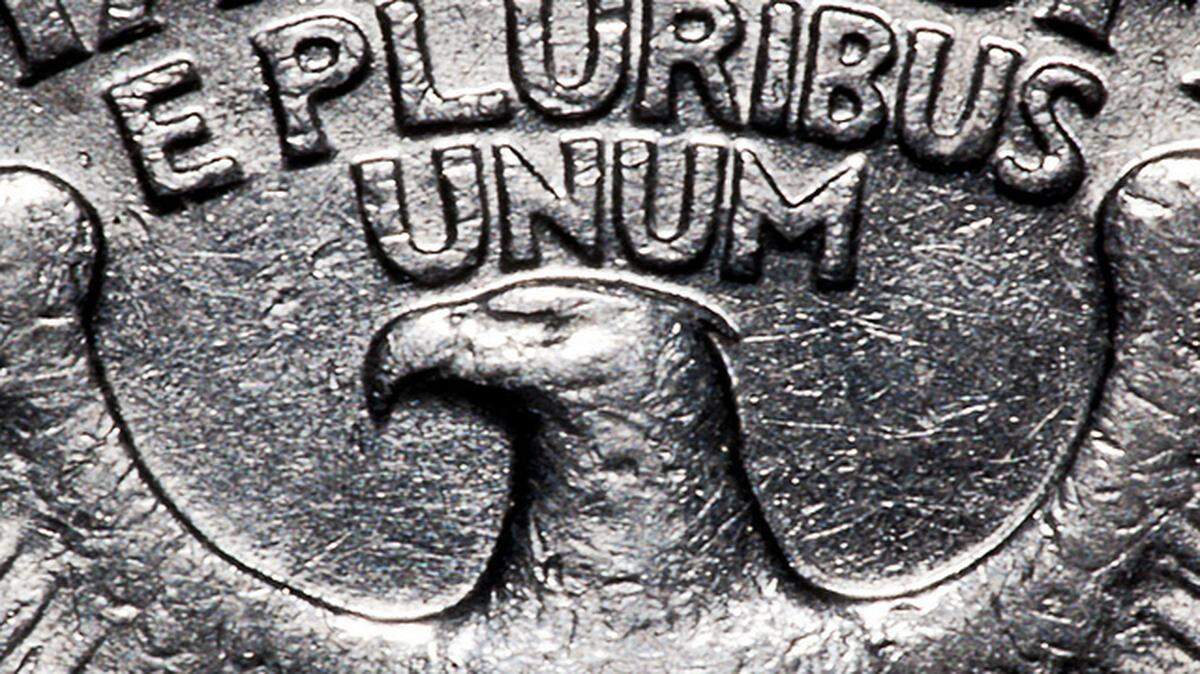
In short, the answer to Rep. Meadows’ question — “Why should my residents pay for rail in Miami-Dade County” is found at the bottom of the dollar bill — E Pluribus Unum. Out of many, one.
Oliver G. Gilbert III is the mayor of Miami Gardens.
This story was originally published September 27, 2019 at 8:26 PM.