
Disability is not a deficit. It is a powerful creative force | Opinion
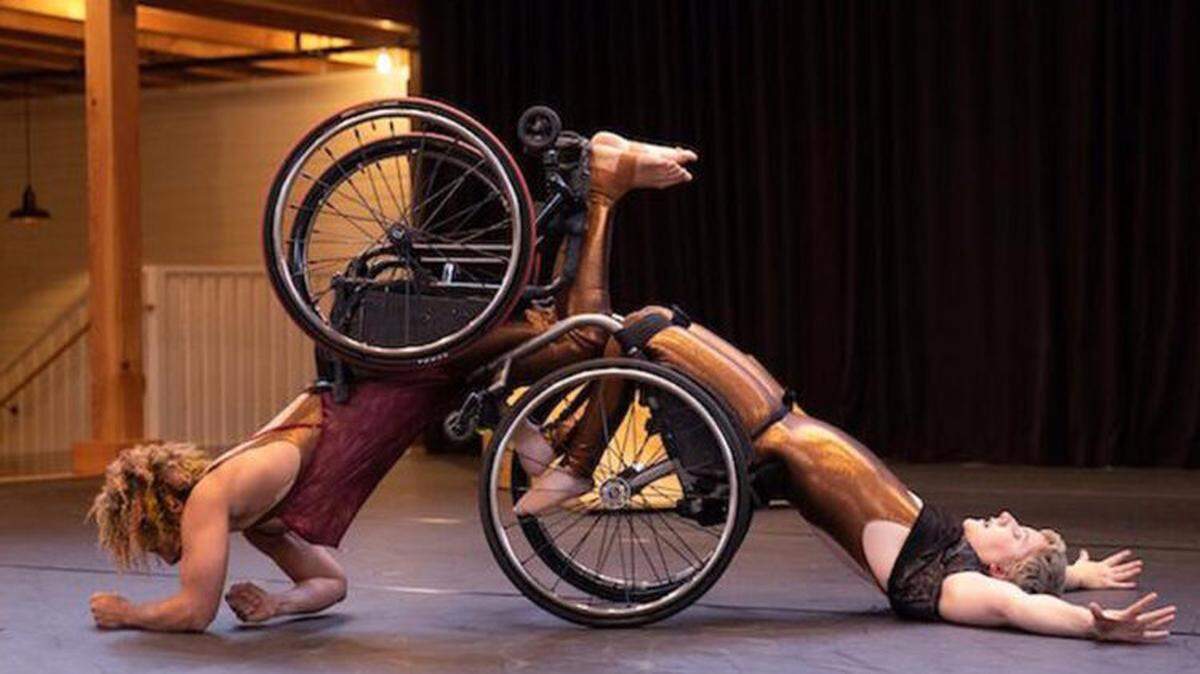
I am a disabled dancer and choreographer. I use disability as the term of identity and also as a term of art. Disability is more than the state of my body; it is the word for an entire culture and artistic aesthetic. Disability is a creative, generative, powerful force.
All too often, disability is regarded as only a medical situation of body or mind. Non-disabled folks mostly know it as a series of deficits that come with a medical diagnosis: the things someone cannot do or the weird things a body or mind does that are beyond control.
I am not interested in the medical world of disability. I do not see it as a set of deficits. Nor do I work from the position of “despite;” I can do this, that, or the other, despite not being able to do certain tasks or actions.
My disability world is about the work of other disabled artists, writers, filmmakers, poets, scholars and activists. It is rooted in the political history of the disability civil-rights movement and the cultural and aesthetic history of disability. I declare “For Us, By Us” as the guiding principle of my work.
While my work may end up being educational or transformative for others — particularly nondisabled audiences — that is not the reason I create. In direct contrast to the way mainstream media often portray disabled performers, my art does not exist to astound or prove my abilities.
With this mission in mind, I founded Kinetic Light, a dance ensemble led entirely by disabled artists, in 2016. My Kinetic Light partners, Michael Maag (lighting and video design) and Laurel Lawson (dancer, technology lead), are my dream collaborators. Working in the disciplines of art, technology, design and dance, Kinetic Light creates, performs, and teaches at the nexus of access, disability, dance and race. Our identities are intersectional, and so is our work.
“Intersectionality” comes from Kimberlé Williams Crenshaw’s feminist legal theory. At its core, the term describes how different aspects of social and political identity overlap and what happens when a person bearing these identities comes into contact with power. Applying intersectional thinking in dance might allow a choreographer to craft a piece that tells her personal story in a way that recognizes all her identities as a queer disabled woman of color, equally.
For example, much of the mainstream representation of disability is incredibly white. I know disability as being intimately bound up with discourses of race, gender and sexuality. When I create work for myself and for Kinetic Light I ask myself a series of questions, including: What does art look like that does not justify itself or the existence of disabled people? What do racialized disability aesthetics look and feel like? How do we move to realize them?
I am not alone in this. I am part of a complicated, exciting, growing disability arts community. Some artists identify as performance artists; some dance with physically integrated (disabled and non-disabled) companies; and others might identify with the growing field of disability dance, which explores disability aesthetics and culture. Still others might resist personal identification, but disability appears in their work. Disability in art is not one thing.
Can you name your favorite disabled dance artist? Can you name any disabled artist? I invite you into our world. Come see a performance and revel in the beauty of the work.
Kinetic Light will appear as part of the Forward Motion festival, which starts at 8 p.m. Sept. 28, at the Miami-Dade County Auditorium. For more information visit ForwardMotionMiami.com.
Alice Sheppard is a multiracial woman with short curly hair. She is a choreographer, speaker, educator and disabled dancer. She is the artistic director of Kinetic Light.
This story was originally published September 23, 2019 at 1:59 PM.