
Don’t believe any candidate touting public-option health insurance. We’ve been there | Opinion
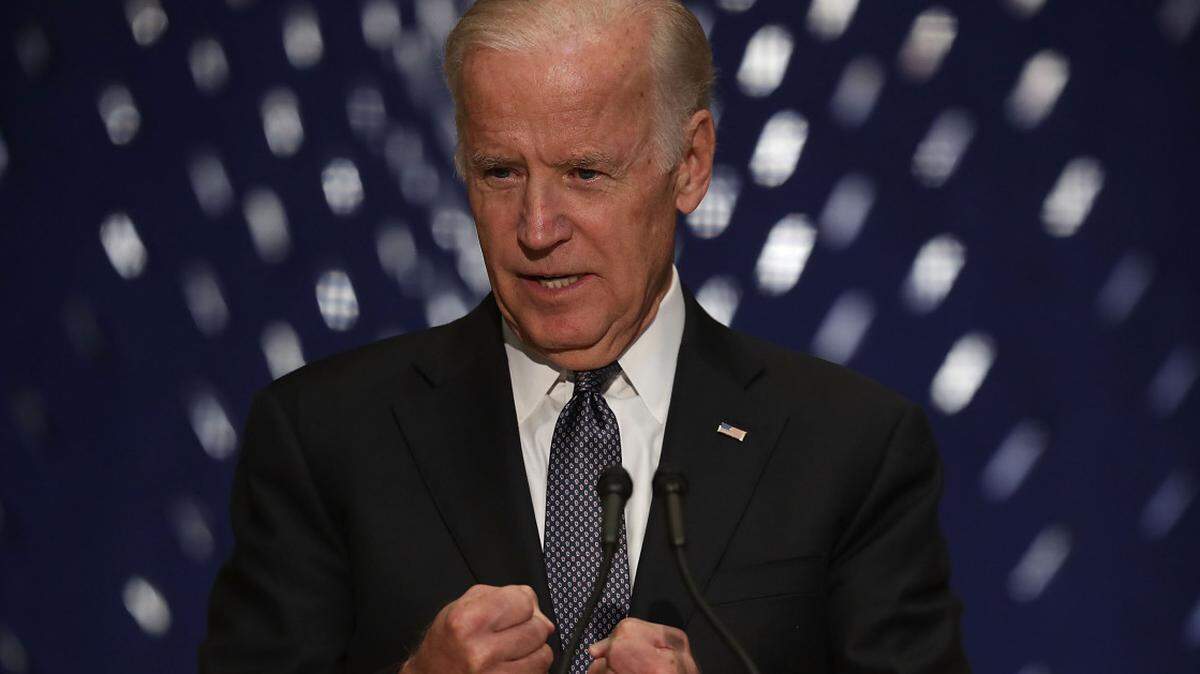
Former Vice President Joe Biden is trying to reassure voters. Like former President Obama, he is promising that, “If you like your health plan, your employer-based plan, you can keep it.”
Don’t bet on it.
Some presidential candidates support directly outlawing private health plans, and replacing them with a single-payer, government-run health plan. But others, like Biden, support a more indirect path to single payer — through a “public option,” a government health plan intended to compete against private health plans.
The idea of a public option is not new. During the 2009-2010 debate on Obamacare, congressional liberals said that they wanted to field the public option against private health insurance because it would enhance competition in the markets and keep private health plans honest.
But the real purpose of the proposal, as several prominent Democrats publicly conceded, was to undercut private health plans by creating a government plan with special advantages, and thus crowd out and destroy private coverage altogether. Moderate Senate Democrats objected, however, and in the waning days of the 2010 debate, the Senate jettisoned the House Democrats’ “robust” public option scheme.
While a full-blown public option was averted, congressional liberals fielded two smaller sets of government-sponsored plans to compete in the individual and small group health insurance markets: The Community Oriented and Operated Plans (Co-Op Plans) and the Multi-State Health Plans, otherwise known simply as the Multistate Plans (MSPs). Competing on a level playing field, both failed.
The CO-OP plans entered the health insurance exchanges to offer coverage as non-profit health plans. To jump-start these new federally sponsored health plans, Congress authorized $6 billion and established a loan program. In 2012, Obama’s team also provided $2.4 billion in taxpayer-subsidized loans.
Nonetheless, despite these heavy infusions of taxpayer cash, the plans started to fail, and the program itself virtually collapsed. By 2016, only 11 plans were active in 23 states. Of the original 24 CO-OP plans, only four remain.
The second set of plans were the Multi-State Plans (MSPs), which required the Office of Personnel Management (OPM) to contract with at least two insurance carriers of offer the federally standardized coverage in health-insurance exchanges. In 2014, however, OPM managed to contract with only one national insurer, the Blue Cross/Blue Shield Association.
That year, Obama administration officials projected enrollment of 750,000 persons. In 2015, enrollment climbed to only 371,000. MSP enrollment trajectory continued downward. The penetration of MSP plans — legally required to be operating in all 50 states by 2017 — was likewise abysmal. In 2018, MSP plans existed in only one state: Arkansas.
Neither the CO-OP plans nor the MSP plans did much, if anything, to enhance insurance-market competition. Personal choice and market competition in the health-insurance exchanges in many parts of the country virtually collapsed. In 2019, 37% of U.S. counties had just one insurer, and 40% had just two.
Yet the “public option” proposal is making a comeback — this time as the more “robust public option” armed with powerful advantages for the government plan that will pave the way for an eventual single-payer, government-run plan. These particular public options are based on a command-and-control model with government price setting, provider coercion, consolidation by squeezing out private competition and shifting financial costs on to taxpayers.
Ordinary Americans, who already fear losing their private health plans, should be wary of politicians’ deceptive rhetoric about how a public option would enhance market competition, keep private plans honest or make the health insurance markets — the markets they’ve already savaged through inflexible regulations — “work.”
The public-option strategy is nothing less than single payer on the installment plan, and with it the erosion private and employer-sponsored health coverage in America.
Robert E. Moffit, Ph.D., is a senior fellow in the Center for Health Policy Studies at The Heritage Foundation. Nina Schaefer is a senior research fellow for domestic policy studies and health policy in Heritage’s Institute for Family, Community and Opportunity.


This story was originally published July 29, 2019 at 7:34 PM.