
In Miami-Dade, ‘full employment’ brings little relief to the working class | Opinion
We currently are benefiting from one of the lowest unemployment rates achievable; as of April 2019, Miami-Dade County had an unemployment rate of only 3 percent, a figure that economists consider virtually “full employment.”
Employment gains also appear to indicate that the county’s employment sources are diversifying. CareerSource South Florida noted in a study that while traditional sectors of the Miami-Dade economy, such as the tourism and healthcare services industries, grew by 1.7 percent, the transportation, warehousing and utility sectors grew by 6.1 percent, and the manufacturing sector grew by 3.9 percent.
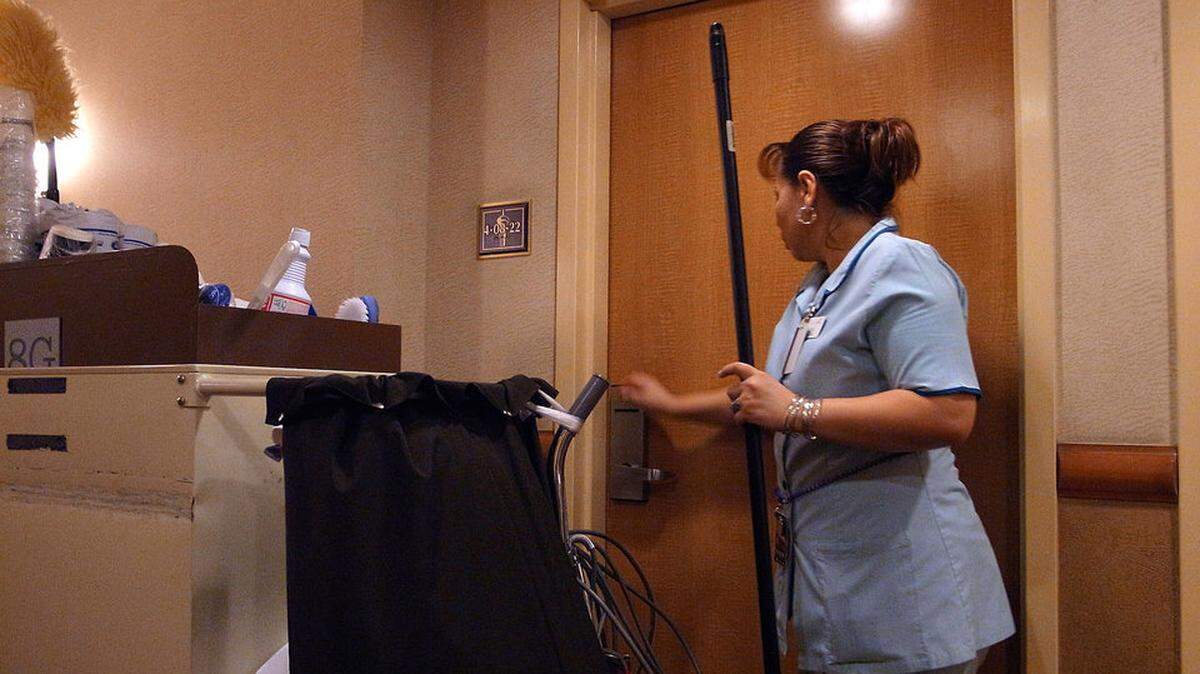
Nevertheless, while economic diversification is an encouraging development, the county’s primary industries are still the healthcare and tourism industries; combined, they account for almost one-third of Miami-Dade’s economy. It is therefore important to note that many of the jobs in the tourism and healthcare industry are low-skilled jobs such as clerical, maintenance, elderly services, and wait staff positions. On average, blue-collar workers in the tourism industry earn $31,200 a year and taxi drivers earn $33,365 a year — a level of income with which it is difficult to sustain a family.
To make matters worse, after federal payroll taxes, this leaves blue-collar workers earning approximately $5,500 less per year; in effect, take-home pay is not much more than $2,000 a month.
Because of our inordinately high housing costs and ineffective mass transportation system, low-wage workers are living paycheck to paycheck. This begs the question: What can government do to bring relief and enhance the quality of life of what is one-third of our workforce? The answer is that all governments must work to eliminate unnecessary fees and hidden taxes.
Charging motorists for using roads affect those who use roads frequently and over long distances the most. Tourism workers fall perfectly into this category. Wendi Walsh, who represents the hotel workers’ union, likes to say that her employees spend 12 hours a day to earn seven hours’ pay; what she means is that for those commuting from Florida City or Homestead to Miami Beach, the round-trip commute takes up to four hours, and public transportation or tolls take another hour of minimum wage.
And then there are red-light cameras. Each red-light camera violation averages $160. For a typical tourism-industry worker earning $15 an hour, a red-light-camera ticket will cost the worker more than an entire day’s worth of income plus three hours of the following workday.
Red-light-camera tickets and toll roads are hardly the only fees and taxes that impact the working- and middle-class families. During the past few decades, governments have imposed “user fees,” for things that used to be free, such as parking at the beach, broadcast TV, trash disposal and use of parks and museums. In effect, what used to be “public goods,” which were available for all consumers regardless of the level of demand, now cost substantial amounts.
Economists insist on telling us that we are at full employment and that we have achieved it somehow without excessive inflation. However, the classic “economic basket” is no longer useful to measure inflation. While it is true that food and retail goods, including clothing and appliances have seen a small rise in cost, the cost of healthcare, transportation, utilities, user fees and insurance has risen enormously — much of it eaten up by government itself.
And so while the investment bankers rake in enormous profits, the average American worker has seen virtually no increase in disposable income and a reduction in the ability to consume what used to be “public” amenities, it is incumbent on government to quit feeding itself at the expense of the middle and working classes, especially while it crows that everybody has a job.
Xavier L. Suarez represents District 7 on the Miami-Dade County Commission.