
Thanks to the Chapmans’ leadership, the Homeless Trust is a national model | Opinion
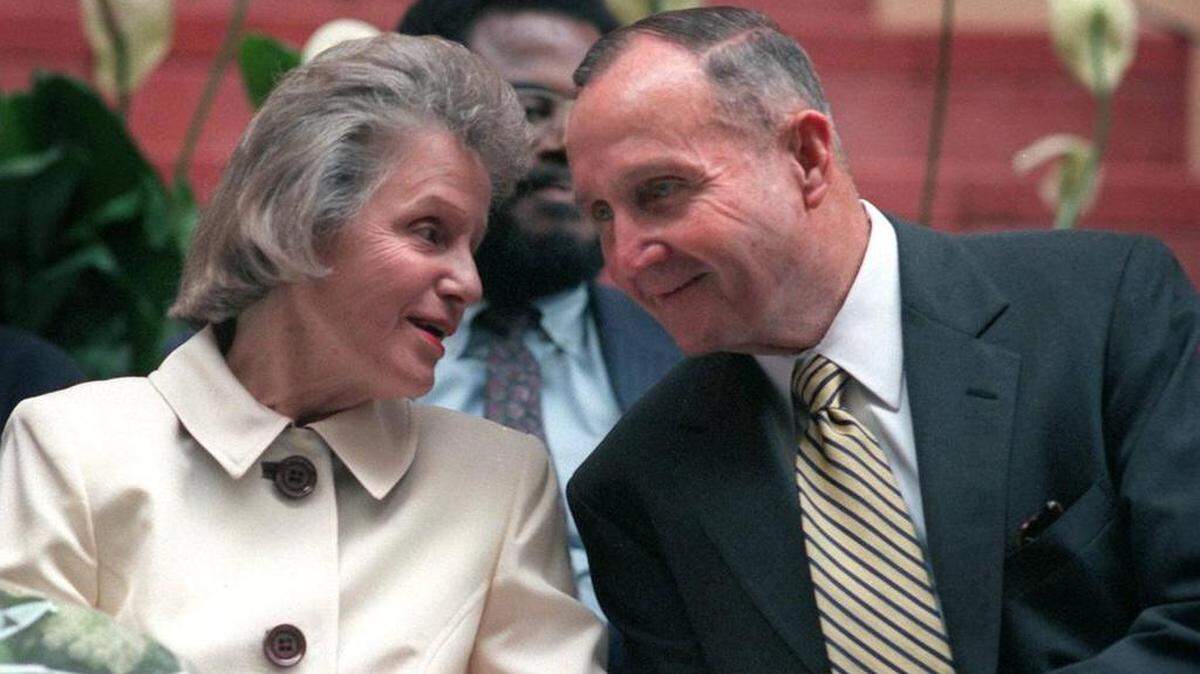
When I heard of the recent passing of Betty Chapman, I felt humbled and grateful to have partnered with her and her husband of 65 years, the late Alvah H. Chapman, to address one of the more complex issues in our community — homelessness.
I also was heartened to know that, as we mark the 25th anniversary of the creation of the Miami-Dade County Homeless Trust this week, Betty was able to see an effective system of care for the homeless come to fruition.
When I first met the Chapmans in the early ’90s, there were an estimated 8,000 homeless people living on our streets — many in unsafe and unsanitary encampments that rivaled slums in Third World countries. There were well-meaning providers but no coordinated system to address the needs of the thousands with untreated mental illnesses, often self-medicated with illegal drugs, living under highways and in abandoned buildings. Certainly, there was no significant funding and practically nonexistent leadership to address the problem.
What began as a political assignment that many felt was doomed to failure, my appointment as the County Commission’s chair of the newly created Homeless Committee turned out to be a blessing.
Our family had dealt for years with my brother’s struggles with substance abuse, mental illness and periods of homelessness. I understood the deficiencies in the system, and this assignment allowed me to work closely with Alvah on a solution that became a national model. The former president of the Miami Herald and CEO of Knight Ridder newspapers, Alvah was a visionary businessman who loved this community and knew we could do better; I, too, believed we could. The passage of the dedicated source of funding to support a coordinated system of care — believed to be the first of its kind at the time — has leveraged millions in federal dollars to expand homeless programs and housing.
Today, more than 2,600 emergency and transitional treatment beds help stabilize individuals and families coming off the streets, while more than 5,900 permanent supportive housing beds provide a decent and safe home to individuals who are again contributing to their community. Specialized outreach to help the severely mentally ill accept services, and programs to address the unique needs of unaccompanied homeless youth, victims of domestic violence and human trafficking, and veterans are just some of the resources available today in our community that are making an impact and reducing homelessness.
The Homeless Trust’s private-sector partner, Chapman Partnership, remains an entry point to a coordinated system of care, and the Trust has evolved to address today’s “housing first” objectives without losing focus on supportive services. Miami-Dade County’s homeless point-in-time count in January found just over 1,000 people still living on the streets (with another 2,600 in emergency housing or treatment programs). While that is 1,000 people too many, that number pales in comparison to New York City’s 78,000, Los Angeles’ 50,000 and Seattle/King County’s 12,000 homeless.
As the first chair of the Miami-Dade County Homeless Trust, I was a witness to how collaboration and innovative thinking can bring together the business community, government resources, private service providers, elected officials, formerly homeless individuals, the faith-based community and so many caring people and interested stakeholders to focus on one goal and identify real solutions for a pressing societal issue.
Our success so far doesn’t mean it was easy. Along the way there were battles about NIMBY (“Not In My Back Yard”), discussions about prioritization of resources and challenges with helping people leave homelessness in a community that still struggles with a lack of affordable housing.
Make no mistake. Homelessness continues to be a challenge for our community. Our work is ongoing and never will be finished. But, as we celebrate this milestone 25th anniversary, I am grateful for so many who have been part of this effort — and especially for Betty and Alvah Chapman, who had the compassion and dedication to help find a real solution for those that Alvah often called the “least, lost and forgotten.”
Alex Penelas was the Mayor of Miami-Dade from 1996-2004. He also served as County Commissioner from 1990-1996.
This story was originally published May 8, 2019 at 5:11 PM.