
State lawmakers intrude on local control in seeking impose term limits on school board members | Opinion
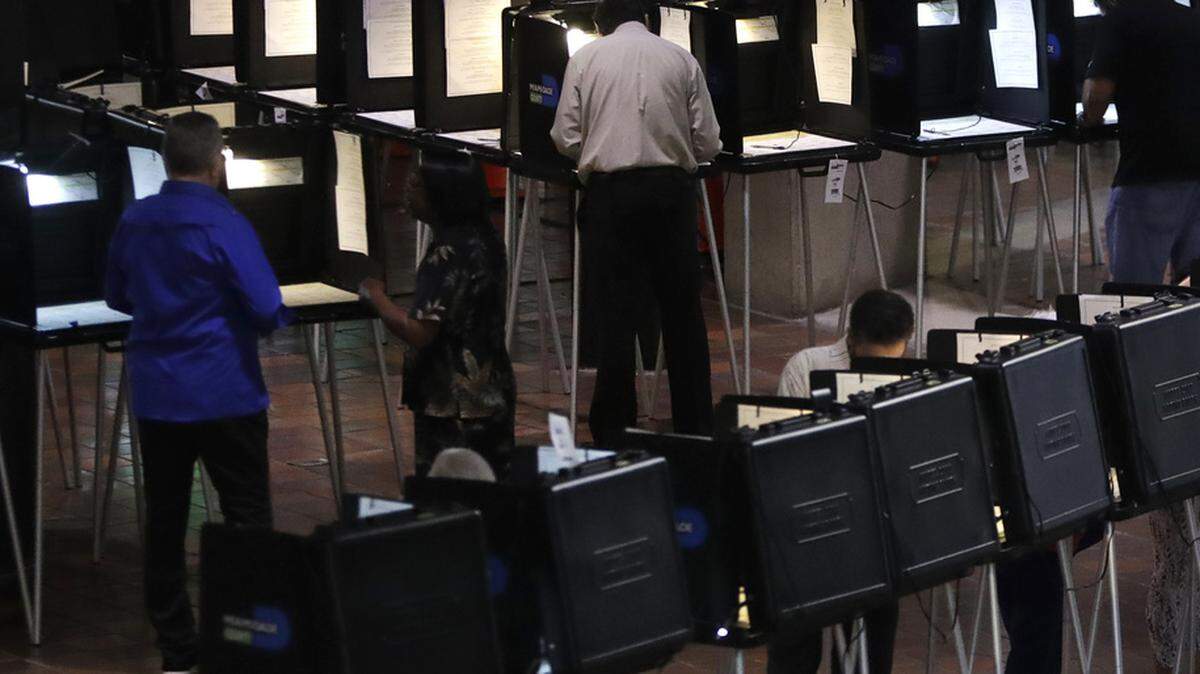
Bills pending in the Florida Legislature seek a constitution amendment that could deny Florida voters the right to vote for or against incumbent school board members.
I was a member of the Miami-Dade School Board. Not until the last board meeting of my 10 years in offive was I able to gain support to provide a significant increase in opportunities for children to participate in dual-language programs.
Did it take this long because I was a slow learner? I prefer to think that institutions charged with youngsters’ welfare and education rightly deliberate long and hard over changes in policy.
School boards are different from other government bodies. Their singular focus is on children. Rarely does a seat on the school board appeal to someone who wants a career in politics. At meetings for candidates for all races, school board candidates are the last ones heard. While these nonpartisan races may be considered less important by the organizers, for parents and education advocates there is probably no more important government body.
First, the significance of school board actions to family concerns is probably why the voters re-elected former school board member Holmes Braddock several times during his almost 40 years of service. Had they not been pleased with his performance they could have ended his term simply by encouraging a challenger to run and by voting for his opponent.
Braddock was not only a fully contributing member of the board. He also became the sole repository of institutional history during a time of rapid turnover among administrators. All too often, staff turnover results in trashing the contents of filing cabinets to leave room for what the new staff member will bring. The result is gaps in the institution’s historical record with no one to remember why things are done the way they are or why certain initiatives have not been pursued.
Those who fear the power of incumbency would entrench ineffective board members fail to take into consideration several facts. The first is the close-up vigilance of parents, teachers and other education advocates. They fill the auditorium at every board meeting, watch the meeting webcasts and serve on school committees.
Second, incumbency is a double-edged sword. While it can reveal the strengths of a board member, it can also expose flaws. It is up to the voter to decide how the pros and cons balance out. That is how elections are supposed to work in a democracy. Otherwise, voters are deprived of the right to judge candidates to be fit for office simply because of the number of years they have already given in public service and regardless of the quality of that service.
Third, imposing term limits on legislators does not seem to have led to races that are more competitive nor have term limits effectively reduced the power of incumbency. Instead, term limits encourage allowing a term-limited legislator to remain in office, essentially unchallenged, until the term limit is reached.
According to the National Conference of State Legislators, in the 40-member Florida Senate, only two races in the November 2018 elections resulted in a change in the partisan composition of that chamber. By way of comparison, the Florida School Boards Association reports that from 2010 to 2018, an average of 66 percent of school board races for a total of 358 school board members were competitive, and 40 percent resulted in the election of a new school board member.
Since the power of incumbency is significantly reduced in competitive and nonpartisan local elections, why do we need to tinker with the Florida Constitution to impose term limits on school board members?
There is still time to save Floridians’ right, privilege and duty to vote for the school board candidates of their choice. They should let state lawmakers know their opinion on HJR 229 and SJR 274 before it is too late to save this aspect of local control.
Rosa Castro Feinberg served on the Miami-Dade School Board from 1986 to 1996. She retired from Florida International University as an associate professor for the College of Education.