
U.S. should counter China’s economic aggression in Latin America with economic and cultural engagement
In 2014, when I was forced into political exile in the United States after being targeted for arrest by the
Maduro dictatorship in Venezuela, I would often ask Americans whether they were worried about China’s presence in Latin America.
The answer was always the same: China has only a commercial interest — not a political one — in Latin America. Though this answer satisfied me at the time, troubling developments in Venezuela in recent years lead me to reject this overly simplistic view.
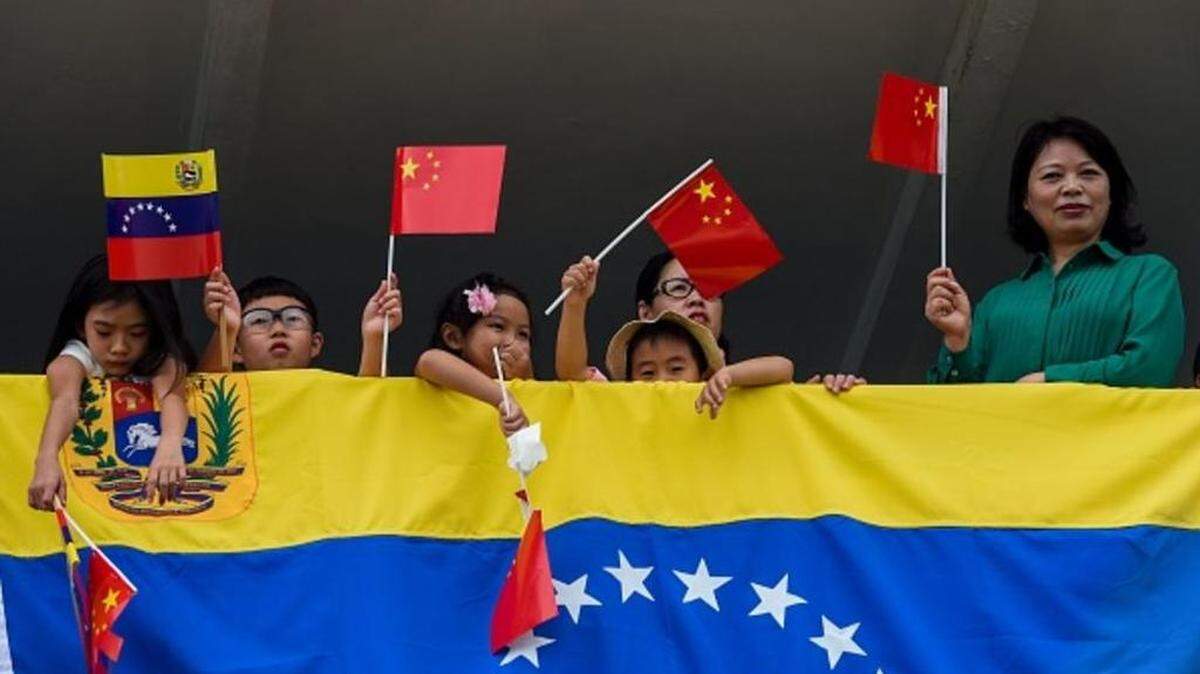
China has a clear political aim in Venezuela: propping up the Maduro regime. Even as Nicolás Maduro has unleashed a wave of repression on dissenters and created the worst humanitarian crisis in our hemisphere, China has continued to provide billions in loans and other forms of economic support to the country. And China has gone a step further. While most of the Americas cracked down on Maduro over his recent fraudulent reelection — he was inaugurated on Thursday — China welcomed him with a state visit, providing him with sorely needed political support.
In the rest of Latin America, China’s political ambitions, so far, have been tempered. This is because of the presence of strong democratic institutions in countries such as Peru and Chile. They act as a barrier to China’s political ambitions. But when these institutions are absent — as is the case in Venezuela — and when political and economic tensions escalate between China and the United States, China tends to assert its political aims in our hemisphere more boldly.
China’s political influence in Latin America, though currently muted, could easily expand and upset the hemisphere’s balance of power.
To effectively counter Chinese influence in Latin America, the United States must accept that China will have a permanent presence there. This is not necessarily a bad thing — Latin American countries depend, in part, on Chinese investment for their own economic development. The risk lies in China attaching political conditions to its money. Managing this risk will require the United States to double down on its two main priorities in the region — promoting democracy and incentivizing economic and social development.
First, the United States’ top priority should be to ensure the triumph of democratic norms, human rights and the rule of law throughout the continent. China’s model of political authoritarianism and uninhibited economic liberalization directly threatens this goal.
The inevitable clash between democracy and authoritarianism – on track to become the defining challenge of the 21st century — already is playing out on our continent. The United States, therefore, should work more closely with Latin American governments — both individually and through international institutions such as the Organization of American States — to support democratic institutions and create partnerships with regional non-governmental organizations to increase legislative and judicial transparency, increase citizen participation in politics, combat corruption and protect human rights.
This will strengthen public and private democratic institutions throughout the region and obstruct unwanted Chinese encroachment in domestic social and political structures. It will also reinforce the United States’ alliances in the region, induce Chinese neutrality and contribute to the preservation of a stable global order.
Second, the United States should incentivize economic and social development in the region by leveraging its close technological, cultural and commercial ties with Latin America. The United States could, for example, export its successful technological revolution abroad and create Silicon Valleys throughout the continent. To achieve this, the United States could promote summits and scholarships to attract Latin Americans to Silicon Valley and lean on its private sector to support promising technological enterprises abroad. There would be no shortage of investors if the United States emphasized the strategic importance of this goal.
The United States could also promote social development by sponsoring sports partnerships across the region. Americans and Latin Americans share an affinity for many sports, including baseball and soccer. Investing in accessible sports programs in impoverished regions would provide at-risk youth with a healthy alternative to getting involved with drugs and crime — and even a potential source of livelihood. Similar programs could also be instituted in other domains, including music. (In fact, in the 1970s, Venezuela implemented a successful orchestra program to combat poverty, but it has deteriorated under the current dictatorship.) Increasing cultural ties with Latin America can encourage positive social behavior and democratic norms.
These priorities are essential to the future and stability of our region. The United States must grasp their importance and take action to counter China’s political influence in the hemisphere. Doing so will require the United States to engage with Latin America as it has never before.
Carlos Vecchio is the political coordinator of Voluntad Popular, a Venezuelan opposition political party.
This story was originally published January 16, 2019 at 5:07 PM with the headline "U.S. should counter China’s economic aggression in Latin America with economic and cultural engagement."