
Forget the myth. John Kelly never was the ‘adult in the room.’
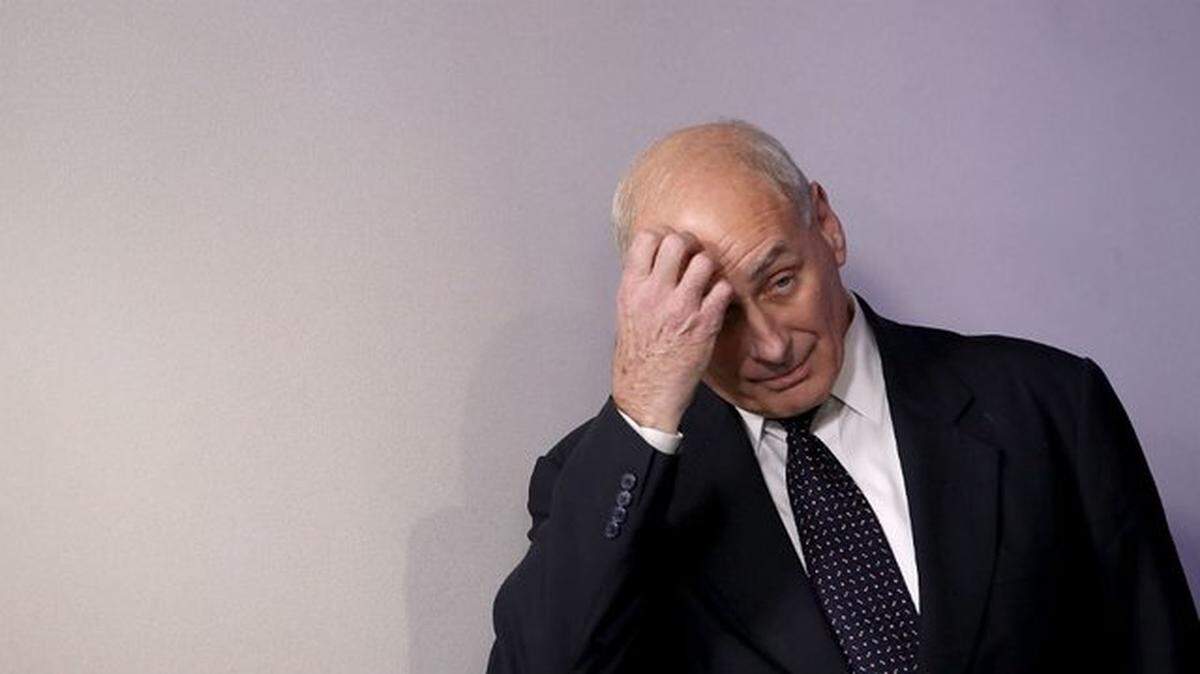
He likes these men, and he admires them, and then something happens. He realizes they’re not playthings? He discovers their elbows aren’t bent in permanent salute? And then we land in a situation like Saturday, when Trump announced that his chief of staff, John Kelly, a retired Marine general, would be stepping down.
If you can remember back to Kelly’s appointment, 6,000 years ago in 2017, the event was met with hopefulness bordering on fan fiction. “The kind of discipline he’s going to bring is important,” Sen. Richard Blumenthal, D-Connecticut, told CNN. “He will bring some plain-spoken discipline,” The Washington Post offered. It quoted an anonymous friend of Kelly’s who heralded the appointment as “the end of the chaos.” He would be — as Washington’s most favored way of describing non-Trumpish White House employees would have it — the adult in the room.
After Trump’s infamous “very fine people” comments regarding the violent 2017 alt-right rally in Charlottesville, a photo circulated of Kelly listening to the remarks, arms folded and head bowed. This body language, perhaps typical of any human listening to any speech, was presented online as evidence of his disapproval and his noble adult-in-the-room status.
In July, another image circulated, of Kelly glowering into his plate at a NATO summit: Trump, down the table, had just accused Germany of being under Russia’s thumb. While the White House’s explanation was nonsensical — Kelly “was displeased because he was expecting a full breakfast and there were only pastries and cheese” — the response from Kelly-believers was just as fantastic. Behold: Kelly, the disciplined chaos-ender, was registering his disappointment with the entire administration in the form of a mournful staring contest with flatware.
It’s amazing how many of us are like Trump when it comes to older men in uniform. We automatically assume they’re altruistic and trustworthy. We automatically assume they’re infallible.
Amid tumult and partisanship, Kelly was appointed, and here was an upstanding father figure for us all, ready to take on rancor, sloppiness and general ineptitude. He could fix things. He had epaulets.
As his tenure progressed, of course, he couldn’t bring discipline. Nobody could. There’s simply no way to enforce structure on a commander in chief who apparently abhors it.
And as Kelly’s tenure progressed, it also became clear that he couldn’t bring an end to rancor and controversy either. Because, it turns out, he brought controversy with him.
In the course of his 16-month appointment, Kelly defended the policy of separating migrant families at the U.S. border because, he said, the children could go to “foster care or whatever.” He spread an untruth about Rep. Frederica Wilson, D-Florida, and then refused to apologize or recant. When White House staffer Rob Porter was accused of domestic violence — accompanied by photos of his ex’s horrifically bruised face — news leaked that Kelly had known about the allegations for months before they became public and privately urged Porter to stay in the job.
I wonder if we get distracted by epaulets. And by epaulets, I’m really thinking of the things that accompany them: A steadfast demeanor. A dignified poker face. A man who looks like he could be your father or your friend’s father.
Because when a person has these things, it’s easy to confuse being “the adult in the room” with a set of behaviors instead of a set of principles. Being the real adult in the room means acting with nuance, compassion and humility — and admitting the times when you’ve failed to do so. It doesn’t mean doing bad things in a really dignified way.
It’s possible that in a few years, Kelly will join the lecture circuit, write a tell-all memoir and reveal a hundred ways in which he helped America avert crises in which he saved an impulsive president from his worst instincts. He was a hero in his military career; perhaps he was a hero in the White House, too. He certainly seemed to approach the role from a place of public service.
But meanwhile, let’s be careful about how much we pre-emptively applaud the next adult in the room. No matter how impressive the résumé or the uniform, no matter how official and reassuring they look. Sometimes, an adult in the room just provides the veneer of maturity that helps a toddler in the room get away with everything.
Monica Hesse is a columnist for The Washington Post’s Style section and author of “American Fire.”
(c) 2018, The Washington Post