
Peace with the Palestinians won’t leave Israel in the clear
For years Israelis have been prodded to make peace with the Palestinians, the argument being that once this feud is settled, everything else in the Middle East will fall in place. In other words, the Israeli-Palestinian conflict has been used to pressure Israel, claiming that it was the root of all problems in this turbulent region.
A look at the Middle East today proves how false this premise is.
Where shall we start? Qatar attracts today’s attention because of the ultimatum it has been served by a Saudi-led coalition. Saudi Arabia, the United Arab Emirates, Bahrain, and Egypt want Doha to sever its warm relations with Iran and the Muslim Brotherhood and to close down Al-Jazeera, which they view as an instrument of incitement against their regimes. You can’t trace an Israeli fingerprints here even with a magnifying glass.
This crisis can at any moment escalate into war, with Arabs fighting Arabs over something that has no connection whatsoever to Israel. It happened before, when Saddam Hussein conquered Kuwait in 1991, only to be kicked out by an American-led Arab coalition. His launching missiles toward Israel was a crude attempt to drag the Jewish state into a crisis.
Syria comes next, with its bloody civil war that has destroyed this country and that sees no end. The fact that Israel keeps a watchful eye on its Syrian border and occasionally intercepts spillovers from this war doesn’t obscure the fact that this is purely an internal Syrian feud, now exacerbated by the involvement of external powers.
Iraq, of course, keeps bleeding, and in that country it is difficult to decide whom ISIS hates more: fellow Sunni Arabs who don’t subscribe to its radical Islamist doctrine, or the Shiite, backed by Iran. ISIS has in its rhetorical arsenal the usual words about Palestine, but before it liberates Jerusalem, it might lose Mosul first.
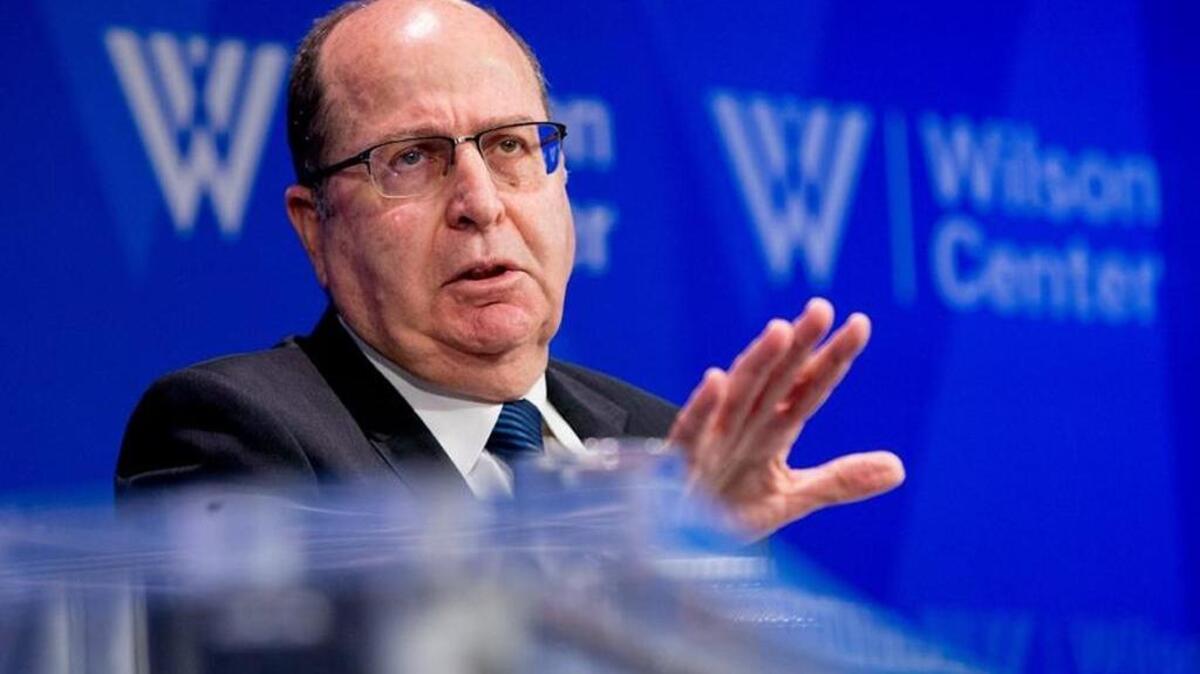
It seems that ISIS is aware of that. Former Israeli Defense Minister Moshe Ya’alon said in April that last November, the Khalid ibn al-Walid Army, an ISIS proxy on the Syrian Golan Heights, had opened fire on IDF positions and then apologized.
Continuing this somber tour of the horizon, we reach Yemen, which is continuously bombarded by neighboring Saudi Arabia. The Saudis claim that they are trying to restore the legitimate government toppled by a Zaidi-Shiite forces, which are affiliated with Iran.
Finally, in May, Egypt launched air strikes against Libyan terrorist bases, in response for the killing of 29 Coptic Christians south of Cairo.
Surrounded by this mayhem, Israel is rightfully determined to always be able to defend itself, because the Middle East has no mercy for the weak.
However, to conclude — like the Netanyahu government — that Israel shouldn’t be doing anything on its track with the Palestinians, because this conflict is marginal compared to the others, is a mistake.
In 2002, at the Arab League Summit in Beirut, the 22 member states unanimously endorsed the Arab Peace Initiative (API), which had been initiated originally by Saudi Arabia. Israel, not wisely, ignored it. True, it wasn’t a good plan, mainly because it called for the return of the Palestinian refugees to Israel. But didn’t the late Shimon Peres teach us, “Don’t say no, say yes, but?”
Later, the conventional wisdom was that the API ran out of steam. Not so. It was readopted in the 2007 Summit in Riyadh, and endorsed again this March in the Summit in Amman.
Furthermore, in July 2016, a retired Saudi general, Anwar Eshki, made an unprecedented visit to Israel. The general — surely traveling with the silent blessing of the Saudi rulers — told his Israeli hosts that, “There will be no peace with Arab countries before there is peace with the Palestinians.”
This is only partly true, because Egypt made peace with Israel in 1979 without the existence of an Israeli-Palestinian peace, and in 1994 Jordan followed when the Oslo Accords were only in their initial stage. However, the formula Eshki suggested to the Israelis is simple: The more progress you make with the Palestinians, the closer you get to the rest of the Arab states.
Eshki had another incentive, which Israelis could surely appreciate: “If the conflict is resolved, the countries that exploit the Palestinian issue, namely Iran, will no longer be able to capitalize on it.”
Israel should stop ignoring these voices coming from the Arab world — and mainly from Saudi Arabia — since 2002. Instead of sitting idly, believing that without lifting a finger it becomes stronger because Arabs are killing Arabs, Israel should take the Arab Peace Initiative as a jump-start to reconciling with the Palestinians. The Sunni countries, who share Israel’s concerns about Iran and the Islamist terrorism, will accomplish what neither President Trump nor his Middle East emissaries will ever do: Bringing the Palestinians to the table.
This story was originally published July 12, 2017 at 4:35 PM with the headline "Peace with the Palestinians won’t leave Israel in the clear."