
Letters: How Herald readers feel about America on the nation’s 250th Anniversary | Opinion
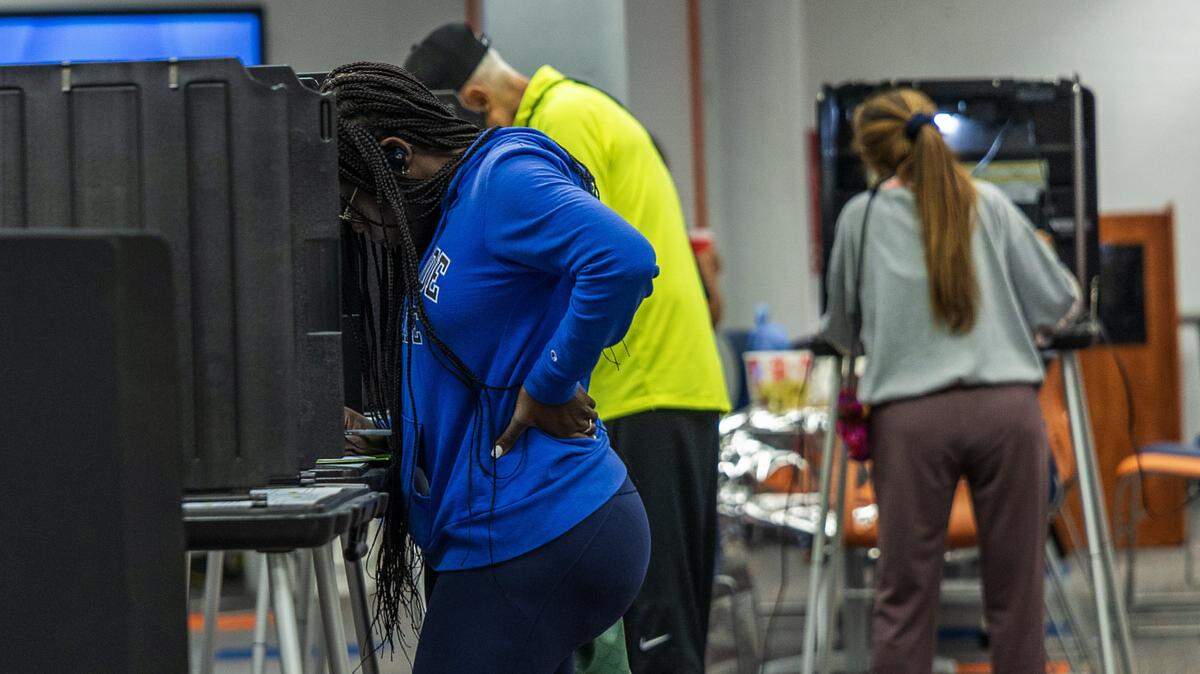
Ballot box patriots
Miami Herald Editorial Board member Mary Anna Mancuso’s uplifting June 14 column, “America’s 250th is worth celebrating — even if you didn’t vote for Trump,” was refreshing. Notwithstanding reports of negativity and divisive partisanship among our elected officials (trickling down to their constituents), there is much for which to be proud for our country. Our democracy is certainly worth fighting for and needs our collective support.
No other nation in the world has overcome adversity and successfully preserved its democratic freedoms for its citizens and its welcoming visitors, as expressed by Emma Lazarus’ sonnet, inscribed at the pedestal of the Statue of Liberty, welcoming immigrants, refugees and the oppressed to the United States.
As Mancuso stated, “America was founded on a radical idea: Ordinary people can govern themselves. It was revolutionary in 1776 and in 2026, it remains a great experiment in self-governance — one we continue working on.”
We all can agree to disagree with civility and nationalism in mind. Perhaps the best way to celebrate the nation’s 250th may be by doing our patriotic duty of voting, with record attendance by all at the ballot boxes.
H. Allen Benowitz,
Miami
Honoring the founders
As the United States celebrates its 250th anniversary, I wonder what our nation’s founders would make of the violent attack on the U.S. Capitol on Jan. 6, 2021, intended to disrupt and stop a constitutional process. The founders pledged and risked not only their lives but also their livelihoods, property and financial security to establish a republic governed by laws rather than by force.
What would they think of leaders who placed loyalty above accountability and of a nation still divided and struggling to agree on the meaning of that day?
The true test of patriotism is not how loudly and elaborately we celebrate our independence. It’s how faithfully citizens and leaders honor the founders’ sacrifices, by safeguarding the democratic institutions they entrusted to us and defending and protecting the right to freedom their sacrifice gave us.
The enduring lesson of Jan. 6, 2021 is not about one election or one political figure. It is about whether Americans are willing to defend democratic institutions. Capitol Police protected those inside, at devastating physical harm to themselves. Congress returned to the Capitol later that evening and unwaveringly fulfilled their constitution duty, certifying the election of the president and vice president.
However, the deeper damage was the erosion of a shared commitment to truth, the rule of law, accountability and the peaceful transfer of power the founders believed was essential to the survival of the republic. Those principles survive only when leaders and citizens alike are willing to uphold them, even when the outcome is not the one they wanted.
Enid Garber,
Palmetto Bay
Campaign finance reform
The American Revolution was fought over simple but powerful ideas. The founders were concerned not just about independence from Britain, but independence from the influence of special interests like the East India Company. They believed the government should work for the voters.
Two and a half centuries later, what happened to our independence?
Running for office is incredibly expensive. Congress spends half of its term in office raising money. Wealthy donors, super PACs and special interest groups pour money into campaigns and lobbying. Voters’ interests are less influential than the onslaught of donors who fund election campaigns with jaw-dropping spending. That is concerning.
With our politicians paying more attention to their donors than the needs of the people, are we still independent? Or have we allowed ourselves to become subordinated?
Readers should learn more about this issue and support sensible restrictions on campaign spending and donations. Let’s declare independence from special interests and restore the voter’s primacy in government once again.
Ramon Galiana,
West Kendall
Heck of a job, Ronnie
Last week, Gov. Ron DeSantis said that “Alligator Alcatraz” shut down because it “fulfilled the role it was designed to serve.”
If that purpose was to waste taxpayer dollars, instill fear into immigrants trying to find a better life for themselves and their families (most of those detained or deported had little, if any, actual criminal record), re-enforce the racist tropes of our sitting president, demonize the “other” and undermine and subvert the ideals of our founding documents then, yeah, it did a bang up job.
Scot McCluskey,
Davie
Pool hustler
Nicole Russell’s June 23 criticism, “The left’s Reflecting Pool obsession is absurd,” misses the point. The issue isn’t what left-leaning journalists say about the horrible screw up at the reflecting pool. The issue is that this was just another (of how many?) of President Trump’s fiascos.
Not only will he not take ownership of such fiascos, but he then uses federal prosecutors to make contrived arrests to prove he didn’t do anything wrong. As usual, Trump will say there is evidence — in this case of vandalism — but can’t (and never will) come forward with it.
Stuart Goldstein,
Palmetto Bay
Truth is no ‘blip’
Vice President JD Vance said last week that the Watergate scandal of 1972, if it were to happen today, would be but a 12-hour news blip. He also said the idea that it would take down a presidency is “crazy.”
He’s right. Not because burglary has become less a crime, but because it would no longer even faze a sizable portion of the electorate.
Laudable ends do not justify unlawful means. In 1972, political figures, executive and legislative alike, were committed to decision on established facts — what President Nixon knew and when he knew it — not political spin. That is not to say partisanship was absent, but duty and principle guided action. Attorney General Elliott Richardson resigned rather than follow an order he deemed illegal.
Former U.S. Sen. Ed Gurney of Florida, who was named to the Senate select committee that investigated Watergate and with whom I had numerous discussions, said that he believed Americans wanted and deserved the truth, no matter how politically painful.
They still do, even though our elected officials seemingly no longer have such courage and conviction. The electorate must now remind them of that.
R. Thomas Farrar,
Miami
A civics lesson
As America celebrates its 250th anniversary of our nation’s founding, it is worth asking whether ordinary citizens still have the same influence over government that our founders envisioned.
Florida’s future should be shaped by its citizens, not by the size of campaign war chests. Across the state, voters of every political persuasion are expressing frustration that money seems to have an outsized role in modern elections. Whether discussing local races, statewide campaigns, or national contests, the concern is remarkably consistent.
As a retired business executive and volunteer SBA SCORE mentor, I understand that healthy systems depend on trust and accountability. When stakeholders believe influence can be purchased, confidence suffers.
Over the past 50 years, U.S. Supreme Court rulings have limited voters’ ability to regulate political spending. As a result, Republicans, Democrats and independents alike have grown very concerned about money’s growing role in elections — a rare point of agreement today.
The Constitution provides a mechanism for addressing structural challenges when ordinary legislation proves insufficient. Constitutional amendments have helped America adapt before and can do so again.
Floridians of every political perspective should ask their elected representatives to support a constitutional amendment that would allow reasonable limits on the influence of money in politics.
Jonathan Newman,
Sarasota