
Florida is leading the fight to rein in artificial intelligence | Opinion
Florida and AI
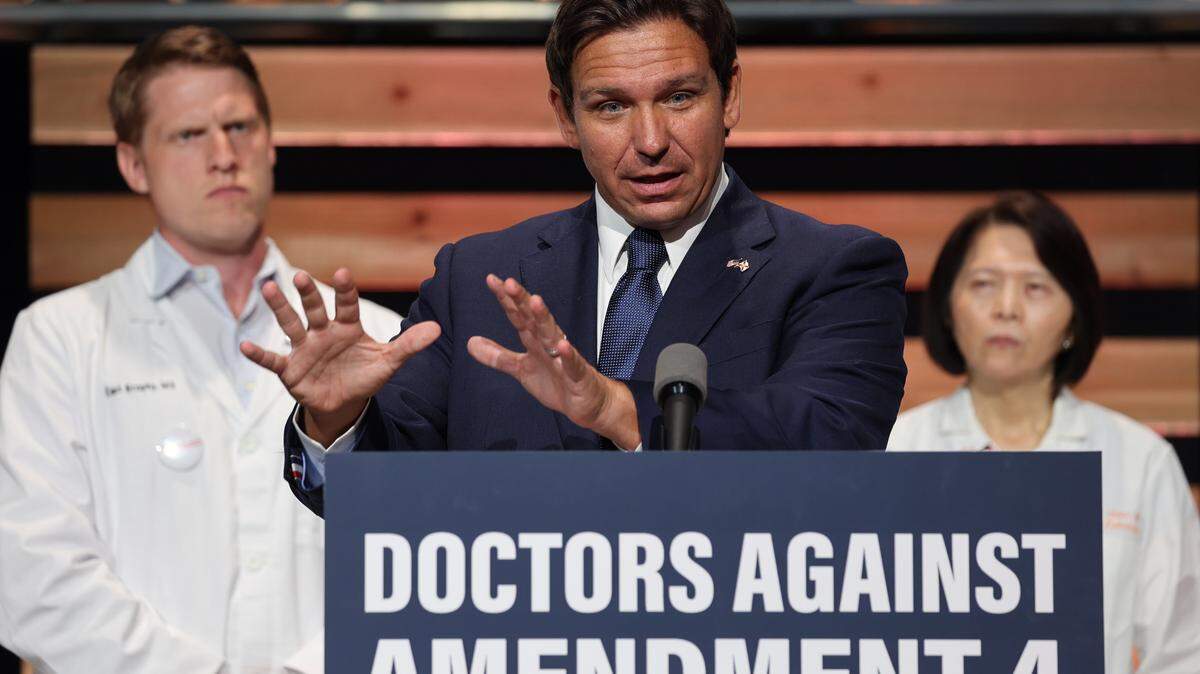
The influx of tech leaders to Miami, the looming governor’s election, the legislative efforts like Gov. DeSantis’ “AI Bill of Rights” and the first state-led lawsuit against OpenAI, make Florida the state to watch in the fight over AI, technology and public health.
Nowhere is the impact of technology more visible than in public health, where it has long been under the promise of advancement and efficiency. Yet without regulation or institutional support, our residents are often left to fight for their rights within the health system.
As a Florida native and researcher, I have heard residents say that health technology does not always feel like care and increased digital health literacy is needed. As a Gen-Z voter, I see that technology is embedded in our lives, but understanding it does not exist equally. Health technology is advancing rapidly, but patient understanding is not keeping pace.
AI is not a partisan issue. Across political and social lines, people consistently want choice and to understand what is happening to their bodies.
Florida can lead the nation in regulating technology, especially in public health, by protecting choice and ensuring that innovation enhances care rather than replacing it.
Se’maj A.D. Griffin,
West Palm Beach
Vouchers a lifeline
Sydney Altfield’s May 15 op-ed, “Florida’s school vouchers are working. That’s why they’re being sued,” explained the numbers behind Florida’s education policies. Let me share what those policies look like in real life for my son, who would not be where he is today without these vouchers.
My son was struggling in a school that simply wasn’t the right fit. He was falling behind and becoming increasingly disengaged. Thanks to Florida’s Family Empowerment Scholarship, we were able to move him to a school where he is now thriving academically and socially.
A few years ago, that kind of opportunity would have been available only to families with the financial means to pay private school tuition out-of-pocket. Today, families like mine have such options.
The lawsuit challenging Florida’s scholarship programs may focus on legal arguments and funding formulas, but for parents, the stakes are much more personal. These programs are helping real children find schools where they can succeed. My son is one of them.
Shulamis Tyberg,
North Miami Beach
Desalinate now
Florida’s coastal cities face a serious saltwater intrusion crisis. In the 1960s, my mother worked for the Pompano Beach water department. She was aware of the crisis then. Today, it’s worse. Saltwater contaminates groundwater wells supplying water to millions of residents.
On May 31, researchers announced a solar desalination process that converts seawater to drinking water using only sunlight, without toxic byproducts. The technology works. It’s ready. It’s clean. Florida’s coastline cities can deploy these systems within 18 months. The need is urgent and the time to act is now.
Steven D. Philbrick,
environmental advocate,
Tallahassee
Risky tax cut
With extremely little analysis, the Florida Legislature has asked us to cut property taxes. Florida’s geography, economy and culture vary from region to region. A “one-size-fits-all” approach to cutting property taxes — without a deep understanding of the risks involved, even though it may help some of us — is crazy. We are asking for trouble.
A few months ago, the USA bombed Iran without contemplating what could happen. The results were the closing of the Strait of Hormuz, a surge in gasoline prices and higher costs for food and other commodities.
How will that be resolved?
Gov. Ron DeSantis has forced the property tax issue upon us without any serious study.
Will this be his Strait of Hormuz?
DeSantis is term-limited and will soon be gone. We will have to cope with all the difficulties as a result. Only fools would vote for this without studies of potential results and solutions put in place.
Alfred Sasiadek,
Lauderhill
Looks like tyranny
The Declaration of Independence was a moral argument. It condemned a distant government that imposed economic blockades, coerced neighbors into isolation and used the legal process not to achieve justice but domination. The Founders called this tyranny.
Recently, the Trump administration sanctioned Cuban President Miguel Díaz-Canel, his family, Raúl Castro’s son and grandson and set a June 5 deadline for foreign banks and companies to sever ties with Cuba’s military-linked economy or face penalties themselves. This follows the Castro indictment, unveiled on Cuban Independence Day, and an oil blockade which left hospitals unable to power operating rooms. Thousands of patients, including children, await surgeries that cannot be performed.
We have seen this playbook — in Venezuela. What followed was not democracy, but “managed authoritarianism,” as analyst Joseph Wehmeyer wrote in the foreign affairs platform, War on the Rocks. Cuba’s pattern is identical.
The Declaration of Independence does not say these rights belong only to people in governments of which we approve. Governments derive their powers from the consent of the governed. That means Cubans, not Washington.
Our founders called it tyranny. What do we call it — and ourselves — now?
Stephanie Suerth,
Baltimore, MD
Fighting disease
Weeks ago, the World Health Organization (WHO) issued its highest international alert short of declaring a pandemic emergency over a growing outbreak of the rare Bundibugyo strain of Ebola in Uganda and the Democratic Republic of Congo, with concerns it could spread into South Sudan.
Unlike previous Ebola outbreaks, there is no approved vaccine or treatment for this strain. The WHO warned the virus likely circulated undetected for weeks and that case numbers are probably undercounted. The affected region is already struggling with armed conflict, displacement, weak healthcare systems and population movement across a major migration and commercial corridor, increasing the risk of regional transmission.
At a moment like this, America should not be retreating from global health leadership.
Containing such outbreaks depends on disease surveillance, testing, contact tracing, rapid deployment teams, logistics and international coordination. Yet, the U.S. withdrawal from the WHO has already weakened funding, personnel support and information-sharing mechanisms that are critical during health emergencies.
Congress should also recognize that the Global Fund to Fight AIDS, Tuberculosis and Malaria supports far more than those three diseases. It strengthens laboratory systems, healthcare worker networks and disease surveillance infrastructure. Those systems are often the same backbone used to detect and contain outbreaks like Ebola.
In previous Ebola crises, Disaster Assistance Response Teams (DARTs), coordinated through USAID and other U.S. emergency infrastructure, helped provide logistics, coordination and field hospital support.
Viruses do not recognize borders. Weakening global disease surveillance does not make Americans safer. Stopping an outbreak abroad is far cheaper than containing it after international spread.
Alessandro Fuentes,
Miramar
Big whiner wins big
President Trump was offended when the IRS audited his taxes.
When my mother was audited, she brought a shoebox full of receipts and explained her deductions one by one. After an hour, the IRS agent said, “Mrs. Beasley, your explanation satisfies the IRS.”
The president sued the IRS for $10 billion and demanded a family exemption. He settled for $1.776 billion — and the exemption.
Are presidential feelings worth the annual incomes of 27,300 average Americans for doing what my mother did to obey the law? And when did presidential feelings become a tax on the public — not emotionally, but monetarily?
Philip Beasley,
Plantation
History of insolence
The May 26 letter, “Dishonest deal,” referred to the disgrace of spending for a Trump library in downtown Miami. The letter writer has it all wrong.
From Hialeah’s Henry Milander decades ago, to former Miami Commissioner Joe Carollo and former U.S. Rep. David Rivera today and countless more over the decades, what better place to put a monument to the people who grifted their way into Miami-Dade County history than in downtown Miami?
Glenn Huberman,
Miami