
Miami Muslims stand with the Pope and Catholic Charities amid Trump attacks | Opinion
Standing in faith
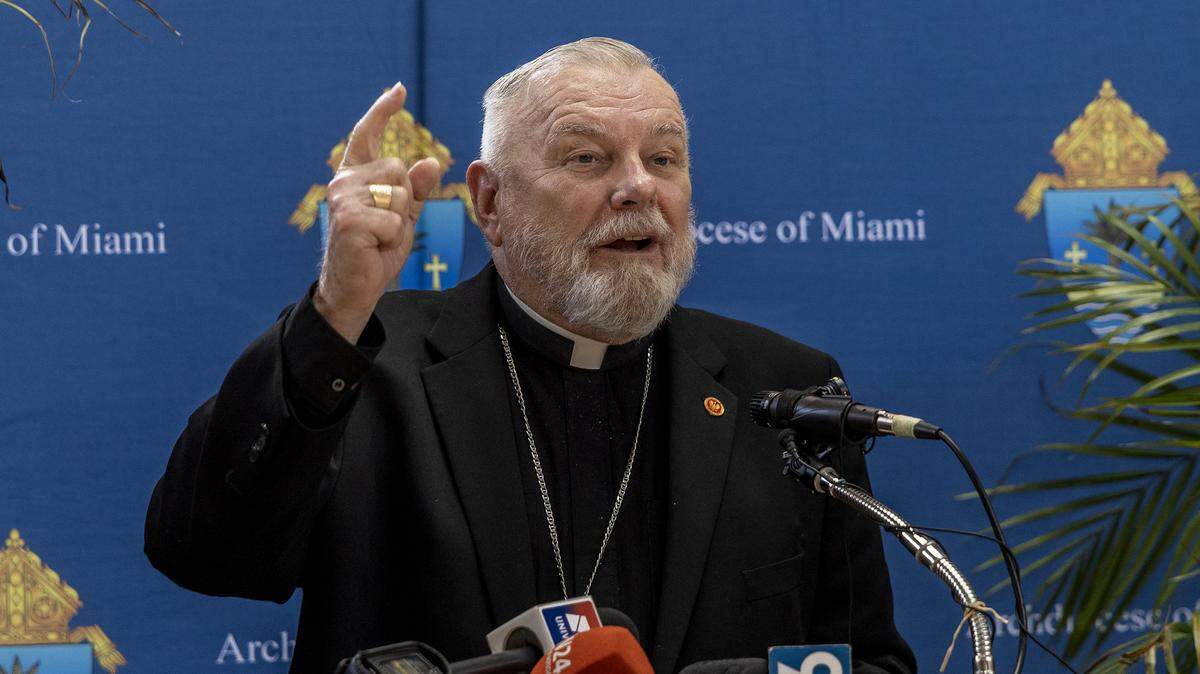
We are deeply concerned about the recent attacks directed toward His Holiness the Pope, in response to his principled stance against war and violence. At a time when the world is facing profound suffering and division, moral voices calling for peace, restraint and the sanctity of human life deserve to be protected and amplified — not condemned.
We stand in solidarity with the Archdiocese of Miami and the broader Catholic community in supporting the Pope’s message, which reflects values shared across our faith traditions: compassion, justice and the pursuit of peace. Islam, like Christianity, upholds the dignity of every human being and encourages dialogue and reconciliation over conflict. Muslims believe in the teachings of the Prophet Jesus for love of God and neighbors, humility, love rather than retaliation and love over hate.
In addition, we are deeply troubled by the cancellation of the $11 million grant to Catholic Charities of Miami. The organization played a very important part in Syrian and Afghan refugee resettlement in Miami and elsewhere.
Faith-based organizations such as Catholic Charities play an indispensable role in serving vulnerable communities, regardless of background or belief. The withdrawal of such critical support risks undermining essential humanitarian services that so many in our region depend upon, especially in light of crises around the world and at home.
These developments — the attacks on moral leadership and the reduction of support for vital charitable work — highlight the urgent need for people of faith to stand together in defense of compassion, justice and the common good.
COSMOS reaffirms its commitment to working alongside the Archdiocese of Miami and other faith-based leaders to strengthen interfaith collaboration and advocate for peace, understanding and coexistence.
Naveed Anjum,
vice president,
Coalition of South Florida Muslim Organizations (COSMOS),
Miami
Get this fixed
Re: the April 21 story, “Miami police, fire chiefs say $450M bond could fix leaky roofs, mold in stations.” I hope the voters approve this; it needs to happen badly. The photos posted showed incredibly horrific conditions. I’m sure there is much more. These facilities are critical to public safety and need to be up to standards.
Ignoring, for a moment, that these are first responder facilities, why would any employer subject their employees and staff to such horrible conditions?
I understand it is a financial burden, but if updates and repairs had been done all along, the burden, while still there, would have been more manageable. I hope the citizens of Miami approve this.
Robert J. Lynch,
Davie
Better bus? Not really
I’d like to know how many dollars were spent on consultants for the “Better Bus Network” (hopefully, not much with a title like that). Seems like a shill — and if it quacks like one and looks like one.
Based on the reporting from the April 21 Miami Herald, “‘Better Bus’ promised speed in Miami-Dade. Riders are still waiting for results,’’ riders would have benefited more from a mediocre answer given by a $20-per-month ChatGPT subscription. It’s too bad, it would have probably told county administrators to just extend the Metrorail.
Daniel Hernandez,
Miami
‘Supertall’ worries
The April 20 article regarding “Supertall” towers coming to Miami was informative but barely addressed the infrastructure demands and quality of life issues already stressing our community.
Increased traffic congestion, additional demands on our antiquated sewer and water systems and the additional strain on our police and fire departments were scarcely mentioned. The increased density will surely be the next hurricane’s dream come true.
Arnie Gellman,
Miami
Neglecting elders
That Florida’s Department of Children and Families will not answer questions posed by the Miami Herald or lawmakers about its elderly protection program, as described in the April 16 follow up to the chilling series “The Gray Market,” makes it abundantly clear: this administration lacks professional standards and accountability.
State inspectors are seemingly held to the worst practice imaginable — ignore hotline reports of maltreatment and never find inadequate supervision, unsanitary conditions or gross negligence.
I lived in Florida for 45 years, but Gov. Ron DeSantis’ first term was enough to drive my family out. Negligence and deflection are his central habits.
We can hope that lawmakers will immediately force needed reforms at DCF. More importantly, the state budget must include additional regulatory positions so that Florida’s assisted living facilities are not a real and present danger to our elderly population.
Chris Kirchner,
Los Angeles, CA
Disappearing trees
The City of Miami routinely grants permits allowing developers to remove trees from public rights-of-way, citing that “trees conflict with construction activities.” This is outrageous.
These are not minor trees. They are mature, specimen-sized, often native and even state-threatened species. Under Chapter 17 of the City Code, such trees are intended to be protected, with removal allowed only under strict criteria, not for developer convenience. Yet the city appears to be stretching, if not violating, the spirit of its own code by approving these removals without exhausting alternatives.
This is not just bad policy, it is harmful. Mature trees reduce extreme heat, absorb stormwater, improve air quality and protect public health. Their loss in public spaces, where they provide the greatest shared benefit, is especially damaging. Replacing them with saplings is not mitigation; it is a long-term deficit.
We are also stripping neighborhoods of their character and shade, eroding quality of life for residents.
Public trees are public assets. Development must adapt to them — not erase them. Miami cannot claim resilience while permitting this destruction.
Sandy Moise,
Miami
Taxing situation
The elimination of residential property taxes has been the subject of much talk within Florida’s Republican circles.
In conversations with other politicians, Miami-Dade County Commissioner Anthony Rodriguez explained that grass still needs to be cut and trees still need to be trimmed. We still need to repair fire hydrants and sewer lines. We cannot have a government without money. And we certainly don’t want the state to control all the property tax money.
Eliminating property taxes may force a sales tax increase or implementation of user fees. This would only result in transferring the costs of running the government to poorer people while wealthier people pay much less. This is an abomination.
Property taxes could be ameliorated, but not by reducing them on seniors without taking into account their incomes or their assets. This would be terribly unfair to poorer middle-class and younger working-class people.
The increase of property taxes when a house is sold should be limited to, say, 10% or 15%. Why should government get a windfall when a property is sold or inherited?
Seniors who have limited income and are not living in multi-million-dollar mansions should get a break in their property taxes. However, those who really need the help are young, who have never owned a home and want to buy one. We want our children and grandchildren to continue living in Miami. They will never be able to afford a home if the current trend continues.
Rodriguez should meet with the public and with politicians to hear what they have to say. Later, all comments should be seriously analyzed by economists and accounting and finance professionals. These are serious issues and should not benefit just the wealthy or one political group.
Maria Luisa Castellanos,
president,
United Architects,
Miami