
Don’t we want Miami-Dade to be a place not just for the wealthy? | Opinion
Housing needs
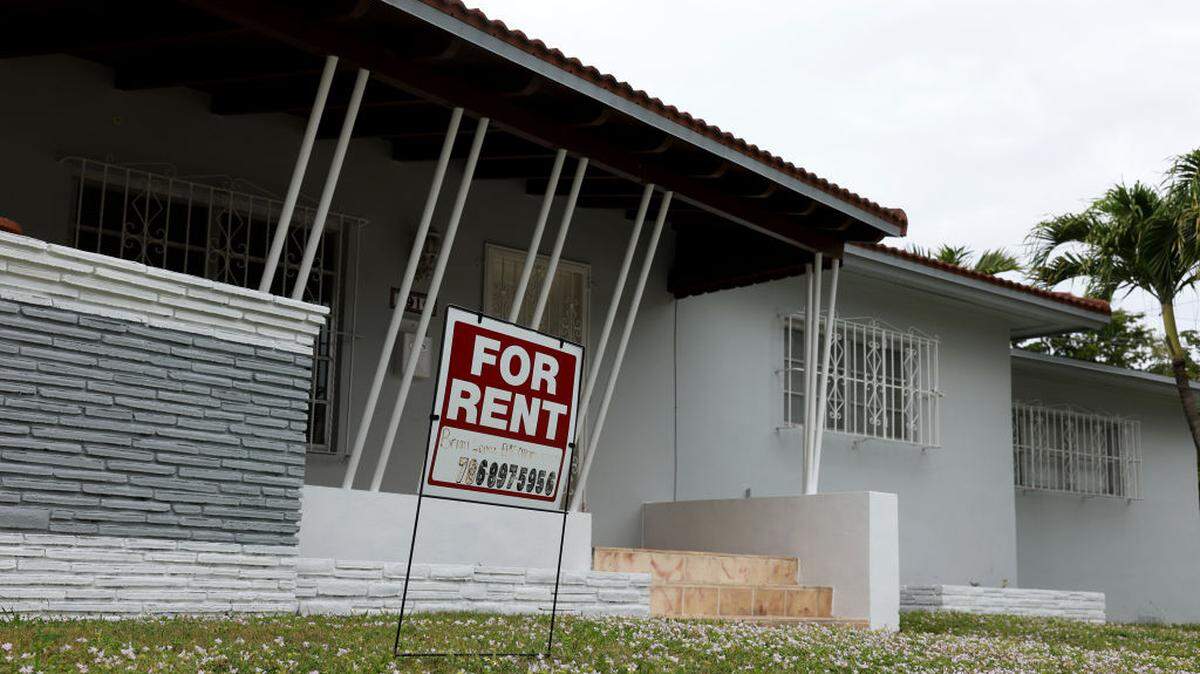
Miami‑Dade County is becoming one of the most expensive places to live and this is putting much pressure on families. Rent rises while wages stay the same. Many people are being forced to move farther away or live in crowded homes just to afford a place to stay. As a student, it’s stressful to think that my friends or even my own family could be pushed out of the community of our upbringing.
This crisis doesn’t just affect adults. When families struggle with housing, students end up switching schools, losing stability and dealing with stress, which makes focusing more difficult. It shouldn’t be normal for teenagers to worry about whether their family can afford rent.
Miami‑Dade needs more affordable housing options and stronger support for those who live and work here. Teachers, nurses, service workers and families deserve to stay in the communities they help build. If we want Miami‑Dade to be a place where everyone can live, not just the wealthy, then our leaders need to treat housing like the urgent issue it is.
Emily Caballero,
Kendall
Do what’s right
The March 22 Miami Herald story, “Some Black FIU students feel unsafe and unheard after group’s racist texts,” was stunning because of the professed fear they face daily was heightened by the revelation of the specific horrors revealed in an FIU student chat, instigated and participated by the now former secretary of the Miami Republican Party.
One of the nation’s treasured patriots, Dr. Martin Luther King Jr., often said in many speeches that, “The time is always right to do what is right.”
That time is now, to deliver consequences at the university and at the city for the outrageous attacks on the dignity, humanity and lives of students in Miami, executed by a university and political-party sanctioned student “chat.”
What are the leaders of Miami waiting for?
Joan Wynne,
Miramar
Follow the money
Amid a lack of a clear rationale, the U.S. government is spending taxpayer funds — more than $200 billion — for a war six out of 10 Americans disapprove. Meanwhile, there was no money to pay TSA employees.
Something is definitely not right.
Lois Kahn,
Coral Gables
Land’s value
Kudos to Andreas Hase for refusing the Village of Pinecrest’s extortion in its land-for-permit hustle. As the Herald’s March 21 story, “Jury rules Miami-Dade town couldn’t ask for land in exchange for building permit” suggests, it would have been easier for Hase to cave to the extortion than fight city hall in court. I thank the Herald for reporting about the trial and for explaining the reason behind the racket: municipalities want to take private property without paying for it.
In the historical preservation game, municipalities take a portion of an owner’s land without paying for it; not a physical portion, but the owner’s right to use the land as they see fit. As a result, the value of the historically-designated realty is diminished, but the municipality does not compensate the owner for that lost value.
Municipalities that wish to preserve ostensibly historical properties have a readily available option (just like Pinecrest did with respect to Hase’s property): exercise eminent domain. The rub is that municipalities do not want to pay for historical preservation. If elected officials and staff honestly believe that a property is worthy of historical preservation, they should pay for it.
Leo Bueno,
Coral Gables
Growing synogogue
I read with real admiration and, yes, ambivalence, Rabbi Yossi Harlig’s March 20 op-ed, “30 years in South Dade and every soul still matters for Chabad.”
As the first female president of Temple Israel of Greater Miami, whose father-in-law and husband also served in that storied capacity, I wish only continued success to the Chabad of Kendall-Pinecrest congregation.
When Temple Israel was founded in 1922, we were a fledgling spin-off of Miami’s first and more traditional synagogue. We grew from 41 founding members to, at our zenith, 1,800 member families in the 1950s and 60s. And, we birthed multiple other Reform synagogues north and south of our downtown facility.
When I served as president in 1989-1991, we counted 1,250 member families. And, with the many other suburban congregational choices, the fear of crime and member flight, our numbers faced a continuing and steady decline. Despite the multitude of attempts to recreate the glory days of Temple Israel, we ultimately “sunsetted” the synagogue last June after 103 years of service to Greater Miami.
Indeed, Chabad of Kendall-Pinecrest is among the many “emissary” congregations reaching out to the Jewish community of South Dade. May it keep on keeping on!
Norma A. Orovitz,
Bay Harbor Islands
Bike safety
As an orthopedic surgeon who has treated bicycle-related accidents, I am concerned with the recent increased incidence of serious injuries not only to the rider but also to pedestrians.
According to a March 13 article in the Miami Herald, “Is micromobility unsafe? Florida lawmakers look to curb e-bike, e-scooter deaths,” state data recorded 3,000 accidents involving bicycles or motorcycles in 2024. According to the Federal Highway Administration, 60,000 pedestrians and 42,000 bicyclists are injured in roadway crashes annually.
Key national statistics indicate that in 2023, there were 7,314 pedestrian and 1,155 bicycle fatalities. Pedestrian fatalities increased 80% and bike fatalities more than 70% between 2009 and 2022.
Frequently, motorists do not see cyclists. Pedestrians can sustain serious injuries from unfortunate run-ins with bicyclists. Accidents often involve head injuries to cyclists and lower body trauma to pedestrians.
Traffic engineering improvements can reduce the incidence of injuries. Creating dedicated pedestrian and bike lanes are the most important starting point. They are designed to enhance safety and mitigate conflicts between bicyclists and motor vehicles. Studies have shown a reduction in crash risks for cyclists by up to 90%.
Amsterdam is well known as one of the most bicycle-friendly cities in the world. It boasts 320 miles of dedicated “red asphalt” as separate bike lanes. Cyclists are required to only use these paths. As a result, ecologically friendly bike use has grown exponentially.
County budgets have not addressed this problem as planned new safety road construction is not likely until 2035.
Do we have to wait this long?
Joseph Mensch,
Coral Gables
Vote by mail
President Trump, ever right, never wrong, has been railing against mail-in voting and pounding the U.S. Senate to pass legislation which, among other things, would curb the use of mail-in ballots.
Then, we learned that Trump just recently voted by mail ballot in a Palm Beach County special election.
Wait, what?
If voting by mail is so bad that the Senate must legislate against it, how could Trump possibly make such a mistake as to vote by mail?
Either it is right or it is wrong.
Or is it just wrong for the elderly who have difficulty getting to a polling place and okay for the wealthy who can’t trouble themselves to vote in person?
Ashby Cathey,
Miami
Trump effect
It’s interesting that Mary Anna Mancuso’s March 29 column, “Miami-Dade’s GOP took a stand against extremism. Will state party follow?” failed to mention the core cancer of the party’s prejudice and pseudo-fascism fascination as manifested in recently revealed FIU College Republican/TP-USA racist text messages. Donald Trump is, of course, the core of this hatred. From Trump’s racialized Barack Obama birtherism conspiracy, to his recent tweet depicting the Obamas as apes, stating Haitians eat dogs and cats and that Somalian-Americans are “garbage,” it’s little wonder that impressionable young Trump supporters take their cue from him. JD Vance called Trump “America’s Hitler.” Trump’s previous chief of staff and national security advisor both said he had fascistic tendencies. Alas, what’s missing from Mancuso’s article (and local Republican’s writ-large) is the recognition of this fundamental truth. As Martin Luther King Jr. noted, “There comes a time when silence is betrayal.”
John Ise
Miami Shores