
The takeaway from Miami’s election isn’t about Democrats’ success, but voters | Opinion
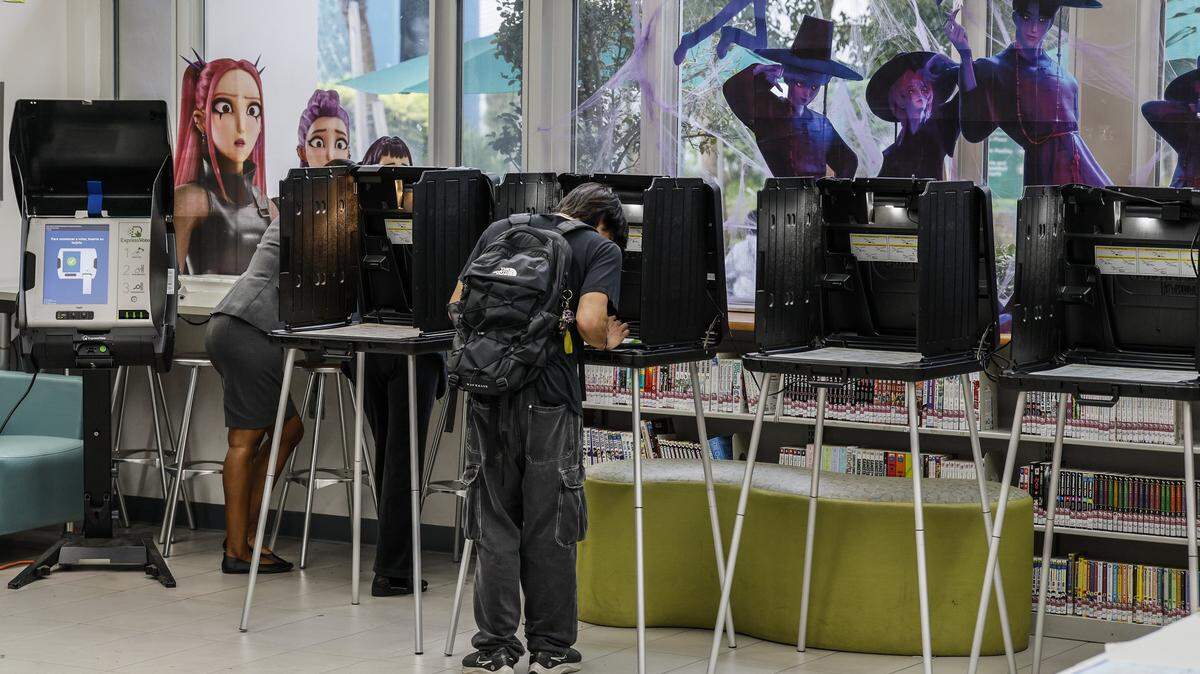
Voters’ choices
Political pundits (of both parties) have intentionally defined (misread) Miami’s recent mayoral election results, nationalizing the results with a hyper-partisan focus. The media followed suit: “first Democrat elected in 30 years,” “bellwether for 2026 midterms.” Democrats, in particular, should be cautious in jumping to conclusions.
Since 1973, Miamians have elected nine mayors. None of us ran as, nor campaigned on, our party affiliation. Instead, we campaigned on local issues, the change we believed was best for the City of Miami.
Last week’s results should be viewed in the same light. Miami voters overwhelmingly rejected the status quo, incumbents (all but one commissioner is serving their first term), corruption and political dynasties. They chose the opposite of what the current leadership embodied.
Instead, they voted for change and reform, fresh faces and new ideas, with a commitment to tackle, among other things, affordability. They voted based on local, non-partisan concerns.
As proof, look no further than the sole commission runoff. The winner, Rolando Escalona, an unknown, ran as the outsider, the anti-establishment candidate. I can’t remember reading an article that mentioned his party affiliation, nor do I remember him campaigning on his party affiliation. It did not matter.
Miami voters chose to elect a mayor and commissioner who committed to working full-time on the affordability crisis facing them, not in service of themselves.
That is the real takeaway for Democrats.
Manny Diaz,
former mayor,
Miami
Cuba shines in NYC
A group of friends visited New York City. We planned it to coincide with two major events related to Cubans and enjoy the city’s spectacular Christmas season. On a very cold day, we visited the Museum of Modern Art (MoMA), which was showcasing a major retrospective of Cuba’s most famous artist, Wifredo Lam, whose ethnic background represents the country’s races: Chinese, Black, Spanish and Criollo.
The exhibit, “When I Don’t Sleep, I Dream,” runs through April 11, 2026 and was organized by MoMa Director Christophe Cherix. It is the first retrospective in the U.S. to feature Lam’s full trajectory and includes his most famous works, “La Jungla“ (”The Jungle”) and “Mother and Child,” in which the artist expressed his grief over his wife and son dying of tuberculosis. Additionally, numerous important paintings (some on loan from Miami collectors), ceramics and drawings are well organized and explained.
Ironically, MoMA’s 1944 exhibition, “Modern Cuban Painters,” introduced the island’s top artists to the world. However, Lam refused to participate in a dispute with museum leaders. The following year, MoMA acquired “La Jungla.“ Meanwhile, playing on Broadway to sold out audiences since March is the hit musical and winner of five Tony Awards, “Buena Vista Social Club.“ The show includes favorite Cuban songs like “El Cumbanchero,” “Lagrimas Negras,” Beny More’s “Qué Bueno Baila Usted,” the lullaby “Drume Negrita,” “Dos Gardenias” and many more that made the audience sing and dance in their seats. We hope our local musical theater impresarios and the directors of our great Miami museums bring “Buena Vista Social Club” and Lam’s exhibit to Miami for all members of our communities to enjoy. Leslie Pantin,
Coral Gables
Friend and mentor
Miami is a city of dreamers and doers. Occasionally, someone comes along who quietly builds the foundation that allows others to succeed. For decades, this was Bill Cullom, president of Greater Miami Chamber of Commerce.
Bill was known as a tireless advocate for Miami-Dade County. When an issue truly mattered, the conversation began at the Chamber. He had an extraordinary instinct: if the Chamber should lead an issue or empower others to do so. Either way, he made sure there was a plan.
For those who worked closely with him, Bill was far more than a public leader. I had the privilege of calling him my boss, mentor and friend for more than 20 years. Bill led from the heart. His love for Miami and his belief in its potential guided every decision he made.
Bill understood people in a way few do. A handshake was never the end of a conversation; it was the beginning of a relationship. Many of those relationships were forged over breakfast at Grand Bay Hotel. They were a chance to brainstorm, listen, guide and then act upon. Bill’s genius was turning conversation into action.
Today, his fingerprints are visible throughout Miami-Dade, in partnerships, initiatives and institutions that exist because he helped bring them to life. His legacy is not a single achievement, but the steady progress of a community he loved.
We recently lost Bill and his beloved wife, Caryl, within a week of each other. They were partners in every sense. Even in leaving us, they remained side by side. Miami is better because of Bill and Caryl Cullom.
Those of us who knew them are better, too. Rest easy, boss. You’ve earned it.
Mary Lou Tighe,
executive director,
Broward League of Cities,
Miramar
Core concepts
Re: the Dec. 10 op-ed by Grazie Pozo Christie, “Florida students will learn the dangers of socialism.” I have no problem with that as long as students are also taught the evils of fascism. By stating there are more victims of communism than fascism, she turns this into a math problem.
An ideology that has more victims is more evil and therefore gets warnings in school, but other ideologies are not mentioned? Are the victims of Stalin, Mao, Castro and their ilk more worthy of mention than victims of Hitler, Mussolini and Franco?
Pozo Christie worries that today’s students favor socialists, so why isn’t she equally worried about students being open to Hitler and his ovens?
All authoritarian dictatorships are evil. Teach that in our schools.
Corey Mass,
Miami Beach
Hotel history
While Miami Herald reporter Vinod Sreeharsha’s Nov. 24 story, “A piece of Playboy history is for sale. It can be yours for $8M,” recounted most of the Playboy and Castle hotel history, the interregnum from the mid-1970s, when it was the “Konover,” was given short shrift.
When I was a young reporter for the late weekly, The Jewish Floridian, I covered a live Yiddish production at the Konover which featured then-renowned actor Leo Fuchs. My own Yiddish skills being barely minimal, I took my mother along to translate for me. (My parents were bilingual, raised speaking English and Yiddish.) My late mother offered me a play-by-play as the show progressed; we were “shushed” throughout the production. I chuckle at and treasure that memory even more than meeting the famous Second Avenue actor.
Norma A. Orovitz,
Bay Harbor Islands
Hometown musician
I was saddened to learn our hometown country music star, Raul Malo, died on Dec. 8 due to cancer. He was 60.
In 1989, my friend and I were walking late one evening near Ocean Drive in Miami Beach and entered a local dive bar to have a cocktail. The band was playing really well. When they stopped for a break, we walked up to the lead singer and told him we liked their music and asked who they were. Malo identified himself and said the band was The Mavericks. Little did we know then they were on the verge of national fame.
We’ll always remember that night when an unassuming Malo took the time to talk to us and gave us a memory we’ll never forget.
Jacqueline Gutstein,
Miami
Seriously?
Time magazine chose “Architects of AI” as its Person of the Year. These tech leaders are reckless thieves who destroy and ensure we can no longer trust our eyes.
Video, photo, art and writing have all been assaulted by generative AI, doing nothing productive for society but making the oligarchs richer.
Paul Bacon,
Hallandale Beach
This story was originally published December 12, 2025 at 1:17 PM.