
As Playhouse comes down, a reminder of Miami-Dade’s failure to preserve our history | Opinion
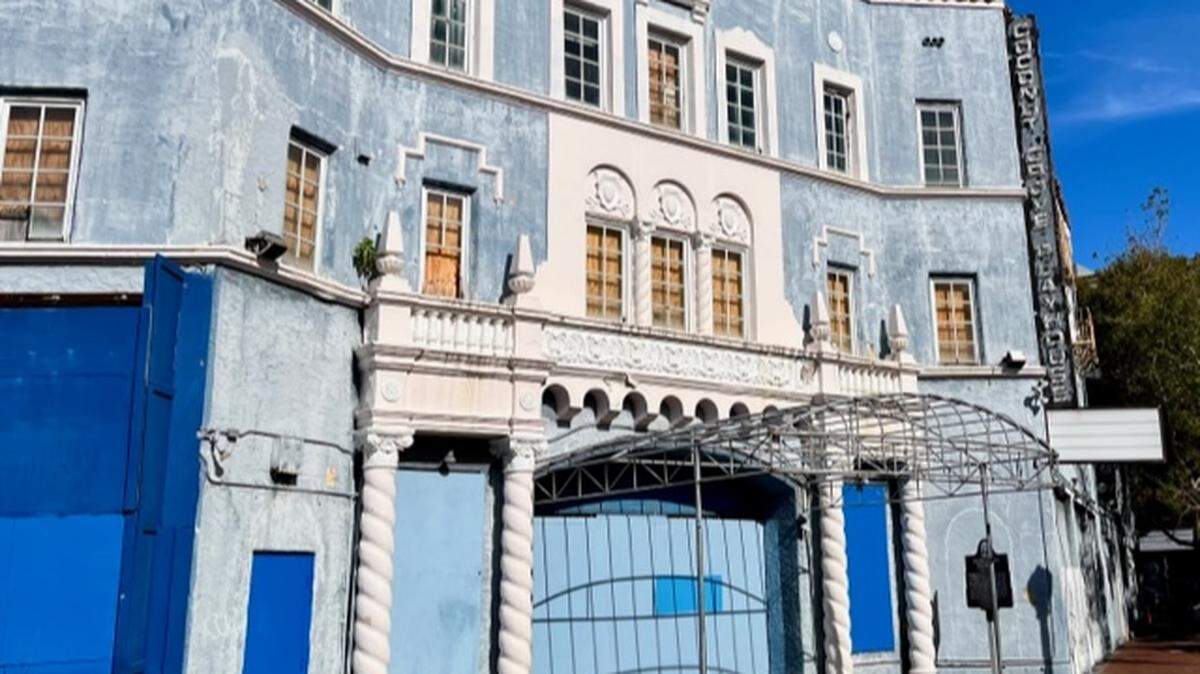
Final curtain
After a dozen years of trying to save our “grand old lady of theater,” the Coconut Grove Playhouse is coming down. Ninety-eight years of history will soon be rubbish and debris. The space where such stage and screen icons as Maureen Stapleton, Hume Cronyn, Jessica Tandy, Eve Arden, Tallulah Bankhead, Carol Channing, Liza Minnelli, Linda Lavin, Bea Arthur, George C. Scott, Colleen Dewhurst, Ethel Merman, Denzel Washington, David Letterman and so many more performed will be a memory. Decades of memories, just gone, brushed aside into piles of trash.
On Nov. 2, 2004, Miami-Dade County voters approved a ballot measure for a bond to be used for “funding to reconstruct the Coconut Grove Playhouse to restore its structural integrity and add to its performance and educational capabilities.” Unfortunately, the county has a history of tearing down rather than preserving. Rarely is anything we vote for ever important in this town.
This majestic building at 3500 Main Highway in Coconut Grove was built in 1927. While 20% of the building’s façade (front) will, hopefully, be saved, the remaining 80% will soon be a mound of dust. As of this writing, perhaps less than three weeks remain before its final death.
Get in your car, drive by and take photos. Show them to your friends, children and grandchildren and explain to them how elected officials impact so much of our community. One or two of the elected, who would have honored the will (and the vote) of the people, could have made a difference and the building would have been restored. (Thank goodness the Statue of Liberty is not in Biscayne Bay; our politicians might have replaced it with one of Kim Kardashian!)
Instead, self-interest wins the day and the Coconut Grove Playhouse is lost forever.
Michael Rosenberg,
West Kendall
Misguided proposal
Re: the May 1 story, “Legislature reopens door to bulldozing historic buildings in Miami Beach and elsewhere.” Ned Murray, associate director of the Jorge M. Perez Metropolitan Center at Florida International University, has spoken about the importance of keeping our neighborhoods sustainable. Sustainable neighborhoods are places to walk and find shops to suit our needs.
Is there is a way to say stop this proposal? The Harlem neighborhood in New York City did it, can we?
The distinctive Art Deco character is another reason to save our buildings.
Wallis Chefitz,
Coconut Grove
License nuisance
The system to renew a driver’s license is complicated and infuriating, lacking sufficient information and designed seemingly to prevent people from following through. I am a retired county employee and my license expires in September. Because it does not have a star in the upper right corner, it is not considered a REAL-ID. Thus, I must create an online account, which should be followed by scheduling an appointment at a DMV office with sufficient I.D., such as a birth certificate or passport.
Furthermore, Miami-Dade County has an insufficient number of DMV offices and the new FLOW mobile DMV buses are always located in areas without bathrooms which, to many, are an absolute necessity.
While trying to create the required online account, the system has twice rejected my attempts, claiming that my physical address is “invalid.” I question the intelligence of those who designed this new system.
Did they test it using regular people, not county or state employees?
The system definitely is not user-friendly. The horror stories told by those trying to renew their licenses are considerable. Seems I am destined to be one of them.
Ellen D. Coulton,
South Miami
Fraud buster
Miami Herald reporter Jay Weaver’s April 29 story on outgoing director of the SEC’s Miami office, Eric Bustillo — “Stock scammers. Ponzi schemers. He loved his decades of work in punishing South Florida fraudsters” — beautifully captured Eric life and career. I have had the opportunity to litigate against him, work with him as a mediator and interact with him over the past 30-plus years. He is and has always been the consummate gentlemen and professional.
The SEC will surely miss his guidance, wisdom and institutional knowledge. Although no one has asked me, I strongly prefer that Eric be nominated to one of the several open federal district judge positions.
Howard A. Tescher,
Fort Lauderdale
Art Deco’s end?
Miami Beach residents must wake up. Do not let developers tear down Art Deco buildings to build high-rises.
Just look at downtown Miami. We used to see the the beautiful water. Not any more.
Carol Hamilton,
Miami Springs
Losing our way
What else is there to say when our nation deports a four-year-old American citizen, in the middle of cancer treatment, without proper due process because the mother is here illegally?
The mother was likely not a member of the infamous Tren de Aragua or MS-13 gangs. We should have the capacity to do a case-by-case analysis in these deportation cases.
Worst of all perhaps, is the arrogance and nonchalant nature in which Border Czar Tom Holman and the White House press team explain away these heartless atrocities. May God help us find our moral compass once again and the openness of heart that made America the great country it has always been. Funny, until 2016, I never once thought of America as anything other than exceptional.
Ramon L. Mendez,
Miami
Economic development
Under President Trump’s leadership, the U.S. Department of Housing and Urban Development (HUD) is advancing community revitalization by championing strategic public-private partnerships. Opportunity Zones, launched during Trump’s first administration, have spurred private investments in under-served communities, bringing new infrastructure, businesses, workforce training and housing.
Earlier this month, I visited Miami’s Liberty Square, where redevelopment is transforming lives. Miami-Dade County and its partners have leveraged Opportunity Zones through thoughtful design. The addition of a health clinic, social services, commercial and recreational spaces and the new home of the Miami-Dade Chamber of Commerce, has inspired new entrepreneurs.
Opportunity Zones don’t just create economic development; they create community development. With public-private partnerships and long-term investment, Americans can build a true foundation for themselves — a home, a job, a business and a thriving life.
At HUD, we’re furthering self-sufficiency in Americans. While the government is a great convener, Washington, D.C. certainly does not have all the answers. In the first 100 days of the Trump administration, we’ve seen partnerships with local leaders bear transformative results. HUD is committed to stewarding public-private partnerships to revitalize many more communities in the years to come.
Scott Turner,
U.S. Housing and Urban Development Secretary,
Washington, D.C.
Silencing students
I am a college educator working with students who face academic, financial and personal barriers. I’m very frustrated with Florida’s House Bill 1381 — the SAVE Act — and other proposals that would force voters to provide either a birth certificate or passport to prove their citizenship before they can register to vote. Many of my students lack access to documents like passports or birth certificates, particularly those who have moved to the state or are first-generation citizens navigating unfamiliar systems.
We already have secure systems in place to verify voter eligibility. These new laws do not strengthen our democracy. They particularly target and disenfranchise young people from lower-income backgrounds, silencing their voices at every step. Worth noting is that these proof of citizenship requirements are so egregious, they impact many people from all walks of life, across rural and urban divides, party lines, age groups and more.
These laws create obstacles when registering and voting. If lawmakers truly cared about civic engagement, they would focus on making voting more accessible, not adding new barriers. Sadly, it appears their focus is the opposite.
Michael Pelaez,
Hialeah