
Venezuela’s quake toll raises an ugly question: Did Chavismo amplify the tragedy? | Opinion
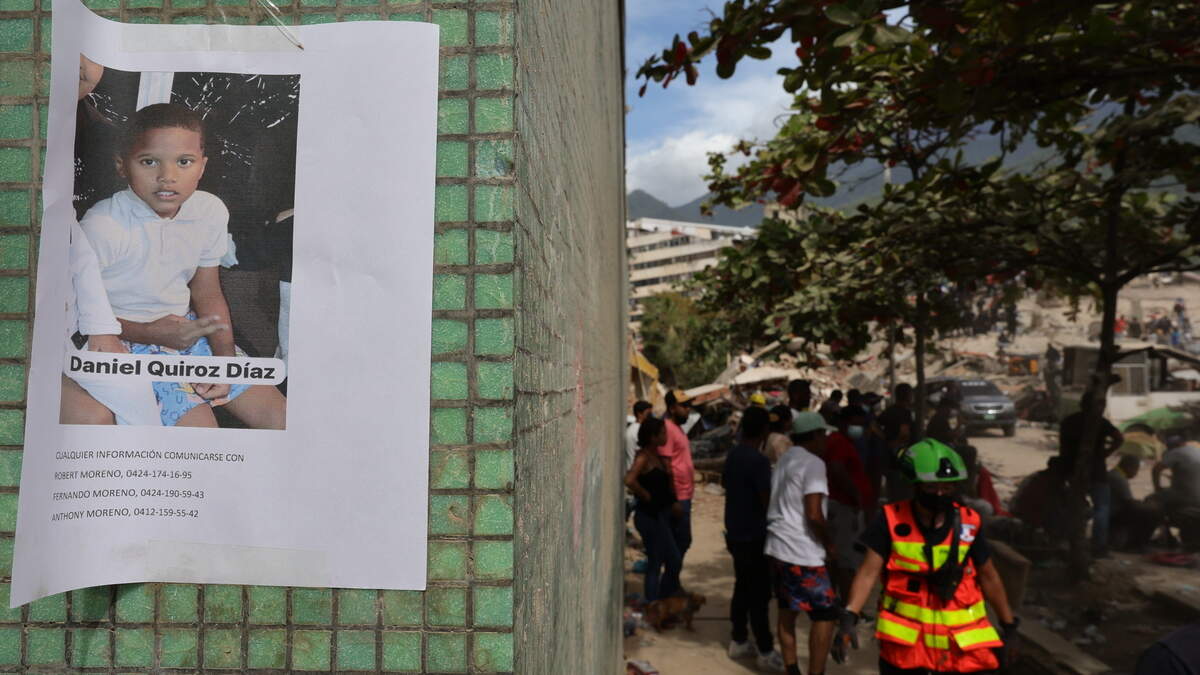
With more than 3,500 people dead in Venezuela — and thousands still missing — a nagging question has emerged: How much of the death toll and devastation caused by two major earthquakes last month is a human-made catastrophe, the result of decades of Chavismo in the South American country?
Angry Venezuelans are accusing their government of not responding effectively to the disaster. It has augmented a humanitarian crisis created by a regime that Hugo Chávez ushered into power in the late 1990s with leftist populist policies and increased state control of the economy that eventually pushed nearly 8 million people into exile. People are begging authorities for help and some have dug through the rubble with their own hands looking for loved ones.
And there’s the increasing scrutiny of the government-built apartment complexes that pancaked when the 7.2 and 7.5 magnitude earthquakes struck the nation on June 24. For years, residents of those complexes and engineering experts have said that the buildings, many constructed under opaque contracts and standards and with materials of unknown quality, could not withstand a major earthquake.
In the town of Caraballeda in the heavily hit La Guaira state, a harrowing discovery gave credence to that concern: broken pieces of walls and roof in a collapsed public-housing building exposed white Styrofoam mixed with the concrete, NPR reported.
Public housing in La Guaira has become one of the densest pockets of earthquake deaths, the New York Times reported. Home to thousands of people, planning for the Misión Vivienda project began in 2011 when Chávez was president and the country was flush with oil money. With an upcoming election, construction happened quickly, and the public was kept mostly in the dark about soil tests and design details, the Times reported. Even before the earthquakes, some Misión Vivienda buildings in other parts of the country were demolished because of poor construction.
“Misión Vivienda is unauditable. The public has no knowledge of the quality of the materials used, the total amount of the investment, whether the corresponding soil studies were conducted, or the number of housing units that were actually built,” El Estimulo, a Venezuelan digital news outlet, reported in 2017.
Delcy Rodríguez, Venezuela’s acting president, has said that the majority of the buildings that collapsed in La Guaira were not built by the state. In a democratic country, widespread devastation seen in public housing would prompt an investigation. But, six months after the U.S. captured Nicolás Maduro in January, Chavismo still runs the country — Rodríguez is closely tied to Maduro.
This is a regime averse to self reflection or accountability. The Venezuelan government has hailed Misión Vivienda as a victory, saying that over 5.5 million homes have been built, according to the Times.
The earthquakes also expose a sticking point in U.S. policy toward the South American nation. Maduro is gone but Venezuelans’ dream of a democratic transition still looks elusive. In a devastated country, fair and open elections may become harder to accomplish.
To many Venezuelans in South Florida, the twin earthquakes may be further proof that Chavismo’s populist promises of equality and helping the poor against the perceived evils of capitalism left Venezuelans worse off, victims of not only a repressive regime but also of widespread corruption and cronyism that are often a by-product of undemocratic regimes.
Now Venezuelans are faced with the possibility that shoddy construction of public housing may have cost lives. If that’s the case, this is a bigger catastrophe than any natural disaster.
BEHIND THE STORY
MOREWhat's an editorial?
Editorials are opinion pieces that reflect the views of the Miami Herald Editorial Board, a group of opinion journalists that operates separately from the Miami Herald newsroom. Miami Herald Editorial Board members are: opinion editor Amy Driscoll and editorial writers Isadora Rangel and Mary Anna Mancuso. Read more by clicking the arrow in the upper right.
What's the difference between an op-ed and a column?
How does the Miami Herald Editorial Board decide what to write about?
The Editorial Board, made up of experienced opinion journalists, primarily addresses local and state issues that affect South Florida residents. Each board member has an area of focus, such as education, COVID or local government policy. Board members meet daily and bring up an array of topics for discussion. Once a topic is fully discussed, board members will further report the issue, interviewing stakeholders and others involved and affected, so that the board can present the most informed opinion possible. We strive to provide our community with thought leadership that advocates for policies and priorities that strengthen our communities. Our editorials promote social justice, fairness in economic, educational and social opportunities and an end to systemic racism and inequality. The Editorial Board is separate from the reporters and editors of the Miami Herald newsroom.
How can I contribute to the Miami Herald Opinion section?
The Editorial Board accepts op-ed submissions of 650-700 words from community members who want to argue a specific viewpoint or idea that is relevant to our area. You can email an op-ed submission to oped@miamiherald.com. We also accept 150-word letters to the editor from readers who want to offer their points of view on current issues. For more information on how to submit a letter, go here.
This story was originally published July 7, 2026 at 4:40 PM.