
Up to 350,000 Haitians now in limbo. Where are Florida’s two Republican senators? | Opinion
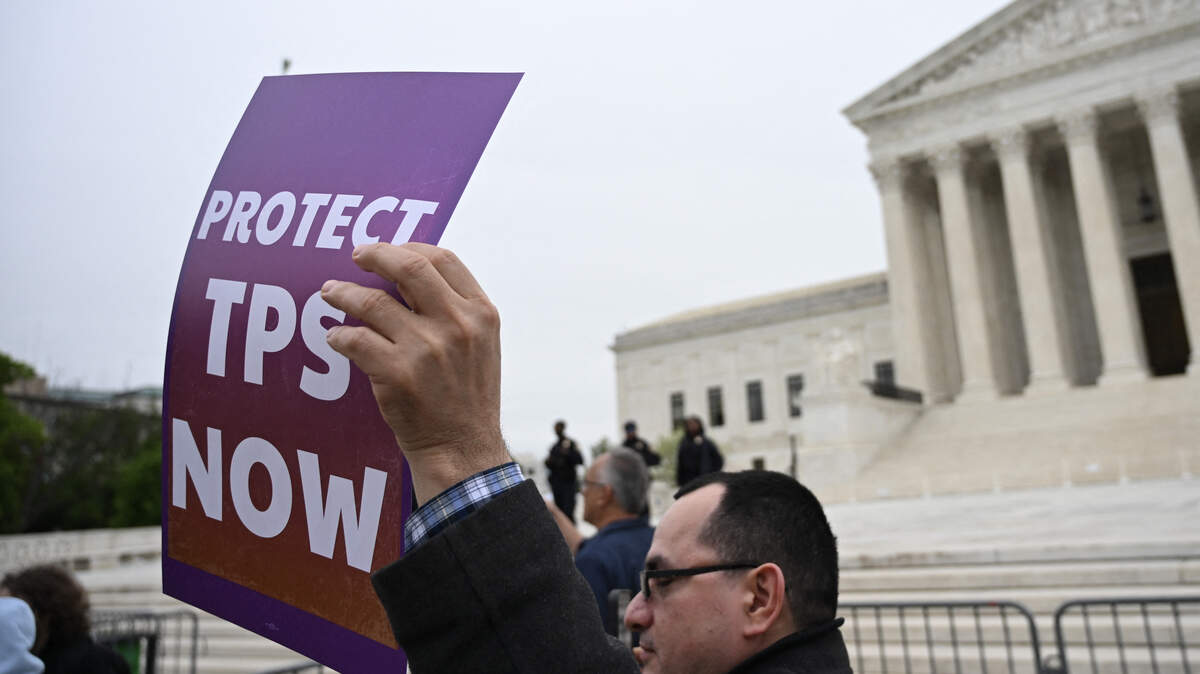
The U.S. Supreme Court again threw Haitians into jeopardy Thursday, upholding the Trump administration’s termination of the Temporary Protected Status designation for Haiti and Syria.
We’re not surprised that the court’s conservative majority sided with Department of Homeland Security’s unfair decision to force up to 350,000 Haitians back to a country that’s undeniably unsafe and unstable. TPS provides protection from deportation for people fleeing political and environmental turmoil in their native countries. Haiti, whose capital has fallen largely under gang rule, fits that definition to a T.
The fate of Haitians on TPS is now up to the U.S. Senate — and Florida’s two Republican Sens. Rick Scott and Ashley Moody.
The U.S. House already passed a resolution to extend Haiti’s TPS designation through 2029. Ten Republicans joined Democrats to pass the measure in April in a 224-204 vote. Among them were Miami Republican Reps. Maria Elvira Salazar, Carlos Giménez and Mario Diaz-Balart. Miami’s Democratic U.S. Rep. Frederica Wilson also voted for it.
The measure, introduced by Massachusetts Democratic U.S. Rep. Ayanna Pressley, has stalled in the Senate. Earlier this month, her office announced that more than a dozen senators agreed to co-sponsor the measure. Scott and Moody were not among them.
Scott has supported Haiti TPS in the past — in 2017 he asked the Trump administration to extend it. This month, he told the Medill News Service from Northwestern University that Florida has “a lot of wonderful Haitians” but didn’t say directly whether he wants the TPS program to continue, saying “TPS was never a permanent program.”
We’re not surprised by his mushy comment.
Haitian-American voters aren’t necessarily part of Florida’s Republican base and Scott and Moody have been loyal to President Trump. Remember, Trump in 2024 repeated the absurd and unsubstantiated claim that Haitians were eating people’s pets in Ohio. Two Republicans from Ohio voted to pass Pressley’s resolution in the U.S. House.
It’s clear that at least some Republicans understand the concerning prospect of deporting hundreds of thousands of Haitians currently on TPS. Despite the Trump administration’s ludicrous claim that conditions in the country have improved, any lay person understands that’s not the case. Since the assassination of President Jovenel Moise in 2021, Haiti has been plunged into chaos where indiscriminate killings, rape and kidnapping by gangs have become the norm. The possibility that people who return to the country will subjected to violence and even death isn’t hypothetical.
The immigrant rights groups that challenged the TPS termination claimed it was motivated by racial animus. But Justice Samuel Alito, writing for the Supreme Court’s majority, disagreed with that argument, writing that statements made by Trump and then-DHS Secretary Kristi Noem about migrants were not “overtly racial, and in substance all expressed policy views that could rest on race-neutral justifications.”
We will let the president’s many claims about immigrants, including his pet-eating comments, stand on their own. It’s important to remember this is the same Supreme Court that allowed states to dismantle congressional districts created to allow Black voters to choose a candidate of their choice. After that ruling, some southern states promptly eliminated those districts.
Justice Elena Kagan wrote a dissenting opinion on behalf of the court’s three liberal justices. She noted that a lower court found the plaintiffs challenging the termination were likely to succeed “in part because statements made by the President showed that a racially discriminatory purpose had entered into the TPS termination.”
And she wrote that the evidence the plaintiffs showed of discrimination included statements by Trump “so repellent and racially inflected” that the court’s conservative majority had declined “to put them in print” in its opinion. Among those statements, Kagan wrote, are:
“’Why is it we only take people from shithole countries’” like “’Haiti [and] Somalia?’”
“’Why cannot we have some people from Norway [and] Sweden?’”
“’Haitians in the United States ‘probably have AIDS.’”
“Haitian immigration is ‘like a death wish for our country.’”
And, then, Kagan concluded: “It is hard to imagine the statements being made today of any White community.”
Now it’s up to the U.S. Senate — and Florida’s Scott and Moody, who’s on the ballot in November — to decide whether they will allow this grave injustice to move forward.
BEHIND THE STORY
MOREWhat's an editorial?
Editorials are opinion pieces that reflect the views of the Miami Herald Editorial Board, a group of opinion journalists that operates separately from the Miami Herald newsroom. Miami Herald Editorial Board members are: opinion editor Amy Driscoll and editorial writers Isadora Rangel and Mary Anna Mancuso. Read more by clicking the arrow in the upper right.
What's the difference between an op-ed and a column?
How does the Miami Herald Editorial Board decide what to write about?
The Editorial Board, made up of experienced opinion journalists, primarily addresses local and state issues that affect South Florida residents. Each board member has an area of focus, such as education, COVID or local government policy. Board members meet daily and bring up an array of topics for discussion. Once a topic is fully discussed, board members will further report the issue, interviewing stakeholders and others involved and affected, so that the board can present the most informed opinion possible. We strive to provide our community with thought leadership that advocates for policies and priorities that strengthen our communities. Our editorials promote social justice, fairness in economic, educational and social opportunities and an end to systemic racism and inequality. The Editorial Board is separate from the reporters and editors of the Miami Herald newsroom.
How can I contribute to the Miami Herald Opinion section?
The Editorial Board accepts op-ed submissions of 650-700 words from community members who want to argue a specific viewpoint or idea that is relevant to our area. You can email an op-ed submission to oped@miamiherald.com. We also accept 150-word letters to the editor from readers who want to offer their points of view on current issues. For more information on how to submit a letter, go here.
This story was originally published June 25, 2026 at 1:34 PM.