
These Republicans get it: FL tax cuts would create ‘government by permission slip’ | Opinion
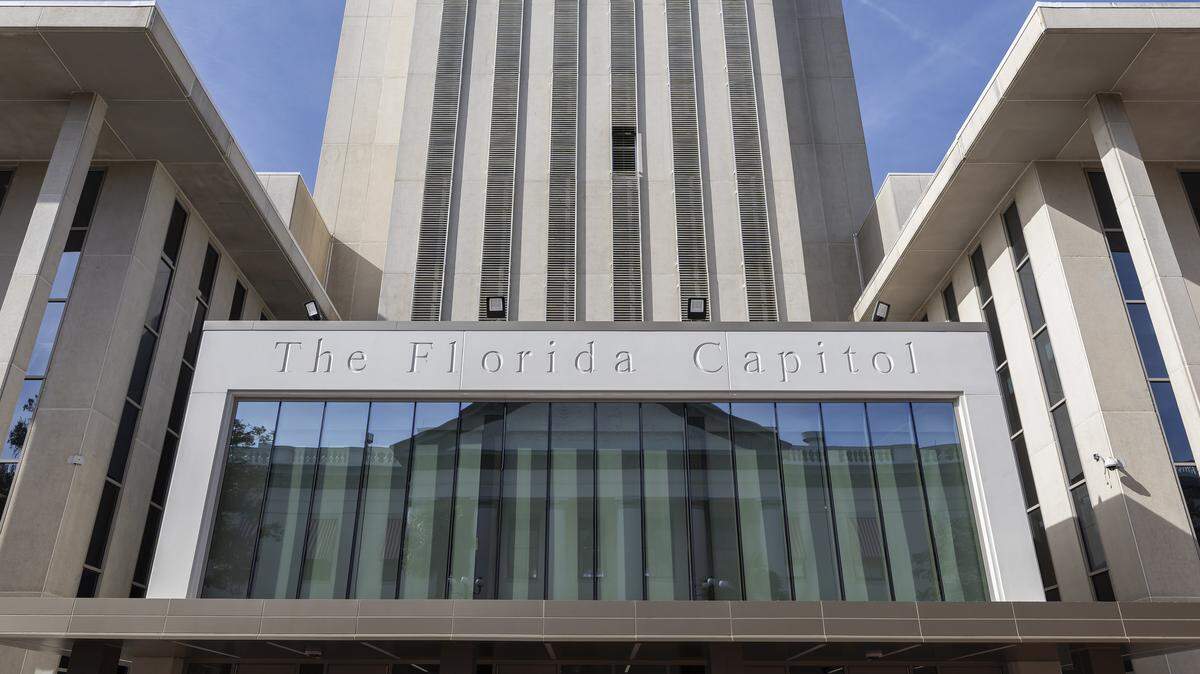
As the debate over whether to slash property taxes in Florida heats up, it’s tempting to dismiss some of the sky-is-falling comments by local governments as overblown and driven by the partisan divide.
Democrats just want to spend money, the thinking goes. It took a tough-minded Republican governor, Ron DeSantis, and his Republican Legislature to muscle through a proposed constitutional amendment, which goes to voters in November, that would stop out-of-control government spending. The GOP is the party of fiscal conservatism, right?
It’s not that simple. At least two well-known Florida Republicans have been raising red flags — or at least orange ones — if this amendment passes.
First, there’s Jeff Kottkamp — a former lieutenant governor and legislator who now leads Florida TaxWatch — saying he expects a lot more “turkeys” in the future state budgets if the constitutional amendment passes.
“Turkeys” are hometown projects considered to be wasteful spending. TaxWatch publishes a list of them after lawmakers approve the state budget each year, in the hope that the governor will veto them. This year, there were 621 projects totaling $829.7 million in a 2026-27 budget of about $114.5 billion. (And that is supposed to be an “austerity” budget, TaxWatch notes.)
Local governments, faced with the inability to fund projects, will turn to their lawmakers to find state dollars, “because their budgets will take a significant hit from the reduction of property tax revenue,” Kottkamp said, according to a Florida News Service story.
In other words, there could be a broad shift away from local government authority and to state control.
And that is exactly what Jeff Brandes, another high-profile Republican ex-lawmaker, has been saying all along about this fight over the future of Florida: The amendment could force local government officials to go, hat in hand, to Tallahassee for funding.
Brandes, a former state senator who started his own nonprofit think tank called the Florida Policy Project, calls it “government by permission slip.”
Sounds awful. If Florida’s 67 counties and 411 cities have to go grovel in Tallahassee for funding each year, that’ll be quite the power shift, a change from home rule to state rule. As Brandes told the Orlando Sentinel, “The lack of local autonomy is my biggest concern.”
There’s another point to consider. Making local government dependent on the state for extra cash will create a wildly unfair system. Assuming Republicans continue to control the state Legislature and governor’s office, red counties and cities would have favored-government status while blue communities would probably find themselves out of luck — and out of money.
Nobody’s arguing that government isn’t wasteful. As property values rose in Florida, governments were all too happy to spend more. During last week’s oh-so-brief debate in Tallahassee over the proposed constitutional amendment, two Miami-Dade Republican legislators went out of their way to highlight county spending they considered excessive: taxpayer-funded security details for county commissioners. That may be a fair target for criticism, but they certainly were quick to throw their own county under the bus. It’s probably no coincidence that Miami-Dade’s mayor, Daniella Levine Cava, is a Democrat.
Add all of this up — more budget turkeys, more dependence on state rule, the potential for an unfair state distribution of money — and the problem is clear. Florida needed time to study this proposal. It needed to be thoroughly and openly vetted for taxpayers. We needed a full financial breakdown of its implications.
Floridians need to remember that this proposal isn’t just a law. It’s an amendment to the state constitution, the backbone of Florida’s governance. Change it at your own risk.
BEHIND THE STORY
MOREWhat's an editorial?
Editorials are opinion pieces that reflect the views of the Miami Herald Editorial Board, a group of opinion journalists that operates separately from the Miami Herald newsroom. Miami Herald Editorial Board members are: opinion editor Amy Driscoll and editorial writers Isadora Rangel and Mary Anna Mancuso. Read more by clicking the arrow in the upper right.
What's the difference between an op-ed and a column?
How does the Miami Herald Editorial Board decide what to write about?
The Editorial Board, made up of experienced opinion journalists, primarily addresses local and state issues that affect South Florida residents. Each board member has an area of focus, such as education, COVID or local government policy. Board members meet daily and bring up an array of topics for discussion. Once a topic is fully discussed, board members will further report the issue, interviewing stakeholders and others involved and affected, so that the board can present the most informed opinion possible. We strive to provide our community with thought leadership that advocates for policies and priorities that strengthen our communities. Our editorials promote social justice, fairness in economic, educational and social opportunities and an end to systemic racism and inequality. The Editorial Board is separate from the reporters and editors of the Miami Herald newsroom.
How can I contribute to the Miami Herald Opinion section?
The Editorial Board accepts op-ed submissions of 650-700 words from community members who want to argue a specific viewpoint or idea that is relevant to our area. You can email an op-ed submission to oped@miamiherald.com. We also accept 150-word letters to the editor from readers who want to offer their points of view on current issues. For more information on how to submit a letter, go here.
--