
In red Florida, Jolly’s purple ticket is a risk worth taking for Democrats | Opinion
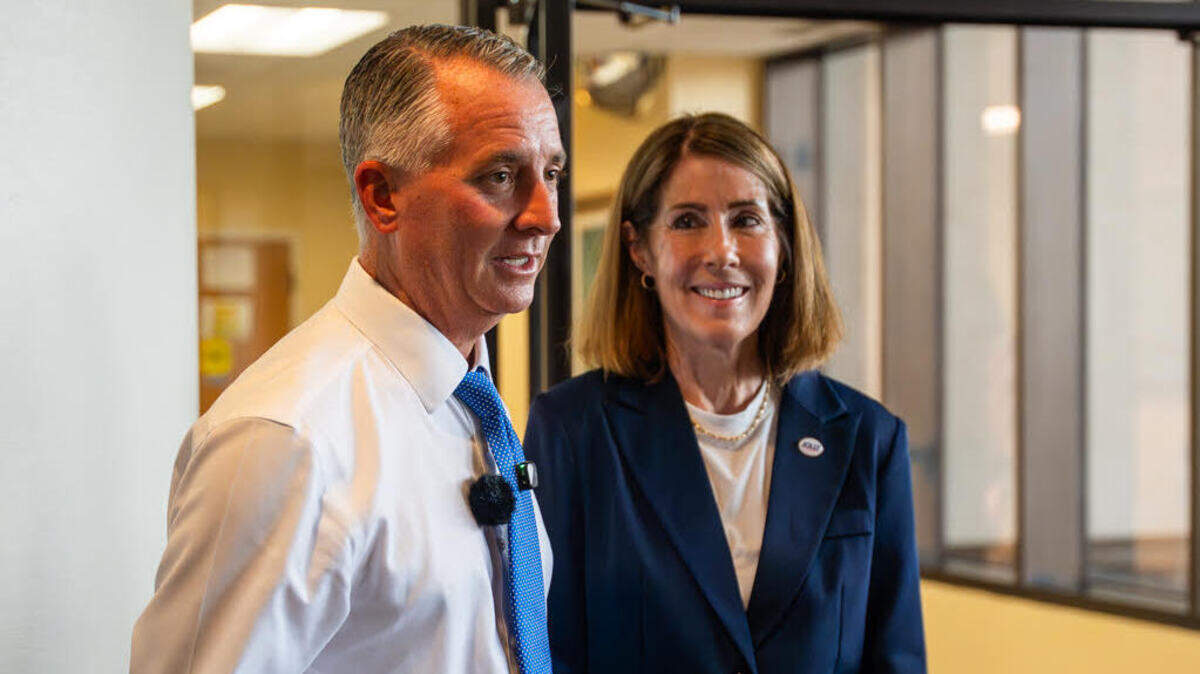
A gubernatorial candidate’s choice of running mate usually doesn’t matter much in elections, but Democrat David Jolly’s pick sends an important signal about his strategy to court voters in what’s now a red state. For a party that’s been hemorrhaging voters, moving toward the center may be the Democratic Party’s best chance at staying afloat in Florida.
Jolly, a former Republican congressman turned Democrat, announced on Wednesday Gwen Graham is his choice as lieutenant governor. Jolly, running to replace Gov. Ron DeSantis, is the leading Democratic primary candidate after Orange County Mayor Jerry Demings suspended his campaign.
Graham is a former Panhandle congresswoman and 2018 gubernatorial candidate whose family has deep ties to South Florida. She’s the daughter of former Gov. and U.S. Sen. Bob Graham — a strong advocate for Everglades restoration and bipartisanship who died in 2024 — and she was born in Miami Lakes, which was built by a real estate firm her family owns.
Jolly’s choice suggests where his campaign stands on a debate that has divided Democrats in the age of President Donald Trump: whether to move to the left or the middle. The choice of Graham suggests Jolly is doing the latter, and that’s probably the right call.
Graham in 2014 unseated a Republican congressman in one of the most conservative parts of the state — that was the country’s biggest upset that year. She did not run for reelection after her Panhandle district was redrawn and became more Republican. She lost the 2018 Democratic primary for governor to former Tallahassee Mayor Andrew Gillum, a Bernie Sanders-backed progressive who went on to lose to DeSantis by a thin margin.
Graham and Jolly served in Congress together and have known each other for years. She is not the progressive firebrand many Democratic activists have been clamoring for. In fact, her moderate, Republican-friendly brand probably cost her the Democratic nomination in 2018. Almost a decade later, the Democratic Party is in a different place: Republican voter registrations have outpaced Democrats in Florida and Trump in 2024 won Miami-Dade County, once a blue bastion.
A Jolly-Graham ticket will be a true purple ticket, but it likely won’t excite Democrats and independents enough to canvass and attend rallies in droves. Jolly made a politically smart choice, one that’s also relatively safe. Is that going to work?
Inspirational campaigns cannot be manufactured, and many Democrats — still bitter about Gillum’s loss and scandals — are over purity tests. Their desire is to find someone who can properly challenge a Republican in the general election. But they should not fool themselves: The odds remain heavily in favor of the GOP in a statewide race — Florida is still Trump country. On the GOP side, Trump-endorsed U.S. Rep. Byron Donalds is considered the frontrunner in a primary that also includes James Fishback, former House Speaker Paul Renner and Lt. Gov. Jay Collins.
In the end, Graham’s status as the so-called establishment — a name many Democrats instantly recognize — might give Jolly credibility with Democrats who aren’t sold on him because he previously was a Republican congressman in the Tampa Bay area. But running mates don’t win elections. Jolly is going up against a GOP political machine that’s been decades in the making — a machine his own party inadvertently helped build by ceding ground in Florida.
If anything, Graham’s selection signals that Jolly will appeal to the middle, which is where our politics, in times of intense polarization and extremism, should return.
BEHIND THE STORY
MOREWhat's an editorial?
Editorials are opinion pieces that reflect the views of the Miami Herald Editorial Board, a group of opinion journalists that operates separately from the Miami Herald newsroom. Miami Herald Editorial Board members are: opinion editor Amy Driscoll and editorial writers Isadora Rangel and Mary Anna Mancuso. Read more by clicking the arrow in the upper right.
What's the difference between an op-ed and a column?
How does the Miami Herald Editorial Board decide what to write about?
The Editorial Board, made up of experienced opinion journalists, primarily addresses local and state issues that affect South Florida residents. Each board member has an area of focus, such as education, COVID or local government policy. Board members meet daily and bring up an array of topics for discussion. Once a topic is fully discussed, board members will further report the issue, interviewing stakeholders and others involved and affected, so that the board can present the most informed opinion possible. We strive to provide our community with thought leadership that advocates for policies and priorities that strengthen our communities. Our editorials promote social justice, fairness in economic, educational and social opportunities and an end to systemic racism and inequality. The Editorial Board is separate from the reporters and editors of the Miami Herald newsroom.
How can I contribute to the Miami Herald Opinion section?
The Editorial Board accepts op-ed submissions of 650-700 words from community members who want to argue a specific viewpoint or idea that is relevant to our area. You can email an op-ed submission to oped@miamiherald.com. We also accept 150-word letters to the editor from readers who want to offer their points of view on current issues. For more information on how to submit a letter, go here.