
DeSantis made bold promise on tax cut plan but sloppy rollout masks hidden costs | Opinion
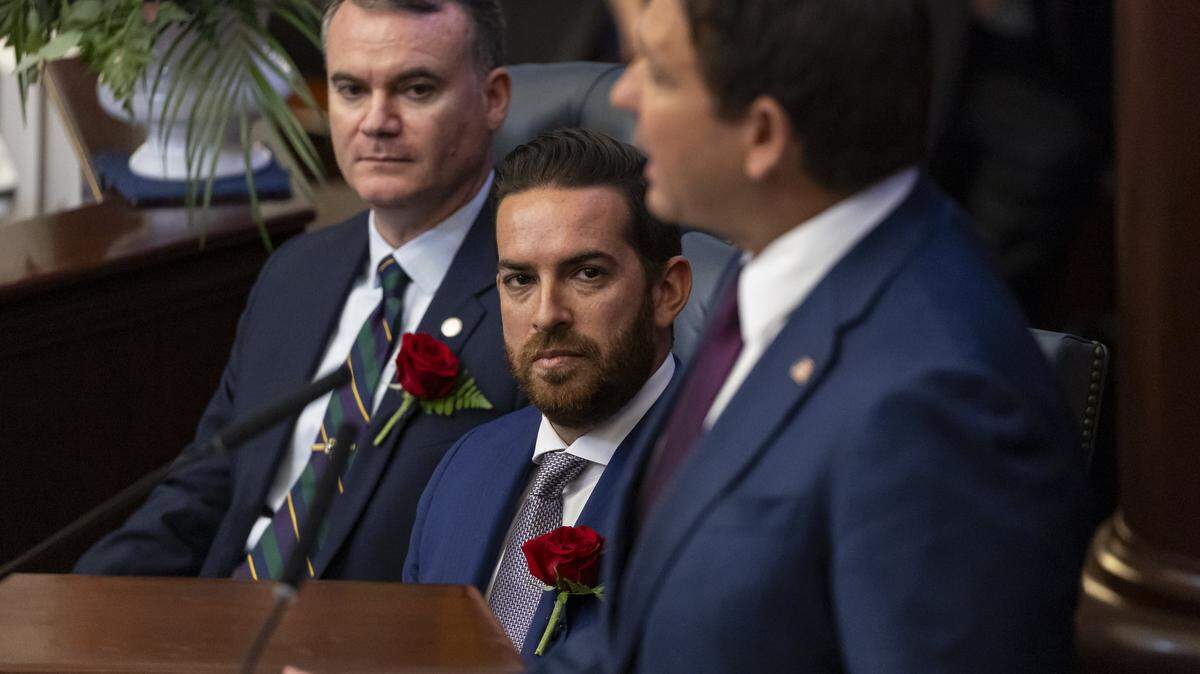
Florida Gov. Ron DeSantis has been talking about cutting property taxes for over a year. So why did the rollout of his proposal on Wednesday look so amateurish?
The governor has given lawmakers and the public just a handful of days to figure out what his plan, with its enormous consequences, actually means. On Monday, the Legislature is scheduled to go into a special session to approve the cuts and then place the issue on the ballot in November. And yet, so far, information is scant and questions are abundant.
There was no study — at least not one shared publicly — on the impact of cutting property tax revenues for cities, counties and school districts that depend on the money to fund basic services such as police, public education, parks and libraries. DeSantis vetoed $1 million lawmakers allocated to study the issue in 2025.
The governor is proposing a trust fund to provide grants to help cash-strapped local governments pay for services. But we don’t know where the money for that would come from — and Florida is expected to face budget deficits in coming years.
Local governments would be required to use what’s left of property taxes after his cuts to pay for “core services” — only there’s uncertainty there, too, over what falls into that category. Legislation filed on Thursday restricts the use of property taxes to paying for public safety, public schools, debt service payments, infrastructure, flood control and a few others. But what about other core city and county functions, such as permitting, planning, libraries, economic development and constitutional offices, such as property appraiser and supervisor of elections? That might force government to raise other fees to fund those services.
These questions amount to potential hidden costs of DeSantis’ much-hyped proposal to slash property taxes. He wants to increase Florida’s homestead exemptions — given to people who live in the homes they own — but it’s unclear how much. The governor first said he wanted to give homeowners a $250,000 break right away followed by $500,000. But the actual legislation calls for $150,000 next year followed by $250,000. More confusion, in other words.
We agree with DeSantis that Floridians need relief from crippling housing costs, but state leaders — Legislature, that means you — need to take action in a measured and fiscally responsible manner, making sure they don’t put the state in a precarious financial position, especially when and if another recession arrives.
The legislation (Senate Joint Resolution 2-F) filed on Thursday by Sen. Bryan Avila, R-Hialeah Gardens, requires the Legislature to create a schedule for the “full elimination” of homesteaded property taxes, though — once again — it’s unclear when that would happen. If the Legislature passes the proposal, 60% of voters must approve it in November to amend the Florida constitution.
DeSantis won’t have to deal with what happens next. Thanks to term limits, he’s out the door after a new governor is elected in November. It will be up to his successor — and Floridians who may see schools and local services slashed — to deal with the seismic upheaval this may create.
One key factor to remember: Florida doesn’t have an income tax so it relies on property and other taxes to keep government running.
Local government officials on Thursday were hectically trying to understand the impact of these potential changes. Under state law, counties have costs they are required to pay — such as their portion of Medicaid — that they wouldn’t be allowed to fund with property taxes under the current legislation, Cragin Mosteller, director of external affairs at the Florida Association of Counties, told the Herald Editorial Board. If the bill passes as currently written, there would be years of lawsuits from local governments challenging the measure, she said.
Former state Sen. Jeff Brandes, a Republican from St. Petersburg, posted a thread on social media with “Ten questions Florida should answer before detonating the property tax system.” Among them: “Who actually controls your city budget after this?”
If the Legislature defines what “core services” cities and counties can fund, decisions about how to run communities would become centralized in Tallahassee and local governments would have to beg lawmakers for funding, Brandes told the Editorial Board.
Like so many parts of this far-reaching proposal, there are too many questions, not enough answers — and it’s all going too fast. For a proposal of this magnitude, that’s irresponsible.
BEHIND THE STORY
MOREWhat's an editorial?
Editorials are opinion pieces that reflect the views of the Miami Herald Editorial Board, a group of opinion journalists that operates separately from the Miami Herald newsroom. Miami Herald Editorial Board members are: opinion editor Amy Driscoll and editorial writers Isadora Rangel and Mary Anna Mancuso. Read more by clicking the arrow in the upper right.
What's the difference between an op-ed and a column?
How does the Miami Herald Editorial Board decide what to write about?
The Editorial Board, made up of experienced opinion journalists, primarily addresses local and state issues that affect South Florida residents. Each board member has an area of focus, such as education, COVID or local government policy. Board members meet daily and bring up an array of topics for discussion. Once a topic is fully discussed, board members will further report the issue, interviewing stakeholders and others involved and affected, so that the board can present the most informed opinion possible. We strive to provide our community with thought leadership that advocates for policies and priorities that strengthen our communities. Our editorials promote social justice, fairness in economic, educational and social opportunities and an end to systemic racism and inequality. The Editorial Board is separate from the reporters and editors of the Miami Herald newsroom.
How can I contribute to the Miami Herald Opinion section?
The Editorial Board accepts op-ed submissions of 650-700 words from community members who want to argue a specific viewpoint or idea that is relevant to our area. You can email an op-ed submission to oped@miamiherald.com. We also accept 150-word letters to the editor from readers who want to offer their points of view on current issues. For more information on how to submit a letter, go here.